
Lieferung heute & morgen

Qualitätsgarantie

Willkommens-Angebote freischalten: KOSTENLOSE Lieferung | Bis zu 80 % RABATT | Kostenlose 30-Tage-JoyPlus-Testphase
App herunterladen
A kitchen knife should dice vegetables cleanly, chop herbs and cut meat or fish with control. Yet not every model labelled “sharp” or “multi-functional” leads to the right purchase decision. What really matters are measurable features such as blade length, steel type, handle design and maintenance requirements.
A sharp kitchen knife can cut very cleanly straight after purchase. How long the edge retains that condition, however, depends on factors including the steel, hardness, grind, chopping board and care. Claims like “razor-sharp” are only of limited value without technical context.
So look for concrete information on blade length, blade material and recommended care. A stainless steel kitchen knife is corrosion-resistant, but that doesn’t automatically make it immune to incorrect cleaning or hard chopping boards.
A Chinese chef’s knife or Chinese cleaver usually has a wide, rectangular blade. This shape is suitable for cutting, dicing and scooping up ingredients. However, it is not automatically intended for bones, frozen food or hard shells. A fine edge can be damaged by such applications.
For heavier cutting tasks, cleavers may be appropriate depending on the design. The manufacturer’s specific guidance remains key: a wide blade alone tells you nothing about whether a model is suitable for chopping hard foods.
A dishwasher-safe kitchen knife can be cleaned in the machine according to the product information. Nevertheless, heat, detergents and contact with other cutlery can stress the edge more than gentle hand washing. For knives with a wooden handle, the dishwasher is generally unsuitable; wood can swell or warp due to water and heat.
For many households, a blade length between 17 and 20 cm falls within a versatile range. A 18 cm chef’s knife or a 18 cm Santoku knife offers enough surface area for vegetables, meat and fish, while remaining easy to control for most people.
With stainless steel kitchen knives, you should pay attention to the specific material description. “Stainless steel” refers to a group of materials, not a uniform performance level. A rust-resistant steel can still develop spots if stored incorrectly.
A FRIODUR ice-hardened blade is explicitly stated for several ZWILLING models. With the ZWILLING Gourmet Santoku knife, the blade is made from ice-hardened special smelted steel according to the product description; the blade length is 18 cm. The model is marked as dishwasher-safe, although hand washing is recommended to protect the edge.
A Granton edge or hollow-ground blade can reduce contact between the blade and food. This is particularly relevant when cutting moist ingredients, but it neither replaces a suitable grind nor regular resharpening.
A handle should sit securely in the hand when dry and allow controlled guidance. Full-tang or through-tang constructions can contribute to stability, provided this is explicitly stated in the product data. With a knife that has a wooden handle, you should also check whether hand washing is required.
Chopping boards made of stone, glass or ceramic can dull the blade more quickly. Boards made of wood or plastic are more suitable. For storage, a knife block, magnetic strip, drawer insert or blade guard are all good options. Loose knives in a drawer increase the risk of cuts and can damage the edge.
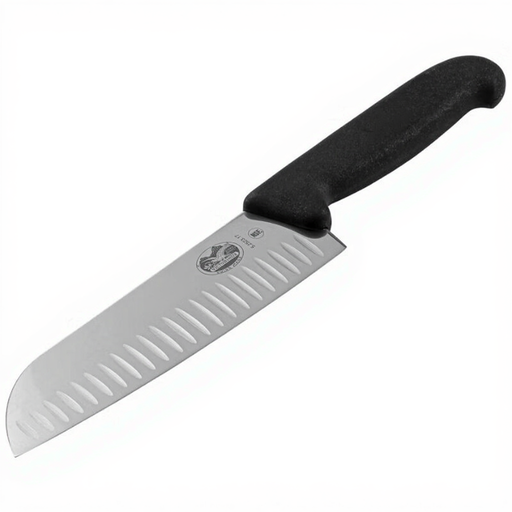
Why this product fits the profile: The 17 cm blade is handy for everyday preparations. The plastic handle and stated dishwasher suitability appeal to buyers looking for a straightforward entry point.
The product data specifies blade length, stainless steel, plastic handle and cleaning instructions concretely, rather than using only vague sharpness promises.
17 cm Santoku blade, Granton edge and marked as dishwasher-safe.
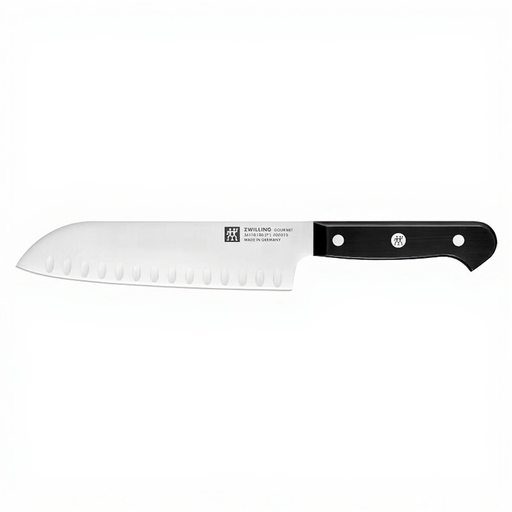
Why this product fits the profile: The 18 cm Santoku knife combines a clearly stated blade length with FRIODUR ice-hardened special smelted steel and a plastic handle.
The material and care information is specific. Despite being dishwasher-safe, hand washing is recommended to protect the edge.
18 cm blade, FRIODUR processing and stated dishwasher suitability.

Why this product fits the profile: The 190 mm blade and described full-tang construction are aimed at people who regularly prepare larger quantities of vegetables or meat.
The specifications state 190 mm, wear-resistant steel, full tang and a wooden handle. Hard foods should still only be cut according to the manufacturer’s approval.
190 mm blade, full-tang construction and ergonomically shaped Shenmu wood handle.
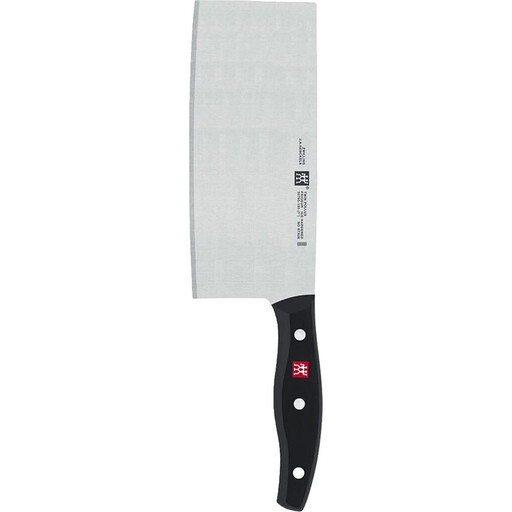
Why this product fits the profile: The wide blade is suitable according to the product description for cutting, dicing and chopping soft ingredients. It can also be used for scooping up cut food.
The safety instructions explicitly exclude frozen food, bones and hard objects. This means the wide blade is not mistakenly classified as a universal cleaver.
18.5 cm blade, rust-resistant special steel and wide blade format with scooping function.
We have compiled a complete, regularly updated list of products that fully meet these strict selection criteria and the safety regulations in force in the EU.
For many tasks in private households, 17 to 20 cm is practical. An 18 cm chef’s knife or Santoku knife offers enough cutting surface for larger vegetables and pieces of meat, without being unnecessarily bulky for typical kitchen work.
Stainless steel is generally more corrosion-resistant than unalloyed steel, but not completely immune. Food residue, moisture and aggressive cleaning agents can affect the surface. Therefore, clean, dry and store the knife carefully.
That depends on the steel, grind, usage and chopping board. Hard boards, bones or frozen food can damage the edge. Regular honing and occasional professional resharpening help maintain the cutting geometry in its intended condition.