
Lieferung heute & morgen

Qualitätsgarantie

Willkommens-Angebote freischalten: KOSTENLOSE Lieferung | Bis zu 80 % RABATT | Kostenlose 30-Tage-JoyPlus-Testphase
App herunterladen
A kitchen knife should primarily suit the cutting task, the size of your hand and your willingness to maintain it. Many buying decisions do not fail because the knife lacks sharpness straight out of the box, but because of unclear material specifications, unsuitable blade shapes or impractical storage.
A sharp blade does not remain in the same condition indefinitely. The steel used, blade geometry, cutting angle and cutting surface all play a role. A model advertised as a sharp stainless steel knife may cut precisely at first, but quickly lose performance if used incorrectly.
That is why you should look for specific details such as blade length, blade material and grind. Vague marketing claims without technical information are of limited help when comparing products.
A stainless steel kitchen knife still needs to be cleaned and dried. Acidic foods, moisture and aggressive cleaning products can affect the surface. Even corrosion-resistant stainless steel is not automatically immune to staining or material wear.
A set can offer good value if you regularly carry out several different cutting tasks. However, if you mainly prepare vegetables, bread and the occasional meat dish, a chef’s knife, bread knife and smaller vegetable knife will often be enough. Before buying, check whether you will actually use all the shapes included.
A chef’s knife with a blade of around 18 to 22 cm is a versatile staple for many households. It is suitable for slicing, rocking and chopping vegetables, herbs and larger ingredients. A smaller utility knife is easier to control for fine or shorter cutting tasks.
A Santoku knife usually has a broad, relatively straight blade and is often used for vegetables, fish and meat. A bread knife with a serrated edge, on the other hand, is designed for hard crusts and softer centres. A longer carving knife with a smooth edge can be useful for carving meat.
The Chinese chef’s knife looks similar to a cleaver, but is not automatically suitable for bones or frozen food. Check the recommended uses for the individual model and avoid tasks the blade was not designed for.
For stainless steel, specifications such as “Special Blade Steel”, “High Carbon Stainless Steel” or “German stainless steel” alone do not provide complete proof of quality. Processing, hardness, grind and care instructions are also important. A smaller cutting angle can enable precise cuts, but depending on the design, it may be more sensitive to lateral stress.
According to the manufacturer, the Tefal K232S3 Ice Force 3-Piece Set has a total cutting angle of 26 degrees and blades made from German stainless steel. The claim of “up to twice the performance” refers, according to the manufacturer, to a comparison with other Tefal stainless steel ranges and should not be understood as a general statement about all kitchen knives.
An ergonomic handle should sit securely in your hand and not become slippery during longer preparation tasks. Plastic handles are often easy to clean, while wooden handles require particularly gentle care. A connection between the blade and handle with minimal seams can make cleaning easier.
Do not store knives loose in a drawer. A knife block, blade guard, magnetic strip or suitable drawer insert protects the edge and reduces the risk of injury. Cutting boards made from glass, stone or ceramic can put considerably more strain on the blade than wood or suitable plastic.
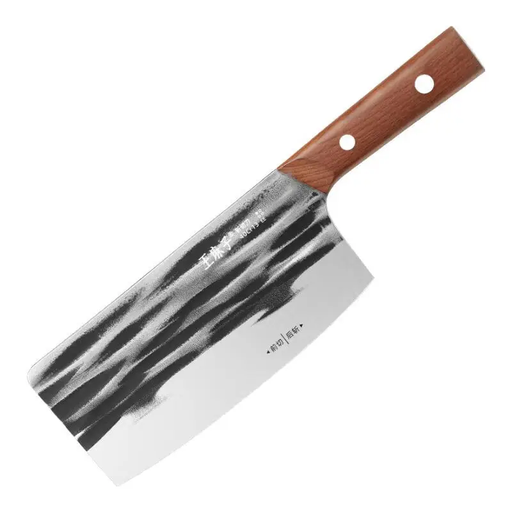
Why this product suits this profile: This model is described as a household knife for everyday cutting and chopping tasks, making it suitable for shoppers looking for a single kitchen knife as the basis of their collection.
The product description specifies stainless steel and intended household use, rather than bundling several specialist knives into one set.
Single household knife; stainless steel blade according to the product information; designed for cutting and chopping.
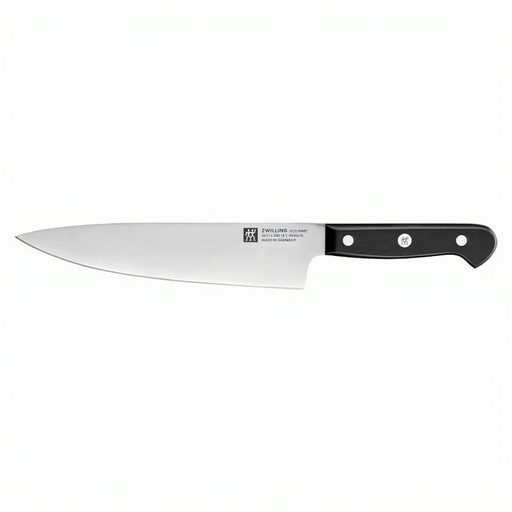
Why this product suits this profile: The 20 cm blade is designed for slicing, dicing, rocking and chopping. The triple-riveted plastic handle and the stated balance make it suitable for regular preparation tasks.
The specifications state the blade length, type of steel, cutting angle and handle construction. This makes it easier to assess the knife objectively than relying on the word “professional” alone.
20 cm blade made from specially alloyed steel; FRIODUR ice hardening according to the manufacturer; plastic handle with three rivets.
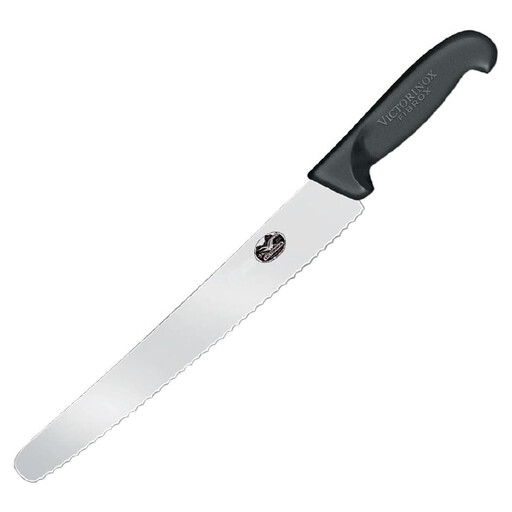
Why this product suits this profile: The 26 cm serrated blade is designed for bread, cakes and pastries. The non-slip handle supports controlled handling during longer cuts.
The serrated edge is clearly suited to a specific use. This means you do not have to use a smooth-edged chef’s knife on hard bread crusts.
26 cm serrated edge; ergonomic, non-slip plastic handle; specified for bread, cakes and pastries.

Why this product suits this profile: The broad blade, measuring 18.5 cm in length and 8 cm in depth, is designed for vertical cutting, dicing and lifting chopped ingredients.
The product data defines the blade shape and intended use. This reduces the risk of using a cleaver-style knife for bones or frozen food.
Broad 8 cm blade; seamlessly riveted plastic handle according to the product description; net weight 268 g.
We have put together a complete, regularly updated list of products that fully meet these strict selection criteria and the safety regulations applicable in the EU.
For many households, a chef’s knife between 18 and 22 cm is a sensible starting point. You can add a small utility knife for shorter tasks and a bread knife for baked goods. If you often prepare vegetables, you could choose a Santoku knife instead of a traditional chef’s knife.
This depends on the steel, grind, cutting surface, use and care. Hard surfaces, twisting the knife sideways and cutting bones or frozen food can damage the edge. Regular, appropriate care and occasional sharpening help maintain consistent cutting performance.
A kitchen knife set can offer good value if all the knives included are used regularly. Buying individual knives, however, avoids unused pieces and allows you to choose precisely according to blade shape and length. So do not compare only the price per item; also consider the material specifications, storage and maintenance required.