
Lieferung heute & morgen

Qualitätsgarantie

Willkommens-Angebote freischalten: KOSTENLOSE Lieferung | Bis zu 80 % RABATT | Kostenlose 30-Tage-JoyPlus-Testphase
App herunterladen
A kitchen knife should cut cleanly, feel secure in your hand and be suited to the food you’re preparing. Yet many buyers choose a model that looks good in the adverts but doesn’t deliver in everyday use. Often, the problem isn’t the brand but the choice of blade shape, material or care requirements.
A finely sharpened blade isn’t automatically practical in the long term. Blade steel, edge geometry, blade thickness and intended use all play a part. A small paring knife, for example, is ideal for fruit and vegetables, but not for cutting through hard bones. A cleaver, on the other hand, may be too heavy and broad for delicate garnishing.
A serrated blade is no universal replacement for a straight-edged knife, either. It’s particularly well suited to foods with a firm outer skin and soft centre, such as bread and tomatoes, as well as certain types of sausage.
A dishwasher-safe kitchen knife is convenient to clean. However, frequent dishwasher cycles can put extra strain on the handle or cutting edge due to heat, detergents and contact with other cutlery. For high-quality or particularly finely sharpened blades, hand-washing with mild washing-up liquid is usually gentler.
So check the manufacturer’s information carefully. The ZWILLING Twin Grip paring knife, for example, is described as unsuitable for the dishwasher, while several Victorinox and WMF models are listed as dishwasher-safe.
A long blade isn’t automatically more versatile. For small kitchens, compact chopping boards or occasional tasks, a vegetable knife, paring knife or utility knife with a blade measuring 8 to 11 cm can be more practical. A chef’s or carving knife measuring 20 to 25 cm, on the other hand, is useful for portioning larger foods, but needs more space and careful handling.
Choose a blade shape to suit the food you’ll be preparing:
A kitchen knife set can be a good choice if you need several types of knife. If you already own a good chef’s knife, buying a complementary paring or bread knife is often more economical than choosing a large set.
Short blades measuring around 8 to 11 cm are easy to control for precise tasks. The Victorinox Swiss Classic Serrated Paring Knife, for example, has a 10-cm blade and weighs 25 g according to the product details. A longer carving knife, such as the Victorinox Fibrox Carving Knife with its 22-cm blade, is better suited to larger foods and cutting even slices.
Weight affects how a knife handles: lighter models are less tiring for small tasks, while heavier cleavers use their own weight to do the work. So consider not only blade length, but also the handle, balance and how long you’ll be using the knife.
Stainless steel kitchen knives are corrosion-resistant and easy to use in everyday cooking. Even so, terms such as “Damascus” or “hardened steel” shouldn’t be judged in isolation. Specific details about the blade material, edge, hardness, handle material and cleaning requirements matter more.
To help your knife last longer:
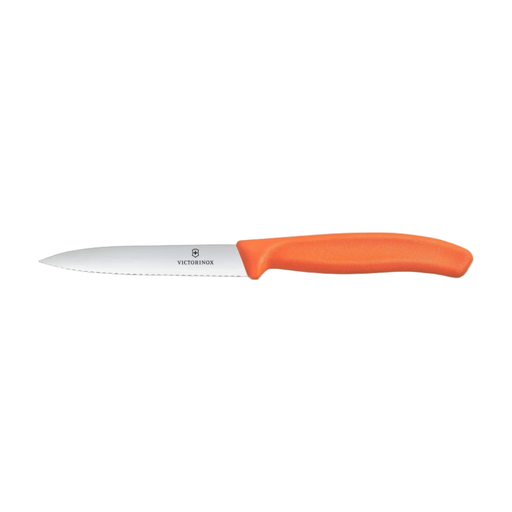
Why this product suits you: This lightweight vegetable knife has a 10-cm serrated blade and is ideal for vegetables, fruit and smaller everyday cutting tasks.
The blade length, weight of 25 g and rust-resistant stainless steel are all clearly specified. This makes it easier to judge what the knife is suited to than relying on general marketing claims.
10-cm serrated blade, ergonomic plastic handle and listed as dishwasher-safe according to the product details.
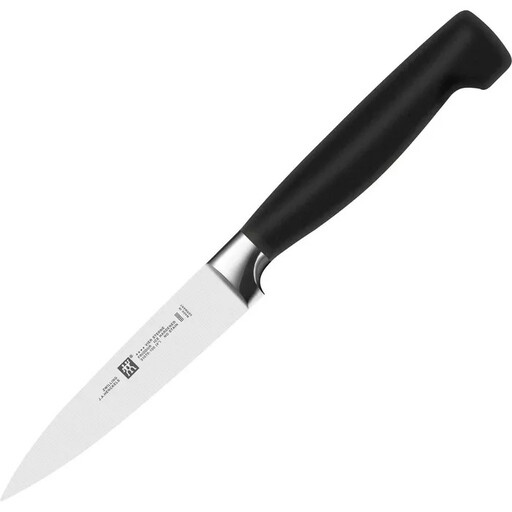
Why this product suits you: This model has a compact blade and an ergonomic, seamless plastic handle, making it ideal for precise peeling, garnishing and cutting fruit and vegetables.
The product details specify FRIODUR-hardened stainless steel, a 10-cm blade and a recommendation to hand-wash. This means the care requirements aren’t obscured by the general claim that it’s “easy-care”.
SIGMAFORGE construction, FRIODUR blade and ergonomic handle; listed as dishwasher-safe in the product description, although hand-washing is recommended.
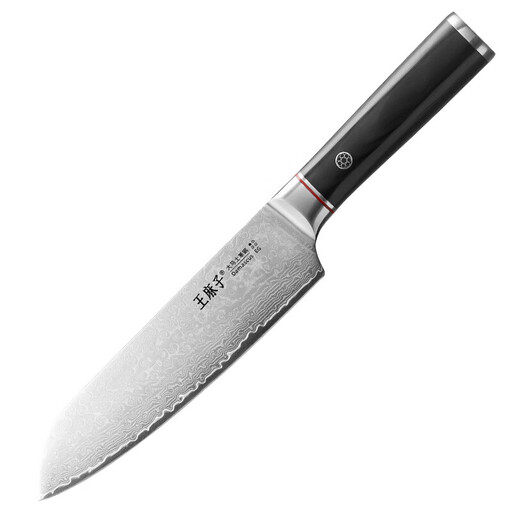
Why this product suits you: This Santoku knife is for buyers looking for a versatile kitchen knife for cutting meat and vegetables, with a distinctive-looking blade.
Choose it for its knife type and intended use, rather than relying on the word “Damascus” alone. It isn’t automatically suitable for bones, frozen food or levering.
Multi-purpose Santoku knife for meat and vegetables; check the manufacturer’s details and care instructions in the product information before buying.
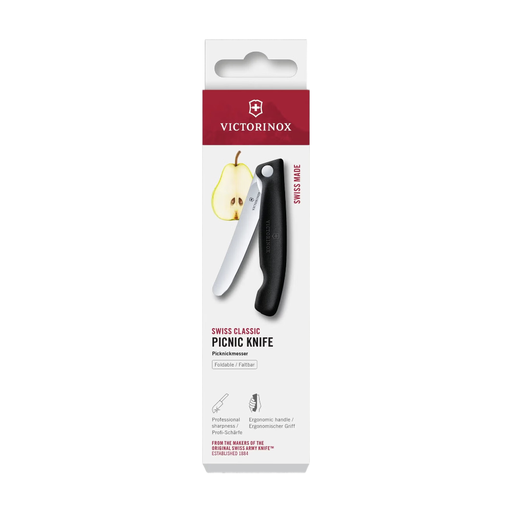
Why this product suits you: This compact folding knife is designed for picnics, camping, hiking and days out when you need to cut fruit, vegetables, cheese or snacks.
The straight 11-cm blade and folding design make it clear that this is a portable picnic knife, not a replacement for a large chef’s knife or cleaver.
Folding design, stainless steel blade and compact storage; follow the applicable regulations on carrying knives when transporting it.
We’ve put together a complete, regularly updated list of products that meet these strict selection criteria and fully comply with the safety regulations in force in the EU.
For many households, a combination of a medium-sized chef’s or Santoku knife, a small vegetable knife and a bread knife is enough. If you often portion meat, you could add a longer carving knife. Choose according to the way you actually cook, rather than the number of knives in a set.
Using suitable chopping boards, hand-washing and drying your knife straight away all help reduce unnecessary wear. A honing steel realigns the cutting edge, but it doesn’t replace a proper resharpening for every knife. Don’t use just any standard sharpener on serrated blades.
A set is worth it if you regularly use several types of knife and the blades included suit the tasks you have in mind. For smaller households, buying individual knives may make more sense. Before ordering, check the blade lengths, handle material, dishwasher suitability and storage options.