
Lieferung heute & morgen

Qualitätsgarantie

Willkommens-Angebote freischalten: KOSTENLOSE Lieferung | Bis zu 80 % RABATT | Kostenlose 30-Tage-JoyPlus-Testphase
App herunterladen
A kitchen knife should suit your hand, your worktop and the tasks you plan to use it for. Many disappointing purchases are not down to the price being too low, but to unclear information about the blade shape, handle, cleaning and storage. If you focus only on an especially sharp blade or a large kitchen knife set, you may overlook details that matter in everyday use.
A large knife is no substitute for a vegetable knife, paring knife or bread knife. For tomatoes, soft fruit and bread, a serrated blade is often more suitable than a straight edge. A Santoku knife, on the other hand, is good for slicing, dicing and chopping a wide range of ingredients, while a small paring knife is useful for precise tasks such as peeling, trimming and garnishing.
The label ‘dishwasher-safe’ does not automatically mean that the blade will retain its original performance over time. Knocks in the cutlery basket, harsh detergents and high temperatures can put extra strain on the blade and handle. For many kitchen knives, hand-washing with a soft cloth and drying straight afterwards is gentler on the materials.
A knife can look the right size on paper and still feel uncomfortable in your hand. A slippery handle, uneven weight distribution or an overly heavy blade can make repeated cutting tasks more difficult. For families and home cooks, an easy-to-control, ergonomic handle is often more important than eye-catching looks.
The blade length should suit the task and the way you like to handle a knife:
A general-purpose knife can handle several tasks, but it will not necessarily replace a long carving knife or a dedicated bread knife.
When choosing a blade, look for details on the rust-resistant stainless steel, the edge and the construction where the blade meets the handle. ‘Rust-resistant’ does not mean that no care is needed. Wash off acids, salt and moisture soon after use.
Names such as FRIODUR and SIGMAFORGE refer to specific technologies or construction methods used by the brand. When buying a Zwilling knife, you should also check the blade length, handle material and care instructions. For a Victorinox kitchen knife, details such as rust-resistant stainless steel, a polypropylene handle, country of origin and a serrated edge are more useful than general marketing claims. For a WMF knife, documented product features include hardened stainless steel, a double-serrated edge and dishwasher suitability.
Sharp blades should never be left loose in a kitchen drawer. A knife block, blade guard or suitable magnetic strip is a good option, provided it is installed securely. Use knives on a stable wooden or plastic chopping board. Glass, stone and metal can damage the blade.
In Germany, specific legal requirements apply to carrying certain knives in public. Kitchen knives are intended for use at home; transport them safely and keep them out of children’s reach. A Japanese cleaver or large carving knife is not suitable for children.
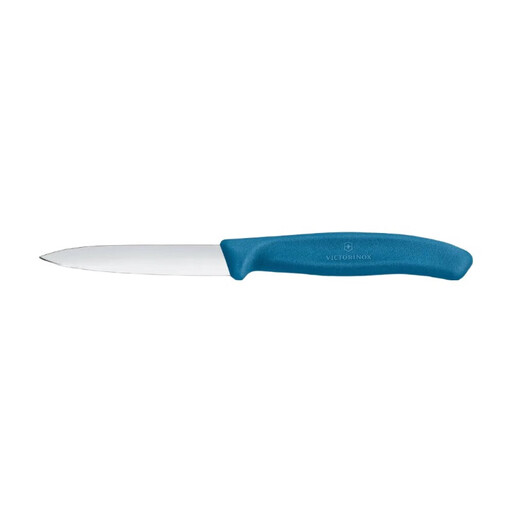
Why this product suits this profile: This compact vegetable knife is designed for everyday slicing, peeling and precision tasks, and takes up little storage space.
The 8 cm blade is clearly intended for smaller tasks, rather than being expected to replace an unsuitable all-purpose knife. The product details specify a straight blade and an ergonomic polypropylene handle.
Rust-resistant stainless steel blade, lightweight design and, according to the product details, dishwasher suitability. Hand-washing is recommended to protect the blade.
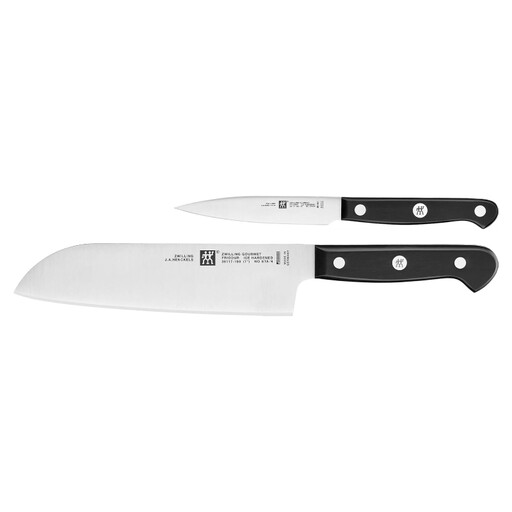
Why this product suits this profile: This combination covers both heavier and finer tasks, and is designed for regular food preparation involving vegetables, meat, poultry and fish.
Instead of an overloaded kitchen knife set, this one contains two clearly different blades: an 18 cm Santoku knife and a 10 cm paring and garnishing knife.
According to the product description, the blades are made in Solingen, forged from special stainless steel and ice-hardened using FRIODUR. The plastic handles help ensure a secure grip.
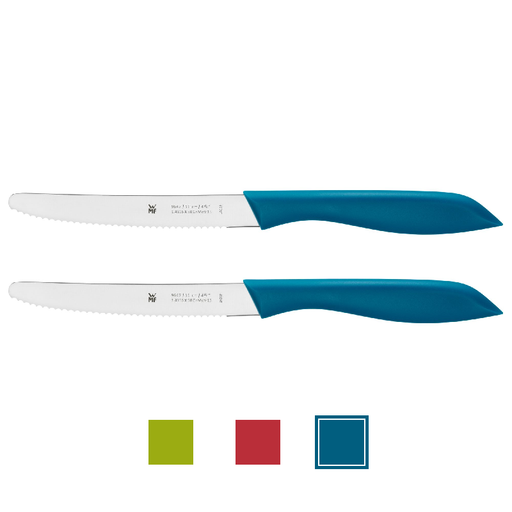
Why this product suits this profile: These two serrated knives are designed for everyday use with bread, cheese, cold meats, fruit, tomatoes and avocado.
The double-serrated edge is designed for soft foods with a firm outer surface. This makes its intended use clearer than that of a generic straight-edged all-purpose knife.
11 cm hardened stainless steel blades, ergonomic handles and, according to the product description, dishwasher suitability. Do not use on bones or frozen foods.
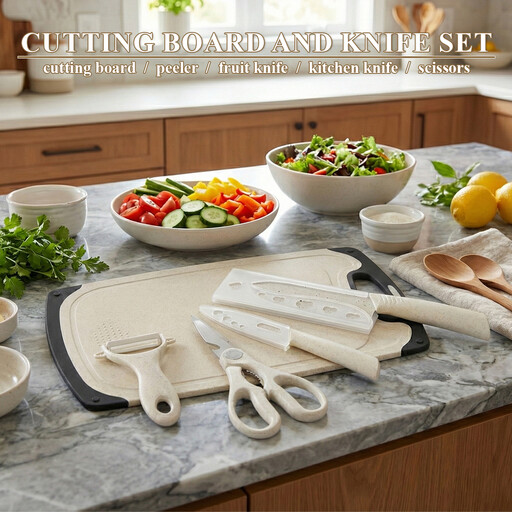
Why this product suits this profile: This set is designed for preparing small portions, soft foods and bite-sized pieces for toddlers.
Blade covers and blunt safety scissors allow the items to be stored separately. However, the set is no substitute for supervision: sharp items must be kept out of children’s reach.
The set includes a chopping board, small knife, fruit knife, safety scissors and Y-peeler. According to the product description, the board and accessories are made from wheat straw fibre and food-grade PP.
We’ve put together a complete, regularly updated list of products that meet these strict selection criteria and fully comply with the safety regulations in force in the EU.
The lifespan of a kitchen knife depends on its materials, how it is used and how it is cared for. Use a suitable chopping board, do not use blades on bones or frozen foods unless they are designed for the task, and never leave knives loose in the sink. After washing, dry the blade and handle thoroughly.
If the knife is no longer cutting as well, a suitable knife sharpener or professional sharpening service may help. Not every standard sharpener is suitable for serrated blades. Before buying, check whether replacement or care solutions are available for the particular blade shape.
For most households, a small vegetable or paring knife, a longer carving or Santoku knife, and a serrated knife for bread and tomatoes are enough to start with. A kitchen knife set is worth considering if the blades included are genuinely suited to the tasks you regularly do.
Some models are described as dishwasher-safe. Even so, hand-washing and drying straight away are often recommended to care for the materials as gently as possible. Always follow the manufacturer’s instructions and avoid letting the blade knock against hard crockery.
When adults are preparing food, small kitchen knives, a paring knife and a sturdy peeler can be useful. Safe storage, non-slip work surfaces and constant supervision are especially important when preparing baby food. Knives and scissors should always be kept out of children’s reach; products with ‘safety’ accessories are no substitute for supervision.