
Lieferung heute & morgen

Qualitätsgarantie

Willkommens-Angebote freischalten: KOSTENLOSE Lieferung | Bis zu 80 % RABATT | Kostenlose 30-Tage-JoyPlus-Testphase
App herunterladen
A kitchen knife should cut precisely, feel safe in your hand and suit your everyday routine. However, eye-catching product claims do not always lead to the right choice. Specific details such as blade length, steel type, edge grind, handle design and care instructions are what really matter.
A large cleaver can be useful when cutting through firm ingredients, but may feel unwieldy when preparing smaller vegetables. For many households, a chef’s knife with a blade length of around 15 to 22 cm is better suited to everyday cutting tasks. The right size depends on your hand size, chopping board and working style.
A sharp blade is pleasant to use at first, but everyday performance also depends on the material, edge geometry and care. Stainless steel is easy to maintain and resistant to corrosion. Carbon steel can offer high hardness and good edge retention, but usually requires more attention and should be thoroughly dried after use.
For some knives, cleaning in the dishwasher is permitted according to the product information. However, with knives featuring a wooden handle or a delicate blade surface, heat, moisture and contact with other cutlery can put stress on the material and edge. If the manufacturer recommends hand washing, you should follow this instruction. Storing a knife loose in the cutlery drawer also increases the risk of injury and can damage the blade.
The knife shape should suit the task:
With stainless steel, corrosion resistance, sufficient stability and the specified care instructions are key. For coated blades, check whether the coating is described as non-stick or as an aid to cleaning, and whether abrasive cleaning products should be avoided.
A kitchen knife should be used on a wooden or plastic chopping board. Stone, glass or ceramic surfaces can blunt the edge more quickly. Regular honing with a suitable honing steel, whetstone or purpose-designed sharpener helps maintain usability. The sharpening angle depends on the individual blade and should match the manufacturer’s specifications.
An ergonomic handle should sit securely in your hand when it is dry and free from grease. Non-slip materials can improve control. With a heavy cleaver, a well-balanced relationship between blade and handle is important, while with a meat knife, controlled and even cutting movements are the priority. For longer periods of use in professional kitchens, catering or at home, a design and weight that help minimise fatigue can be particularly useful.

Why this product suits this profile: The 15 cm blade is designed for everyday cutting tasks. A soft-touch handle and blade guard support comfortable handling and safe storage.
The product details specify stainless steel, a titanium-reinforced non-stick coating and a blade guard, rather than making sweeping performance claims.
15 cm blade, ergonomic soft-touch handle and blade guard; the Fresh Kitchen range includes other knife shapes.
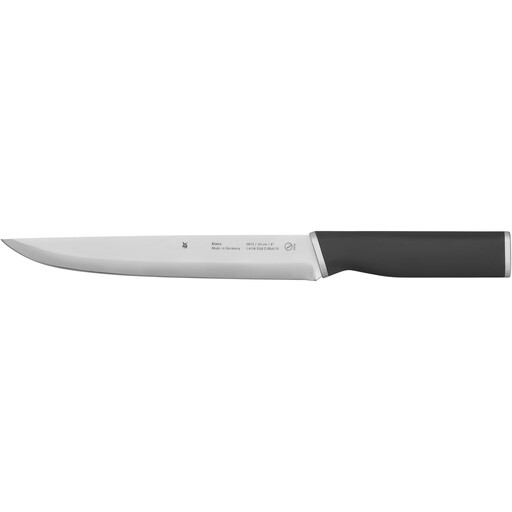
Why this product suits this profile: This carving knife is designed for cooked, roasted and raw meat. The 20 cm blade and ergonomic handle are well suited to controlled cuts.
The details specify specially hardened, corrosion-resistant blade steel and hand washing as the recommended care method.
20 cm blade, specified hardness of 55–58 HRC and ergonomic handle design focused on balance.
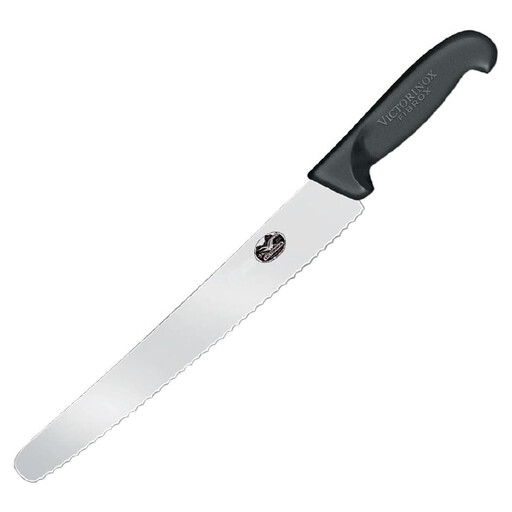
Why this product suits this profile: The 26 cm serrated blade is designed for bread, cake and baked goods. The non-slip handle supports longer cutting movements.
The serrated edge is clearly specified for baked goods and is not marketed as a universal blade for hard materials.
26 cm serrated edge, stainless-steel blade, plastic handle and dishwasher suitability according to the product information.

Why this product suits this profile: The broad blade, measuring 18.5 cm in length and 8 cm in depth, is suitable for slicing, chopping and transferring prepared ingredients.
The product description clearly distinguishes the broad cleaver geometry from a narrow meat knife and specifies a seamlessly riveted plastic handle.
Specialist blade steel, product weight of 268 g and a broad blade surface for cutting and transferring ingredients.
We have put together a complete, regularly updated list of products that fully meet these strict selection criteria and the safety regulations applicable in the EU.
For a longer service life, kitchen knives should be cleaned and dried immediately after cutting. Acidic foods such as citrus fruit or tomatoes should not be left on the blade for extended periods. Knives should be stored in a knife block, drawer insert, magnetic strip or protective sheath.
When using a knife:
For many households, a chef’s knife or Santoku knife, a paring knife and a bread knife provide a practical foundation. If you often portion meat, add a meat knife or carving knife. A kitchen knife set can be useful when you need several different shapes; even so, each blade should be checked for its length, material and care requirements.
This depends on how often it is used, the chopping board, the blade steel and your cutting technique. If the knife is used regularly and no longer glides cleanly through food, it may need sharpening. Depending on the type, a honing steel realigns the edge, while a whetstone or suitable sharpening system removes material. The manufacturer’s recommendations should be taken into account.
Not every stainless-steel kitchen knife is designed for dishwasher use. The blade coating, handle material, heat and cleaning products can affect its service life. The product information is the deciding factor. If in doubt, gentle hand washing with warm water followed by drying is the safer care option.