
Lieferung heute & morgen

Qualitätsgarantie

Willkommens-Angebote freischalten: KOSTENLOSE Lieferung | Bis zu 80 % RABATT | Kostenlose 30-Tage-JoyPlus-Testphase
App herunterladen
Whether a chef’s knife, paring knife or folding knife for a picnic: the selection of kitchen knives is extensive, and the differences often come down to the details. A polished blade or well-known brand name alone says little about whether a knife is suited to your specific cutting tasks. For home cooks, professional kitchens and outdoor enthusiasts, the blade shape, handle, care requirements and safe transport are particularly important.
A 20 to 22 cm chef’s knife is well suited to larger ingredients, herbs and a wide range of cutting movements on the board. However, this length can be cumbersome in small kitchens, when preparing delicate garnishes or peeling. A paring knife with an 8 to 11 cm blade offers greater control when working with smaller ingredients.
Some kitchen knives are described as dishwasher-safe in their product specifications. Even so, heat, detergents and contact with other cutlery can put more strain on the edge and handle than hand washing. For knives with an explicit hand-wash recommendation, clean them with warm water immediately after use. Then dry the blade thoroughly.
A serrated edge performs well on bread, tomatoes, pizza crusts and sausages. For clean rocking motions and precise dicing, however, a straight edge is more practical. A steak knife or pizza knife therefore cannot replace a chef’s knife. If you want one knife for a wide range of tasks, choose a well-balanced chef’s knife or utility knife with a suitable blade length.
Stainless steel is easy to care for in everyday kitchen use and resistant to corrosion. However, “stainless” does not mean that a knife requires no maintenance. Acidic foods such as tomatoes and citrus fruits should not remain on the blade for extended periods. Thorough drying after cleaning is recommended.
Product specifications may refer to different manufacturing processes. The ZWILLING Chef’s Knife TW Pollux and the ZWILLING Gourmet Chef’s Knife, for example, are described as featuring FRIODUR ice-hardened special steel. The WMF KINEO is specified as using specially hardened steel with a stated hardness of 55–58 HRC. These details are technical product characteristics, but they do not alone demonstrate whether a knife is personally suitable for you.
For versatile tasks in a private household, 15 to 20 cm is often a practical range. A 20 cm chef’s knife provides sufficient surface area for cutting vegetables, meat and fish. A 22 or 25 cm knife can be useful when portioning larger ingredients, but it requires more space and a confident cutting technique.
For smaller ingredients, paring knives and vegetable knives with an 8 to 11 cm blade are a good choice. A straight edge supports precise cuts, while a serrated edge is useful for soft foods with firm skins or crusts.
An ergonomic handle should sit securely in the hand and remain stable even during longer cutting sessions. Plastic and Fibrox handles are generally easy to maintain. The Victorinox Fibrox Chef’s Knife is specified with a slip-resistant Fibrox synthetic handle. ZWILLING models such as the Pollux and Gourmet Chef’s Knife feature classic plastic handles with a three-rivet design.
Kitchen knives should not be left loose in a drawer. Suitable options include a knife block, magnetic strip, drawer insert or blade guard. Glass, stone and ceramic cutting boards can blunt an edge more quickly; wood or suitable plastic is generally gentler.
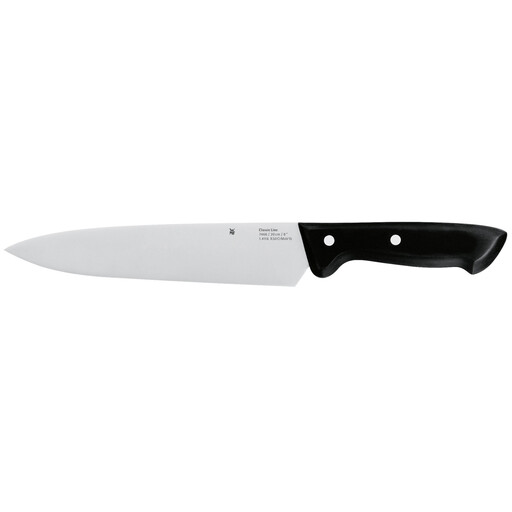
Why it suits this profile: The 20 cm blade covers typical tasks such as slicing, dicing and chopping. This model is suitable for households looking for a single chef’s knife for everyday use.
The straight edge is more versatile than a serrated edge for controlled cuts. The product specifications recommend hand washing, clearly addressing the care requirements.
Stainless steel, 20 cm blade, plastic handle and straight edge. According to the product specifications, it is not dishwasher-safe.
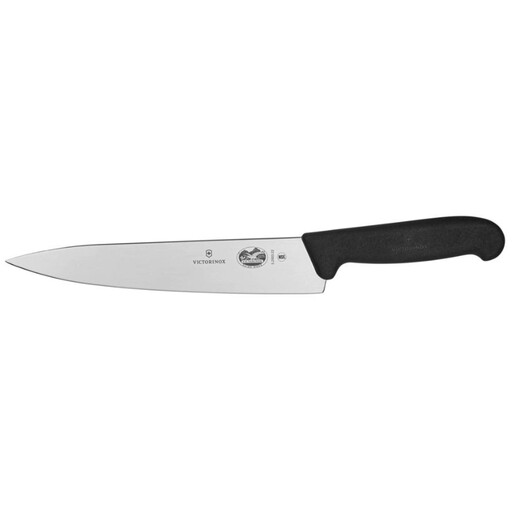
Why it suits this profile: The long, straight blade is designed for frequent preparation of meat, fish, fruit and vegetables. The Fibrox handle is described as slip-resistant and ergonomic.
The blade length is clearly specified and not unnecessarily oversized for smaller tasks. Anyone who regularly portions larger ingredients can make targeted use of the 22 cm length.
Stainless steel blade, 22 cm length, straight edge and Fibrox synthetic handle. The product page states that it is dishwasher-safe.
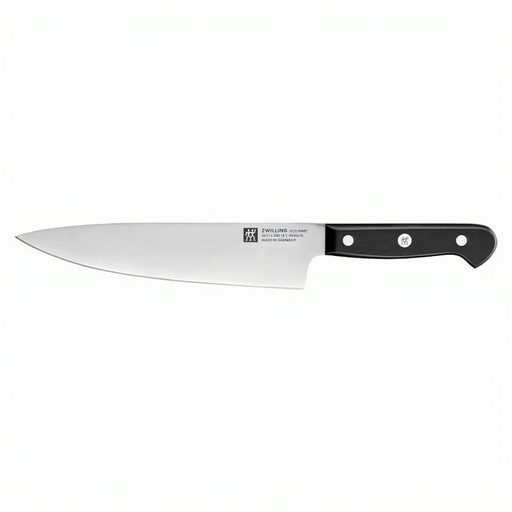
Why it suits this profile: The 20 cm blade and classic three-rivet design are aimed at users looking for a chef’s knife for recurring slicing, dicing and chopping tasks.
The specified V-edge with an overall angle of approximately 30° provides a clear technical reference point. Hand washing is recommended despite the stated dishwasher compatibility.
FRIODUR ice-hardened special steel, straight edge, 20 cm blade and ergonomic plastic handle with a three-rivet design.
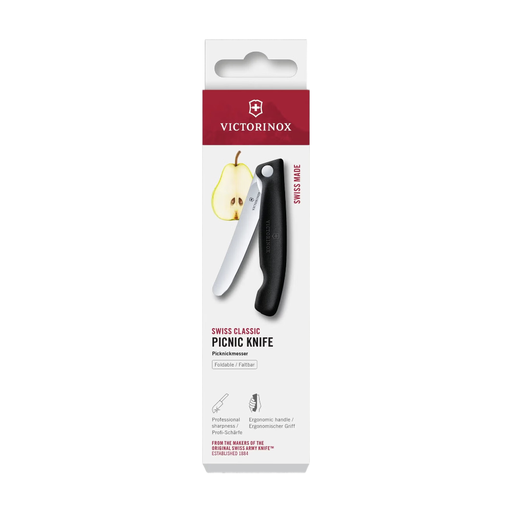
Why it suits this profile: This folding knife is designed for fruit, vegetables, cheese and snacks on the go. Weighing around 42 g, it is well suited to a backpack, picnic basket or camping kit.
The folding mechanism reduces the risk of an exposed blade during transport. In Germany, carrying knives in public spaces is subject to specific regulations; check the applicable requirements before travelling.
11 cm stainless steel blade, straight edge, folding design, polypropylene handle and dishwasher-safe construction according to the product specifications.
A knife set can be a sensible choice when you need to cover several cutting tasks. According to the product specifications, the Victorinox Swiss Classic 6-piece set combines a vegetable peeler with vegetable, tomato and table knives. For small kitchens, a two-piece vegetable knife set with one straight and one serrated edge is a space-saving alternative.
Serrated knives are ideal for bread, pizza and steak. The Victorinox Swiss Classic 11 cm steak and pizza knife features a serrated blade and ergonomic polypropylene handle for these applications. A utility knife measuring 12 to 13 cm, such as the ZWILLING TWIN Grip or NOW S, occupies the space between a small paring knife and a large chef’s knife.
The full selection lets you compare blade length, edge type, handle material and intended use side by side. Before buying, also check the care instructions and the applicable German regulations governing knife transport.
To get started, a chef’s knife measuring around 18 to 20 cm, a small paring knife and a serrated knife are often sufficient. If you regularly serve bread, pizza or steak, you can add a dedicated steak knife or pizza knife.
Use a wooden or plastic cutting board, avoid glass, stone and ceramic, and clean the blade promptly after use. Knives should not be left loose in a cutlery drawer. Depending on how frequently they are used, regular sharpening with suitable equipment may be necessary.
That depends on the individual model. Some Victorinox and ZWILLING knives are described as dishwasher-safe, while the WMF Classic Line is explicitly specified for hand washing. For a longer service life, hand washing with a mild detergent followed by thorough drying is the gentler approach.