
Lieferung heute & morgen

Qualitätsgarantie

Willkommens-Angebote freischalten: KOSTENLOSE Lieferung | Bis zu 80 % RABATT | Kostenlose 30-Tage-JoyPlus-Testphase
App herunterladen
Anyone looking to buy kitchen knives is faced with a wide choice: an individual chef’s knife, a complete kitchen knife set, a kitchen knife block or a specialist model such as a Nakiri knife, bread knife or vegetable knife. However, not every prominently advertised feature is important in everyday kitchen use. The key factors when choosing are blade length, material, handle design, care requirements and the intended use.
Descriptions such as “premium steel” or “particularly sharp” do not tell you much on their own. Look for clear information about the blade material, length and care requirements. Stainless steel may be corrosion-resistant, but depending on its construction and use, it still needs thorough cleaning and drying.
A knife block can be practical if you need to cover several cutting tasks. However, buying knives that are rarely used in everyday life only increases the space and care requirements. For many households, a chef’s knife, a small vegetable knife and a bread knife are enough. Anyone who regularly prepares meat may also need a boning knife or butcher’s knife.
Even if a knife is described as dishwasher-safe, heat, detergents and contact with other cutlery can put greater strain on the blade and handle. The ZWILLING kitchen knife from the Gourmet range is listed as dishwasher-safe; nevertheless, hand washing is recommended to protect the blade and handle. Other models, such as the VierSterne set, are expressly not suitable for the dishwasher.
A 20 cm chef’s knife provides a versatile working surface for slicing, dicing and chopping. This length is suitable for many tasks, but may be less comfortable for smaller hands or cramped worktops. A shorter vegetable knife is easier to control when working with small ingredients.
A Nakiri knife has a wide, usually straight blade and is particularly suitable for vegetables and herbs. Serrated blades are useful for bread, while a cleaver is designed for robust cutting tasks. A boning knife or butcher’s knife should be sufficiently narrow and easy to control when separating tendons or cuts of meat precisely.
When choosing stainless steel knives, information about the type of steel, hardness or manufacturing process is more useful than general marketing claims. The ZWILLING Gourmet chef’s knife is described as having a FRIODUR ice-hardened special steel blade with a total cutting angle of approximately 30 degrees, or around 15 degrees per side. These technical details make comparisons easier, but do not replace checking whether the knife suits your own cutting technique.
Regardless of the model:
An ergonomic handle should sit securely in your hand and should not cause pressure points during longer preparation tasks. The material and shape are more important than a decorative surface. A knife block protects the blades from loose contact with other kitchen utensils and provides a secure place to store them. Before buying, check the block’s dimensions and the amount of space available on your worktop.
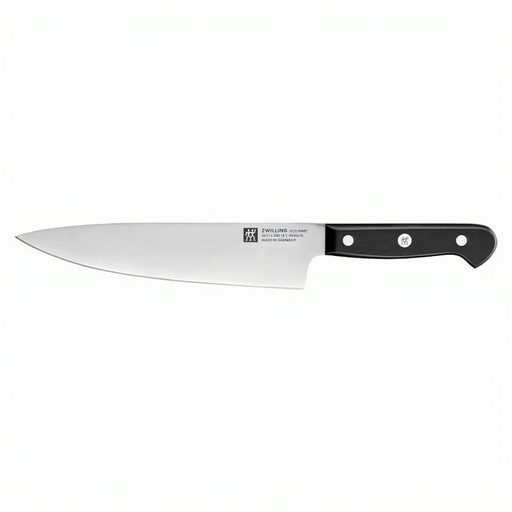
Why this product suits this profile: This individual chef’s knife covers many everyday cutting tasks without the need to buy a complete block.
The product details specify the blade length, cutting angle, handle material and FRIODUR process, rather than relying on general claims about sharpness.
20 cm blade, plastic handle with a three-rivet design and, according to the product description, suitable for the dishwasher.
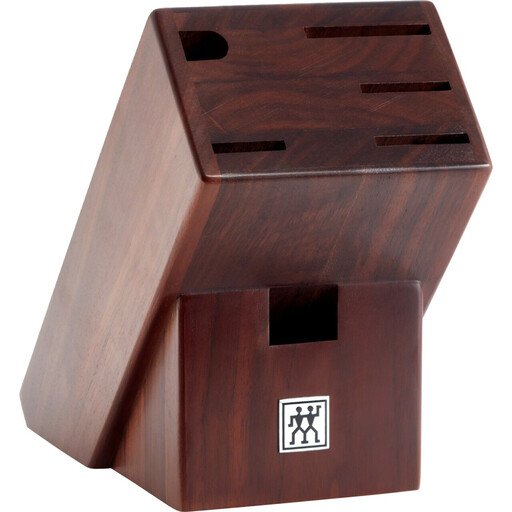
Why this product suits this profile: The block combines several kitchen knives with a honing steel and kitchen scissors for households looking to cover a range of tasks.
The included pieces and dimensions are clearly listed. This makes it easy to check before buying whether the knife types and the available space suit your kitchen.
Includes vegetable, boning or carving, chef’s and bread knives, honing steel, scissors and block; hand washing is recommended.
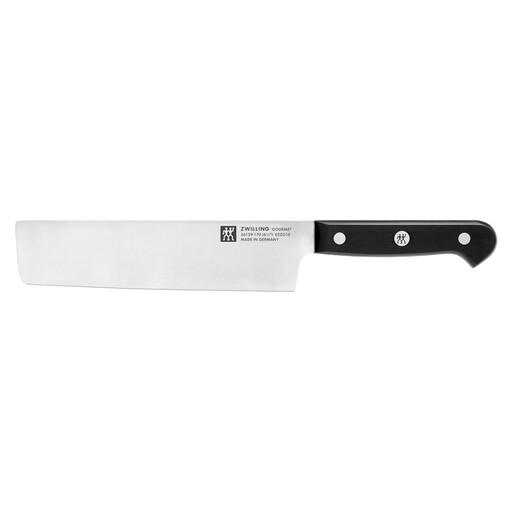
Why this product suits this profile: The wide, 17 cm blade is designed for controlled cutting of vegetables and herbs.
The knife shape is not presented as an all-purpose solution, but is described as being suited to straight cuts through vegetables and herbs.
FRIODUR ice-hardened special steel, V-edge grind with approximately 15 degrees per side and a three-rivet plastic handle.
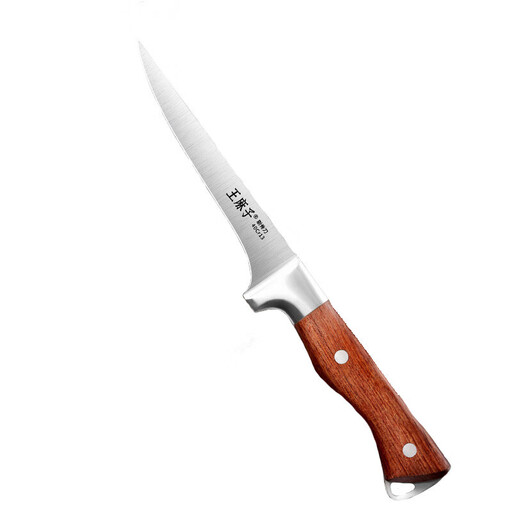
Why this product suits this profile: This model is aimed at users who work with meat, tendons and areas around bones using a knife designed for the task.
It is not categorised as a general kitchen knife for every task. Its specialist design reduces the risk of buying an unsuitable knife type.
40Cr13 blade and rosewood handle according to the product details; described as a boning and skinning knife for beef, lamb and pork.
We have put together a complete, regularly updated list of products that fully meet these strict selection criteria and the safety regulations applicable in the EU.
A WORKPRO utility knife should not be confused with a kitchen knife. Models with a folding function, belt clip, locking mechanism and SK5 replacement blades are designed for carpets, cardboard, paper or general craft work. Only kitchen knives suitable for the purpose should be used with food.
For beginners, three basic types are usually enough: a chef’s knife, a small vegetable knife and a bread knife. A kitchen knife set or knife block can add to this selection if you regularly prepare meat, fish or large quantities of vegetables.
How long the edge remains sharp depends on the chopping board, cutting technique, quantity of food, cleaning and sharpening. A honing steel can realign the edge between sharpening sessions. Do not cut on glass or ceramic, and store the knives so that the blade does not come into contact with other objects.
No. Price should not be the only deciding factor. Blade length, knife shape, handle, material details, care instructions and the actual intended use are more important. If you only occasionally chop vegetables, you may not need an extensive kitchen knife set. For frequent or specialist tasks, however, a suitable individual knife may be the better choice.