
Lieferung heute & morgen

Qualitätsgarantie

Willkommens-Angebote freischalten: KOSTENLOSE Lieferung | Bis zu 80 % RABATT | Kostenlose 30-Tage-JoyPlus-Testphase
App herunterladen
A kitchen knife should suit your workflow, hand size and the food you are preparing. Even so, many shoppers choose products whose most important features are described only vaguely in the advertising. A shiny handle, eye-catching colour or the label “all-rounder” says little about whether a knife is genuinely suitable for everyday use.
A chef’s knife can cut vegetables, chop herbs and portion meat. However, it is not automatically the right choice for bread, tomatoes or peeling small fruit. A bread knife with a serrated edge works differently from a smooth-edged vegetable knife. If you buy only one large knife, you may end up using it for tasks that put unnecessary strain on its blade.
The label dishwasher-safe means that, according to the manufacturer, a product is intended to be cleaned in a dishwasher. Frequent washing can nevertheless put more strain on the blade, cutting edge and handle than gentle hand washing. Dishwasher cleaning is generally unsuitable for knives with wooden handles in particular. Stainless steel should also be dried after washing to prevent water spots and residue.
A long blade is useful when cutting bread or large foods, but it requires sufficient space and secure control. A paring knife or small vegetable knife is often easier to control for precise tasks. A serrated edge is suitable, among other things, for hard outer surfaces and soft interiors, such as those of bread, bread rolls, tomatoes or pizza. For very fine cuts in herbs, however, a smooth cutting edge is usually more practical.
The blade length should match the intended use:
A Santoku knife typically has a broad, relatively compact blade. Models with hollow-ground or Granton Edge blades can reduce contact between the food and the blade. This is a design feature, not a general promise of performance for every application.
Stainless steel is widely used for kitchen knives because it is corrosion-resistant with normal care. The precise steel composition, heat treatment and edge geometry have a greater influence on use than the broad description “stainless steel”.
For example, a ZWILLING TWIN Grip paring knife is listed with a FRIODUR ice-hardened stainless-steel blade and a stated hardness of 55–58 HRC. This figure describes the material hardness according to the Rockwell C scale. On its own, however, it does not indicate how long a knife will remain sharp under all conditions.
The handle should sit securely in your hand and provide sufficient distance from the cutting edge. Plastic and polypropylene handles are easy to care for, and several of the products mentioned are approved for dishwasher use. Nevertheless, the cutting board, cleaning method and storage conditions remain crucial to the knife’s actual service life.
Avoid glass, stone and ceramic boards, as they can blunt cutting edges more quickly. Sturdy wooden or plastic chopping boards are more suitable. Storing knives loose in a cutlery drawer also increases the risk of cuts and damage. A knife block, magnetic strip, drawer insert or blade guard are suitable alternatives.
The selection below categorises specific kitchen knives according to their intended use and verifiable product features.
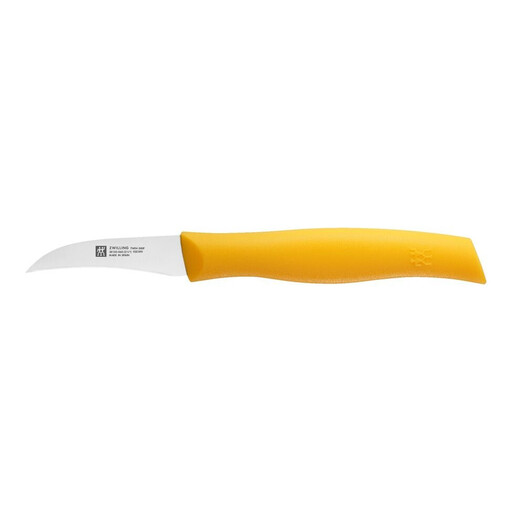
Why this product suits the profile: The compact blade is designed for peeling and trimming fruit and vegetables. The plastic handle and low weight of 20 g make it suitable for everyday preparation where space is limited.
The clearly stated blade length prevents a small precision knife from being confused with a large chef’s knife. According to the product information, the FRIODUR ice-hardened stainless-steel blade is corrosion-resistant.
6 cm blade, ergonomic plastic handle and stated hardness range of 55–58 HRC.
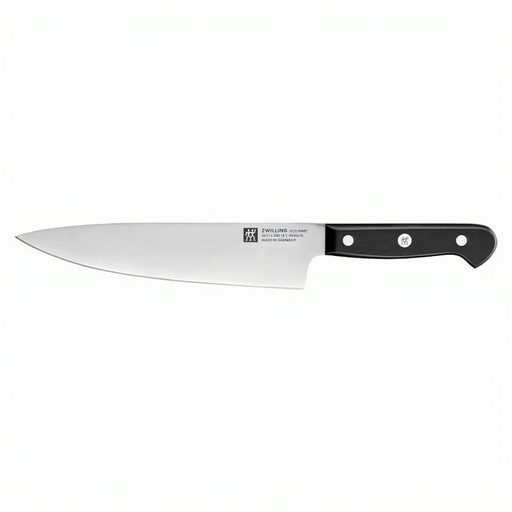
Why this product suits the profile: This chef’s knife is designed for slicing, dicing, chopping and mincing. The 20 cm blade supports larger preparation tasks in the home as well as regular use in catering.
The smooth cutting edge is clearly specified for general kitchen preparation. The manufacturer states that it has FRIODUR ice-hardened special steel, a cutting angle of approximately 30° and a three-rivet plastic handle.
20 cm blade made from special alloy steel, ergonomic handle and dishwasher-safe according to the product information.
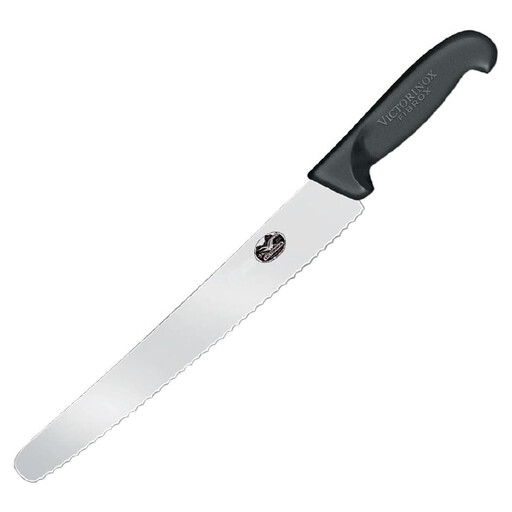
Why this product suits the profile: The long serrated blade is designed for bread, cakes and pastries. This is just as useful for households that bake regularly as it is for breakfast services or catering.
The serrated edge is clearly designed for hard crusts and soft interiors. The stated length prevents a short utility knife from being used for large loaves.
26 cm stainless-steel blade, ergonomic plastic handle and stated dishwasher suitability.
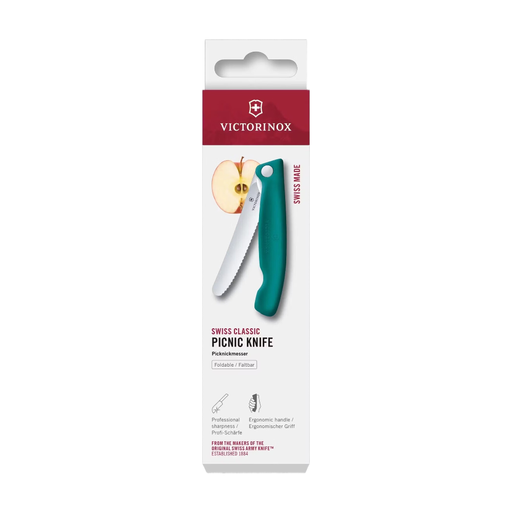
Why this product suits the profile: This compact knife has a folding serrated blade and is designed for fruit, vegetables and snacks on the go. Its low weight of 42 g makes it easy to take anywhere.
The folding design addresses storage during transport. Before carrying it in public, you must observe the knife regulations applicable in Germany.
11 cm serrated edge, folding design, polypropylene handle and dishwasher-safe according to the product information.
We have put together a complete, regularly updated list of products that fully meet these strict selection criteria and the safety regulations applicable in the EU.
Clean kitchen knives as soon as possible after use, particularly after cutting acidic foods. A soft cloth or mild washing-up liquid is sufficient for everyday cleaning. Abrasive cleaners can damage surfaces and cutting edges.
For a Santoku knife such as the Victorinox Fibrox Series Santoku Knife with a 17 cm blade, dishwasher use is possible according to the product information. By contrast, hand washing is recommended for the ZWILLING Professional “S” Santoku knife with a 7-inch blade. These differences should be checked before buying rather than relying on the brand alone.
For many households, a chef’s knife or Santoku knife, a small vegetable knife and a bread knife provide a practical foundation. A utility knife with a serrated edge complements this selection for tomatoes, sausage and smaller cutting tasks. The right combination depends on the foods you prepare and the amount of worktop space available.
This depends on the steel, cutting angle, use, cutting surface and care. Hard surfaces such as glass, stone or ceramic accelerate wear. The dishwasher can also put greater strain on the cutting edge when used frequently. Depending on the type of blade, a suitable knife sharpener or professional sharpening service may be worthwhile.
Some models are dishwasher-safe according to the manufacturer, including several Victorinox and ZWILLING models in the selection. Hand washing with mild detergent followed by drying is nevertheless often gentler on the materials. Before buying, check the blade, handle material and the specific care instructions for the product in question.