
Lieferung heute & morgen

Qualitätsgarantie

Willkommens-Angebote freischalten: KOSTENLOSE Lieferung | Bis zu 80 % RABATT | Kostenlose 30-Tage-JoyPlus-Testphase
App herunterladen
A kitchen knife for chopping must suit the cutting task at hand. A broad Chinese chef’s knife, for example, works well for vegetables, herbs and boneless meat. A heavy meat cleaver or bone chopper, on the other hand, is designed for tougher jobs. If you confuse these two types of knife, you often end up paying for features you don’t need in daily use – or you damage the blade by using it incorrectly.
The term “sharp kitchen knife” says very little about its durability. A thinly ground blade can cut vegetables very precisely, but that doesn’t automatically make it suitable for frozen food, bones or hard objects. With a standard chef’s knife, lateral pressure or forcefully cutting through hard materials can lead to chipping or a damaged edge.
A Chinese chef’s knife often has a wide blade, which allows you to scoop up ingredients and transfer them from the chopping board to the pot. However, this does not necessarily make it a bone chopper. What matters is the intended use, the blade geometry and the construction. Warnings such as “not suitable for bones or frozen food” should be taken seriously.
A stainless steel kitchen knife is generally less sensitive to moisture than carbon steel. But that doesn’t mean it will stay sharp forever or can be safely put in the dishwasher. Heat, detergents and contact with other cutlery can damage the blade and handle. For many models, hand washing and immediate drying are therefore recommended.
For everyday cutting tasks, many suitable models have a blade length of 18 to 20 cm. An 18 cm chef’s knife often offers good control in smaller kitchens and with shorter ingredients. A 20 cm chef’s knife provides more cutting surface and is suitable for larger pieces of vegetables or meat, but also requires more space on the chopping board.
A broad chopping knife or Chinese chef’s knife is not the same as a narrow carving knife. The wide blade supports rocking, chopping and scooping up ingredients. A carving knife with a narrower shape, by contrast, is designed more for clean cuts through meat.
A forged kitchen knife is made from a worked piece of steel and, depending on the construction, can offer a stable, well-balanced base. Details such as “FRIODUR-ice-hardened”, “SIGMAFORGE” or a hardness of 55–58 HRC are concrete product features, but they are no guarantee of a specific cutting lifespan. Actual use, the chopping board and care all influence the knife’s longevity.
With a stainless steel kitchen knife, corrosion resistance, care instructions and the exact steel designation are more important than general marketing claims. For a household that frequently cuts vegetables and meat, a rust-resistant steel is often more practical than a material that requires a lot of upkeep.
A non-slip, dry handle and a controlled balance are important selection criteria. A full tang – where the blade extends through the handle – can stabilise the construction. A finger guard or a shaped bolster can also support hand positioning.
Regardless of the design, always work on a stable cutting surface, keep your fingers away from the blade edge, and store the knife out of reach of children. Glass, stone or ceramic boards can damage the edge more quickly than suitable wooden or plastic boards.
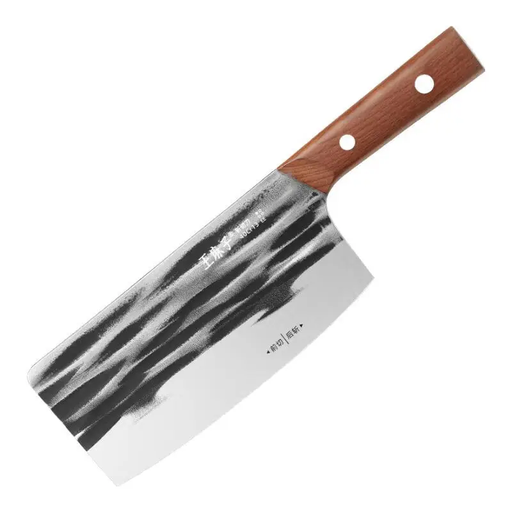
Why this product fits the profile: The stainless steel version is designed for everyday cutting and chopping tasks around the home, appealing to buyers who want a straightforward kitchen tool.
The material specification is clearer than vague advertising about “extreme” sharpness. For bones and frozen food, you should still choose a model specifically designed for that purpose.
Stainless steel blade and focus on household use; suitable for regular cutting and chopping of food.
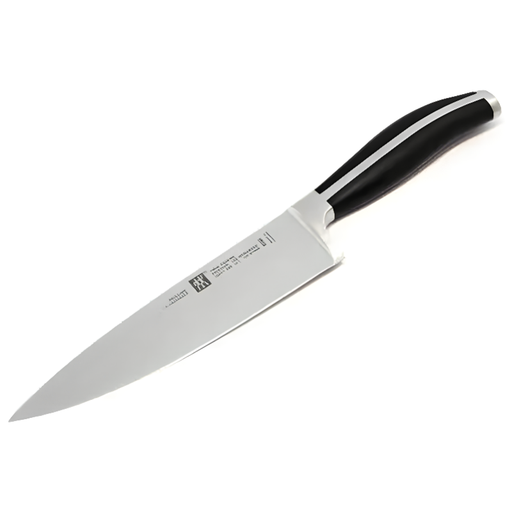
Why this product fits the profile: The 20 cm blade is made from special formula steel, SIGMAFORGE-forged and FRIODUR-ice-hardened. The seamless plastic handle and horizontal full tang appeal to buyers who value construction and clearly stated care instructions.
The product details define its intended use: the knife is not designed for bones, frozen food or hard objects. This helps avoid a typical mistaken purchase.
20 cm blade length, V-edge with 15° per side and seamless handle; ideal for herbs, vegetables, and boneless meat and poultry.
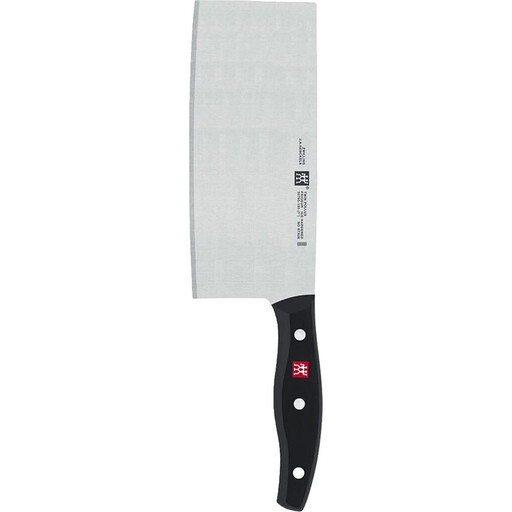
Why this product fits the profile: The broad blade is designed for slicing, dicing and chopping vegetables and meat. It can also be used to scoop up cut ingredients.
The description explicitly states its suitability for soft foods and rules out bones and frozen ingredients. The broad shape should therefore not be confused with a kitchen cleaver.
18.5 cm wide stainless steel blade, FRIODUR-ice-hardened and fitted with a triple-riveted POM handle.
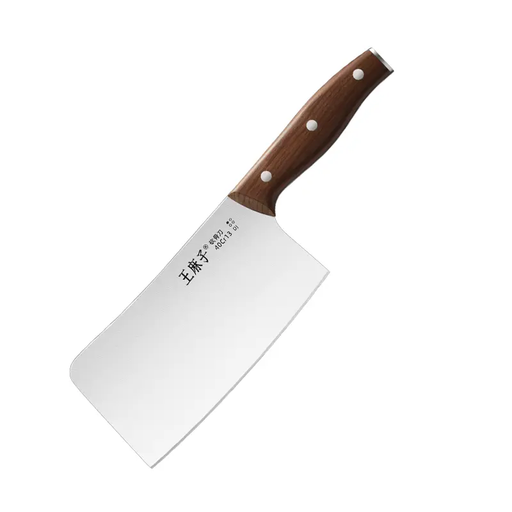
Why this product fits the profile: This robust model is aimed at users who specifically want a cleaver for thick pork ribs, meat pieces and designated bone work.
Unlike a classic chef’s knife, its intended use is explicitly for heavier cutting tasks. Nevertheless, you should check the safety instructions and specific suitability before purchasing.
Designed for heavier chopping work on meat, bones and pork ribs; the forged construction is built for robust use.
We have compiled a complete, regularly updated list of products that fully meet these strict selection criteria and the safety regulations in force in the EU.
For vegetables, herbs and boneless meat, a chef’s knife with an 18 to 20 cm blade or a Chinese chef’s knife is suitable. The broad blade of a Chinese model also makes it easier to scoop up cut ingredients. A stable chopping board and controlled cutting technique remain essential.
A standard chef’s knife should not be used for bones, frozen food or hard objects. For that, you need a specifically designated bone chopper or a robust kitchen cleaver. Always follow the manufacturer’s instructions for the particular model.
The lifespan depends on factors including the steel, hardness, cutting angle, chopping board and usage. Regular cutting on glass or ceramic, as well as incorrect cleaning methods, can dull the edge more quickly. Hand washing, immediate drying and occasional resharpening help maintain consistent performance.