
Lieferung heute & morgen

Qualitätsgarantie

Willkommens-Angebote freischalten: KOSTENLOSE Lieferung | Bis zu 80 % RABATT | Kostenlose 30-Tage-JoyPlus-Testphase
App herunterladen
Anyone looking to buy a kitchen knife will quickly find a wide range of blade shapes, materials and brands. For home cooks, barbecue enthusiasts, meat lovers, catering businesses and households, however, it is not just about a low price or eye-catching product description. What matters is whether the blade length, edge shape, handle and care requirements suit the intended use.
A 20 cm meat knife can be suitable for roasts, poultry and larger cuts. For smaller cutting tasks, however, a blade of this length may be less manoeuvrable. A 15 to 17 cm knife can be easier to control in many households. With a ham knife, on the other hand, a longer blade of 22 to 25 cm can be useful when you want to cut large, even slices.
Marketing terms such as “professional sharpness” or “long-lasting sharpness” are no substitute for technical details. Look out for:
A forged kitchen knife may be stable by design. That does not automatically mean it is suitable for every task. A cleaver is designed for powerful, straight cutting movements, while a carving knife should glide through cooked meat to produce clean slices.
The statement “dishwasher-safe” is convenient, but it is not the gentlest solution for every knife. Heat, detergents and contact with other cutlery can put greater strain on the edge and handle. For this reason, hand washing is recommended for several products, even where dishwasher use is possible. Knives should be dried immediately after washing and stored safely in a knife block, on a magnetic strip or with a blade guard.
Stainless steel is easy to care for in everyday kitchen use and resistant to corrosion. High-carbon steel can offer high hardness and good edge retention, but requires careful cleaning and drying. Hardness specifications, such as HRC, are only meaningful when considered alongside the overall construction.
A forged kitchen knife is often described as having a sturdy blade construction and a pronounced bolster. A full tang can affect the balance and stability. These features should be checked against the specific product details and are not, on their own, proof of suitability.
An ergonomic handle should sit securely in your hand and remain easy to control, even with wet hands. Plastic handles are often straightforward to clean. Wooden handles, on the other hand, require more care and should generally not be soaked or cleaned in the dishwasher.
Do not cut on glass, stone or ceramic boards, as these surfaces can blunt the blade more quickly. Wooden or suitable plastic boards are more practical for many kitchen tasks.
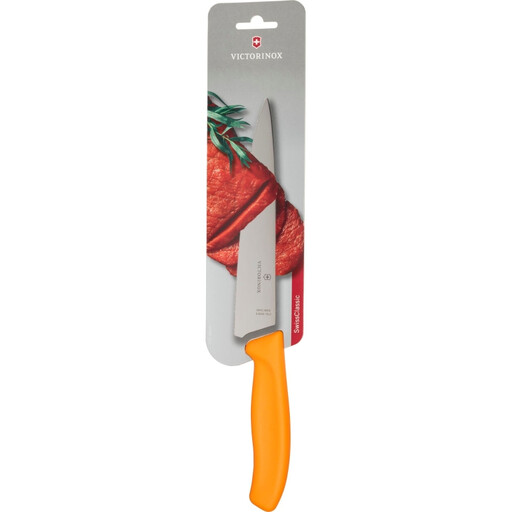
Why this product suits this profile: The 19 cm chef’s and slicing knife handles typical tasks involving meat, fruit and vegetables. Its plastic handle has an ergonomic design, and the product is described as dishwasher-safe.
The blade length and clearly described intended use help prevent buyers from choosing a heavy cleaver for everyday cutting tasks. Nevertheless, the supplier recommends hand washing to extend the product’s service life.
19 cm stainless steel blade, ergonomic plastic handle and made in Switzerland according to the product details.
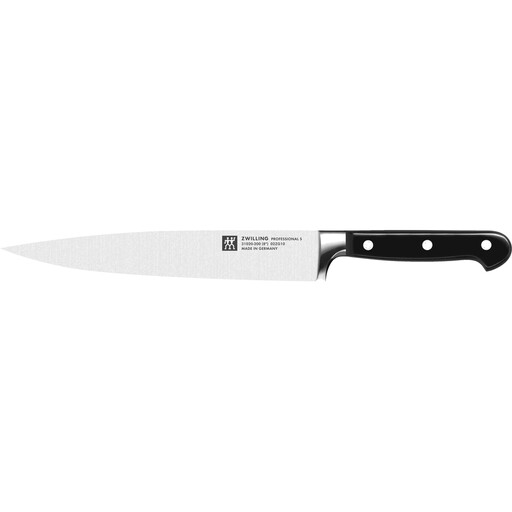
Why this product suits this profile: This meat knife is aimed at users who want to prepare raw meat, roasts, poultry and goulash with a 20 cm blade.
The product details explicitly specify hand washing and rule out use on bones, frozen foods and hard objects. This clearly defines the knife’s intended purpose.
Forged 20 cm stainless steel blade, FRIODUR ice hardening according to the manufacturer, plus finger protection and a three-rivet handle.
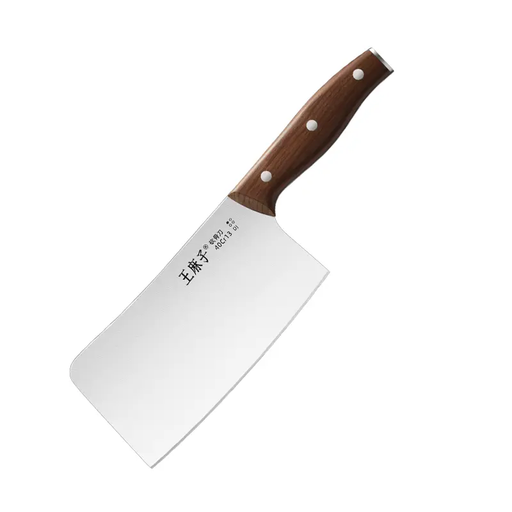
Why this product suits this profile: This cleaver is designed for heavy-duty cutting of meat and pork ribs, making it more suitable for barbecue enthusiasts, meat lovers or anyone processing larger cuts.
Its robust design makes the intended use clear. This type of cleaver is not the right choice for fine carving or decorative slices.
Forged construction, carbon steel and an ergonomic, non-slip handle according to the product description.
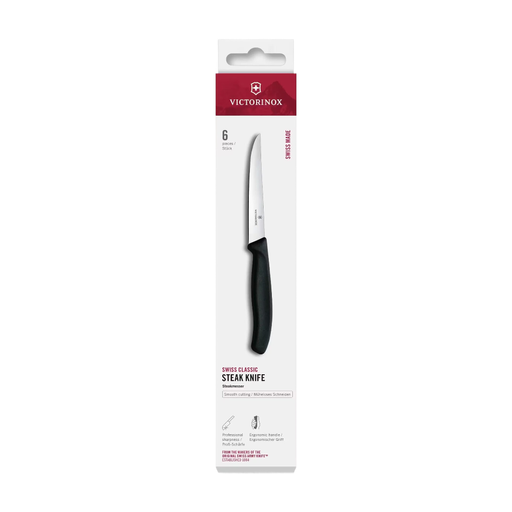
Why this product suits this profile: The set of six steak knives is suitable for households, barbecues and smaller catering operations that require several table knives.
The straight edge is clearly stated. Buyers therefore receive six matching steak knives for the table, rather than an unsuitable carving knife.
Six stainless steel blades with straight edges, ergonomic PP handles and dishwasher suitability according to the product details.
We have put together a complete, regularly updated list of products that fully meet these strict selection criteria and the safety regulations applicable in the EU.
Whether you are buying a Victorinox kitchen knife, a WMF KINEO knife or a ZWILLING kitchen knife, proper care affects its service life:
A chef’s knife with a blade length of around 17 to 20 cm is a practical starting point for many households. If you mainly cut meat, you could choose a meat knife or carving knife instead. Steak knives are a sensible separate purchase for serving.
This depends on the steel, frequency of use, cutting surface, technique and care. Hard surfaces such as glass or ceramic, as well as contact with other pieces of cutlery, can affect the edge more quickly. Regular, correct sharpening helps maintain the knife’s usability.
Some models are described as dishwasher-safe. Nevertheless, hand washing is recommended for many knives, as heat, detergents and knocks can put strain on the blade or handle. The care instructions for the specific product should always be followed.