
Lieferung heute & morgen

Qualitätsgarantie

Willkommens-Angebote freischalten: KOSTENLOSE Lieferung | Bis zu 80 % RABATT | Kostenlose 30-Tage-JoyPlus-Testphase
App herunterladen
A kitchen knife does not need to promise the greatest number of functions; it needs to suit the cutting task at hand. When buying, home cooks, passionate food enthusiasts, catering businesses and households often focus on the price or brand design. Important details such as blade length, edge type, handle material and care instructions can easily be overlooked.
Three common buying misconceptions can lead to unnecessary expense later:
The type of knife should first be based on its intended use:
A kitchen knife set can be useful if several tasks regularly arise. If you already own a chef’s knife, you may not need an extensive set, but rather an additional vegetable or steak knife.
Stainless steel is easy to care for and corrosion-resistant in everyday kitchen use. However, the precise steel alloy, blade hardness and manufacturing quality affect edge retention. Without specific information from the manufacturer, claims such as “permanently sharp” or “professional” should not be treated as measurable properties.
The edge type must suit the intended use:
A serrated knife needs to be sharpened differently from a smooth chef’s knife. This should be taken into account when considering long-term care.
For small preparation tasks, 8 to 10 cm is often sufficient. A classic chef’s knife with an 18 to 20 cm blade offers greater reach and is suitable for larger ingredients. A 22-cm carving knife can make it easier to create even slices, but requires a sufficiently large and stable cutting surface.
The balance between the blade and handle determines how the knife feels in use. Weight alone says little: a lightweight knife can be comfortable during lengthy preparation, while a heavier model may provide greater stability. Ideally, consider the handle circumference, hand size and typical working time together.
An ergonomic handle should sit securely in your hand and slip as little as possible when your hands are wet. Plastic handles are often easy to clean. Wooden handles generally require more care and should not be left in water for long periods.
The term dishwasher-safe describes possible cleaning methods, not necessarily the gentlest one. Hand-washing with mild washing-up liquid, drying immediately and storing the knife safely in a knife block, blade guard or magnetic strip can help protect the edge and handle. Glass, stone or ceramic chopping boards are unsuitable for many kitchen knives, as they put greater strain on the edge.
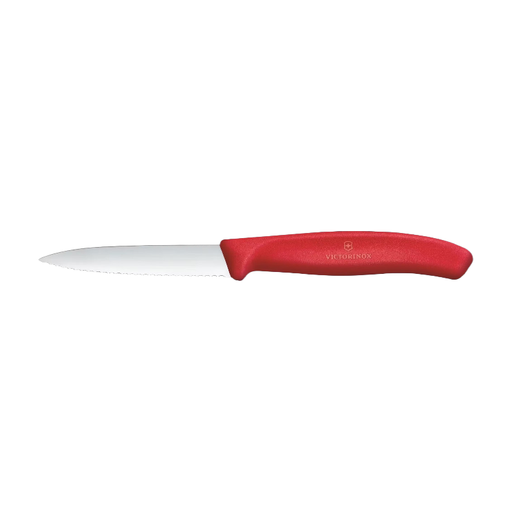
Why this product suits this profile: The 8-cm blade is compact and suitable for fruit, vegetables, peeling and small garnishing tasks. Its low weight of 20 g and PP handle are designed for everyday kitchen tasks.
The short, serrated blade is clearly designed for soft fruit and delicate foods, and is not presented as an all-purpose chef’s knife.
8-cm serrated edge, stainless steel and dishwasher-safe PP handle.
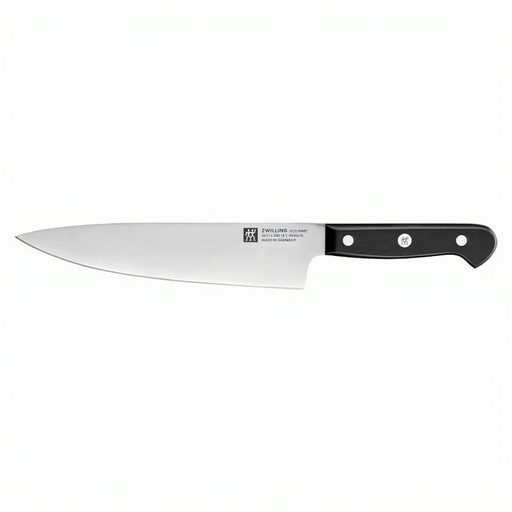
Why this product suits this profile: The smooth 20-cm blade is designed for slicing, dicing, chopping and rocking. The ergonomic plastic handle with a three-rivet design supports controlled handling.
The product details specify the blade length, smooth edge, handle construction and a cutting angle of around 30 degrees.
20-cm blade made from special steel, FRIODUR ice-hardening according to the manufacturer and made in Germany.
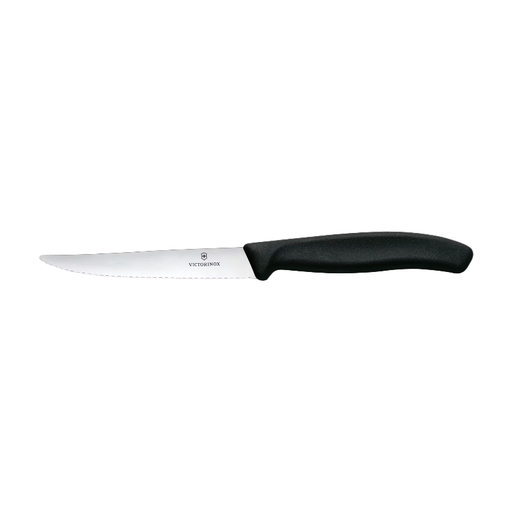
Why this product suits this profile: Six serrated knives with 11-cm blades are ideal for shared meals, catering and households that regularly need steak and pizza knives.
The serrated edge is clearly intended for meat and crisp pizza bases, and does not replace a smooth chef’s knife for fine preparation work.
Six pieces, stainless steel, ergonomic PP handles and dishwasher suitability according to the product details.
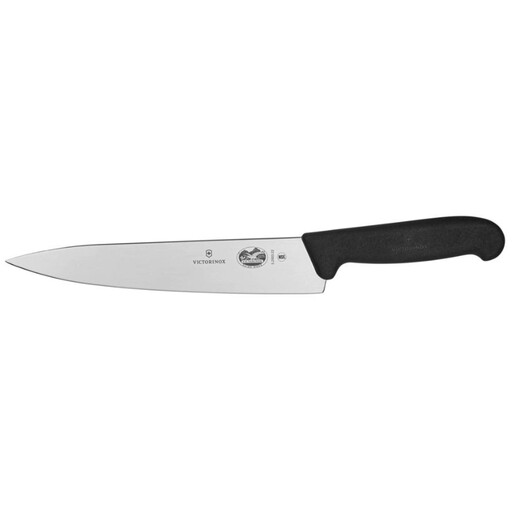
Why this product suits this profile: The straight 22-cm blade is designed for longer, even cuts. The non-slip Fibrox synthetic handle is aimed at frequent users in the home, catering and professional kitchen.
The straight blade is specified for meat, fish, fruit and vegetables, clearly distinguishing it from a serrated steak knife.
22-cm stainless-steel blade and Fibrox handle with a non-slip surface.
We have put together a complete, regularly updated list of products that fully meet these strict selection criteria and the safety regulations applicable in the EU.
Simple routines can help maintain consistent cutting performance and ensure safe use:
For many households, a chef’s knife measuring around 18 to 20 cm provides a versatile foundation. A vegetable knife measuring 8 to 10 cm complements your equipment for peeling, trimming and preparing small ingredients. The right combination depends on the foods you usually prepare and the amount of worktop space available.
Some models are dishwasher-safe according to the product details. However, hand-washing and drying immediately are often gentler on the blade and handle. Harsh cleaning products, prolonged moisture and contact with other cutlery can affect the surface or edge.
How long a knife stays sharp depends, among other things, on the steel, edge type, chopping board, cutting technique and care. A knife should not be used on glass, stone or ceramic. If the blade becomes blunt, smooth blades can be sharpened appropriately; serrated knives have different requirements.