
Lieferung heute & morgen

Qualitätsgarantie

Willkommens-Angebote freischalten: KOSTENLOSE Lieferung | Bis zu 80 % RABATT | Kostenlose 30-Tage-JoyPlus-Testphase
App herunterladen
A kitchen knife should suit the way you work, the size of your hand and the level of care you are prepared to give it. Many disappointing purchases are not caused by a low price, but by unclear product information and choosing the wrong type of knife: a broad Chinese chef’s knife does not automatically replace a classic chef’s knife, and a dishwasher-safe kitchen knife will not necessarily stay sharp for long.
A blade can be extremely sharp when new without retaining that quality for long if it is used incorrectly. Hard surfaces such as glass, ceramic or stone, frozen food and bones can damage the edge. That is why you should look beyond advertising claims about sharpness and consider the blade steel, hardness, grind and care instructions.
The description stainless steel kitchen knife initially refers only to the material group. The manufacturing process and construction are also important when choosing a knife. A forged blade, a full tang and a corrosion-resistant type of steel can affect balance and stability. The exact specification should always be stated in the technical product data.
A dishwasher-safe kitchen knife may be approved for machine cleaning. However, heat, detergents and contact with other cutlery can put more strain on the blade and handle than gentle hand washing. With high-quality or ice-hardened blades, it is therefore usually best to clean them with mild washing-up liquid, dry them immediately and store them safely.
The right shape depends on the task:
Ice-hardened blades are cooled in a controlled process to influence specific performance properties of the steel. Several ZWILLING models use the description FRIODUR ice-hardened blade. Depending on the model, the product data specifies a hardness of 55 to 58 HRC. This figure is a technical indication of the material’s resistance, but it is not the only measure of quality.
The blade grind is also relevant. A V-edge with approximately 15 degrees per side can enable precise cuts. A hollow edge creates small indentations in the blade and can reduce food sticking to it. With serrated blades, on the other hand, the tooth geometry is crucial, and resharpening is more demanding.
The handle should sit securely in your hand when dry and suit the size of your hand. A finger guard can help stabilise your grip. A full tang means that the blade steel extends a long way into the handle; in some designs, this contributes to the balance.
Also look for clear care instructions. According to the product description, the ZWILLING Twin Cuisine Santoku knife is dishwasher-safe, but hand washing is still recommended to protect the blade and plastic handle. According to the information available, the ZWILLING Professional S carving knife and the ZWILLING TWIN Cuisine chef’s knife are not suitable for the dishwasher.
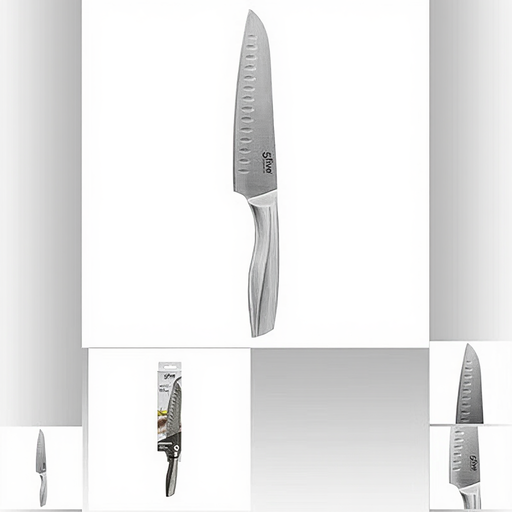
Why this product suits this profile: The Santoku knife is a versatile choice for households looking to prepare vegetables, fish and boneless meat with a single knife.
The product description states that it has a forged construction, a full tang and rust-resistant stainless steel. This provides important information about stability and materials.
18 cm blade, ergonomic handle and a design intended for vegetables, fish and boneless meat.
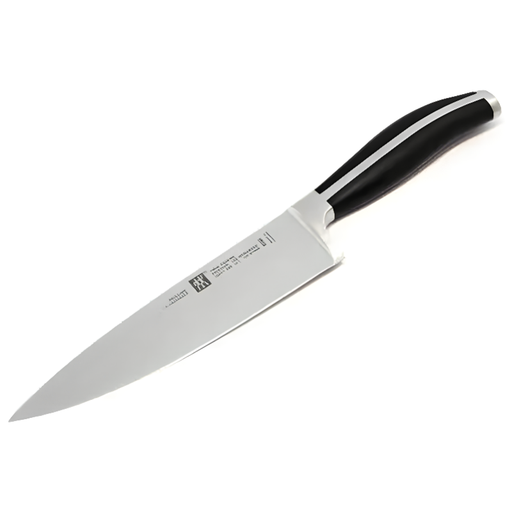
Why this product suits this profile: Home cooks and discerning households get a classic chef’s knife for rocking motions, herbs, vegetables and meat.
The specifications state that it features SIGMAFORGE, FRIODUR, a horizontal full tang and a V-edge ground to 15 degrees per side. Hand washing is explicitly specified for cleaning.
20 cm blade, seamless plastic handle and one-piece construction for controlled cutting movements.
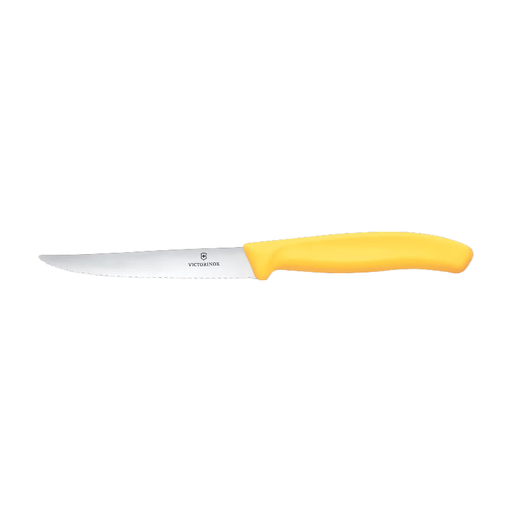
Why this product suits this profile: For BBQ users, families and households that regularly eat at the table, this knife is suitable for steak, pizza and crisp crusts.
The serrated 11 cm stainless steel blade is designed for steak and pizza rather than being positioned as a universal preparation or chopping knife.
PP handle, serrated stainless steel blade and dishwasher suitability; available as a single knife or in versions with six knives.
We have put together a complete, regularly updated list of products that fully meet these strict selection criteria and the safety regulations applicable in the EU.
An 18 to 20 cm chef’s knife or Santoku knife covers many food preparation tasks. If you often use a rocking motion to chop herbs, you may prefer a chef’s knife with a curved edge. For straight cuts through vegetables, fish and boneless meat, a Santoku knife is worth considering.
This depends on the blade steel, grind, cutting surface, use and care. Regular honing can help maintain the cutting geometry during everyday use. If the blade becomes blunt or shows signs of damage, it needs to be professionally resharpened. It is not possible to give a reliable general lifespan.
They can be a convenient choice for everyday use. However, hand washing with mild washing-up liquid and drying the knife immediately will usually put less strain on the blade and handle. Before buying, always check the specific manufacturer’s instructions for the model in question.