
Lieferung heute & morgen

Qualitätsgarantie

Willkommens-Angebote freischalten: KOSTENLOSE Lieferung | Bis zu 80 % RABATT | Kostenlose 30-Tage-JoyPlus-Testphase
App herunterladen
A kitchen knife should slice vegetables cleanly, chop herbs and, depending on the model, prepare meat too. However, eye-catching product claims do not automatically lead to the right purchasing decision. The key factors are the blade shape, material, dimensions, care requirements and intended use.
A Damascus knife or decorative blade pattern can be visually appealing. However, the pattern alone says nothing about the cutting angle, steel quality or handle ergonomics. Even a stainless steel kitchen knife without a striking appearance may be more suitable for everyday use if its shape and care requirements fit your household.
The initial sharpness of a kitchen knife depends, among other things, on the grind, cutting angle and manufacturing quality. For long-term use, edge stability, a suitable chopping board and regular sharpening are also important. A sharp kitchen knife will not stay sharp indefinitely if it is used on glass, stone or hard ceramic surfaces.
A large chef’s knife is versatile, but it is not comfortable for every hand or every task. A cleaver can be practical for vegetables and larger ingredients, while being unsuitable for delicate peeling work. If you only need one knife for small portions, you do not necessarily need an extensive kitchen knife set.
For a stainless steel kitchen knife, corrosion resistance and easy cleaning are typical selection criteria. A carbon steel knife may require special care, as moisture and acidic foods can affect its surface. Specifications such as “40Cr13”, “50Cr” or “Special Blade Steel” should be treated as material information, not as sole proof of genuine everyday suitability.
You should also look out for:
A blade length of around 17 to 21 cm is often practical for versatile kitchen knives, but it must suit your work surface and hand size. Broad blades can also be used like a scoop to pick up prepared ingredients. A heavier knife supports powerful cuts, but can be more tiring during longer preparation tasks. Before buying, compare the product dimensions and weight with the tasks you typically carry out.
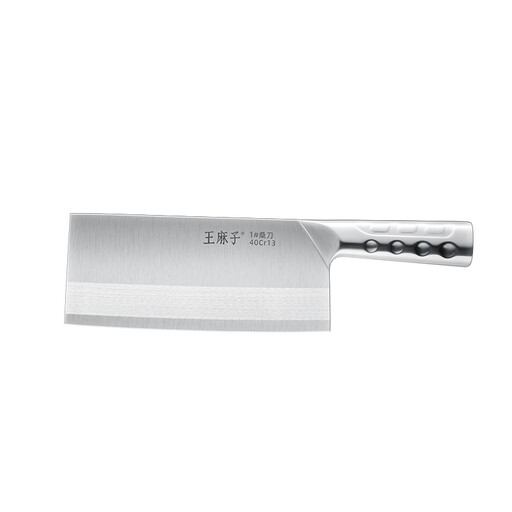
Why this product suits this profile: The full-steel design and focus on household tasks appeal to shoppers looking for a single, versatile Wangmazi kitchen knife for vegetables and meat.
The product information specifies an all-steel construction, along with properties designed to prevent sticking, mould and moisture damage. This makes it easier to assess the knife beyond purely decorative marketing claims.
Full-steel construction; designed for versatile cutting tasks around the home.

Why this product suits this profile: The 18.5 cm-long, 8 cm-high blade combines a broad Chinese chef’s knife shape with a special blade steel construction and a seamlessly riveted plastic handle.
The product description gives specific dimensions, the material and the seamless connection. This allows you to make your choice based on tangible information rather than design features alone.
268 g net weight; broad blade for slicing and scooping up prepared ingredients.
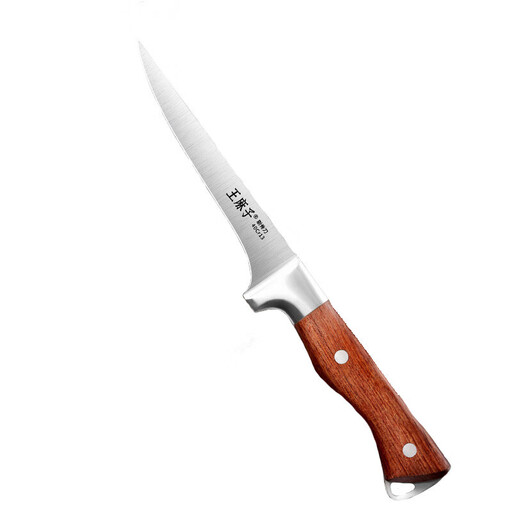
Why this product suits this profile: This boning knife is designed for skinning and deboning beef, lamb and pork, making it suitable for meat preparation with a clearly defined purpose.
Its clearly stated purpose helps prevent a narrow boning knife from being mistakenly bought as a general-purpose cleaver or chef’s knife.
40Cr13 blade material; rosewood handle according to the product information.
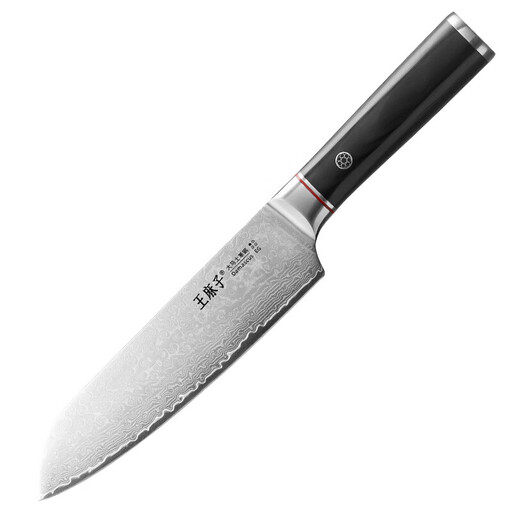
Why this product suits this profile: According to its product name, this Santoku knife is intended for several meat and vegetable cutting tasks and can be an alternative to a traditional chef’s knife.
The choice is based on the knife shape and intended use, not on the Damascus pattern alone. A different model should be used for bones or very hard ingredients.
Santoku shape for cutting tasks; Damascus steel according to the product name.
We have put together a complete, regularly updated list of products that fully meet these strict selection criteria and the safety regulations applicable in the EU.
For many households, a chef’s knife or Santoku knife is a practical starting point. Both shapes are suitable for vegetables, herbs and a wide range of boneless foods. The right choice depends on the blade length, weight, handle and your preferred cutting technique.
There is no universally applicable fixed lifespan. It depends on how often the knife is used, the chopping board, the food, cleaning and sharpening. The right honing or sharpening process can help maintain cutting performance, provided it is suitable for the particular blade steel and grind.
A kitchen knife set can be worthwhile if you want to cover several clearly different tasks, such as cutting vegetables, portioning meat and peeling small ingredients. If you mainly carry out similar tasks, a single suitable kitchen knife with safe storage is often the more space-saving option.