
Lieferung heute & morgen

Qualitätsgarantie

Willkommens-Angebote freischalten: KOSTENLOSE Lieferung | Bis zu 80 % RABATT | Kostenlose 30-Tage-JoyPlus-Testphase
App herunterladen
A reliable kitchen mixer is the heart of many kitchens. Whether for creamy smoothies, airy cake batters, or velvety soups, the right appliance saves time and effort. But the market can be overwhelming, and marketing promises often lead to disappointment. Many devices end up unused in a cupboard after a short time because they fail to meet expectations. As your Joybuy Product Recommendation Officer, I'll help you recognise the common pitfalls and make an informed decision.
Before we dive into the important features, let's look at the most common reasons for buyer's remorse. Understanding these will help you shop more consciously and sustainably.
The Wattage Trap: High Power Isn't Everything. Many manufacturers advertise extremely high wattage figures, suggesting superior performance. In practice, however, the raw wattage number is only a limited indicator of quality. An efficiently engineered 500-watt motor can outperform a poorly designed 1000-watt motor. What truly matters are the power transmission, the quality of the gearbox, and the design of the attachments. A high wattage figure alone guarantees neither a good mixing result nor a long lifespan.
The Accessory Trap: Missing or Expensive Add-ons. You buy a basic model only to find out later that the dough hook, chopper, or a suitable blending cup you need isn't included. Purchasing these parts separately can be expensive and inconvenient. A seemingly good deal can quickly turn into a costly affair.
The Design Trap: Impractical for Daily Use. A visually appealing appliance is tempting, but its true quality is revealed in daily use. Is the mixer difficult to clean because the blades aren't removable? Is the cord too short for your countertop? Is the appliance so heavy that you hesitate to take it out of the cupboard? Such practical flaws can significantly diminish the joy of cooking and baking.
To avoid these traps, you should focus on the following three core aspects. They form the basis of a good purchasing decision.
Not every mixer is suitable for every purpose. Choosing the right type is the first step to success.
Pay less attention to the maximum wattage and more to efficiency and controllability. A good motor runs smoothly even under load and doesn't overheat quickly. Multiple speed settings and an additional turbo or pulse function are important. These allow for precise control over the consistency of your mixture—from slow folding to rapid whipping.
The quality of the attachments determines their durability and hygiene. Whisks and a mixer with dough hooks should be made of stainless steel. They are robust, do not deform, and are usually dishwasher-safe. For an immersion blender, a stainless steel blending shaft is also advantageous as it does not stain or retain odours, especially when processing tomatoes or carrots.
Based on these criteria, we have identified a few models that are particularly well-suited for specific user profiles.
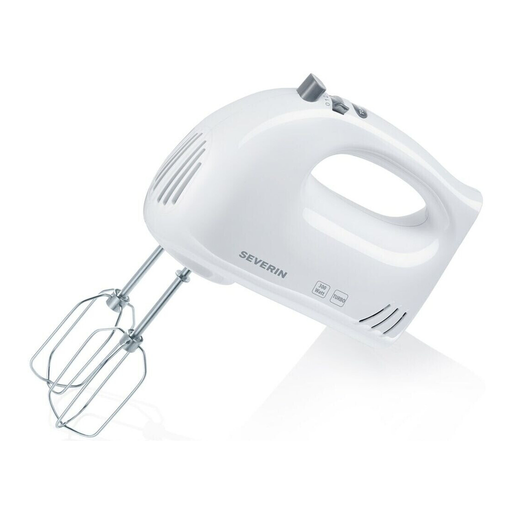
Why This Fits Their Persona: Ideal for those who regularly bake cakes or whip cream. This device focuses on the core functions of a hand mixer, offering reliable performance for everyday baking projects without confusing users with unnecessary features.
It bypasses the accessory trap, as the essential stainless steel beaters and dough hooks are already included. At 300 watts, it is honestly specified and avoids the wattage trap by delivering perfectly sufficient and efficient power for its intended tasks.
Five speed settings plus a turbo function allow for fine-tuned control. The ergonomic design and low weight ensure comfortable handling.
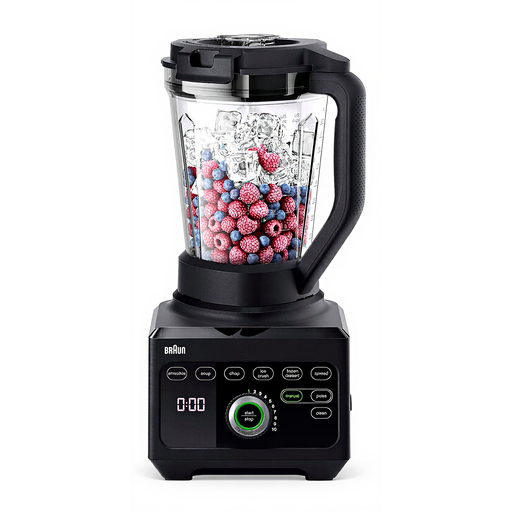
Why This Fits Their Persona: For users who make daily smoothies from tough ingredients like kale, nuts, or frozen fruits and who value an exceptionally fine, creamy consistency. The precise settings are ideal for experimental users.
This model sidesteps the wattage trap because its high power of 1600 watts is intelligently utilised by the TriAction Technology and special programs to actually achieve superior blending results. Here, the power is not just marketing; it's functionally justified.
The iTextureControl technology with 18 different blending programs offers exceptional control over the final texture. The stainless steel blades, made in Solingen, Germany, ensure efficiency and durability.
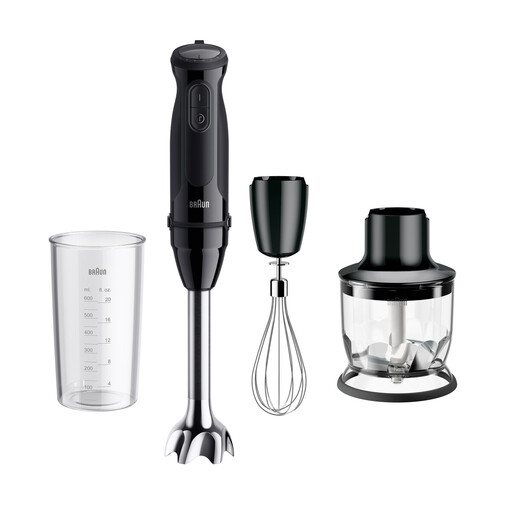
Why This Fits Their Persona: Perfect for cooks who want a single device for many different tasks: puréeing soups, chopping herbs, preparing baby food, or whipping egg whites. This set replaces several individual appliances and saves kitchen space.
This set solves the accessory trap by including the most important attachments (blending shaft, chopper, whisk) right out of the box. The EasyClick Plus system makes changing attachments simple and fast, thus avoiding the design trap of an impractical device.
The 1000-watt motor provides ample power reserves. The PowerBell VPlus technology ensures exceptionally fine puréeing results, and the 21 speed settings allow for very precise control.
We have compiled a complete, up-to-date list of products that fully meet these strict selection criteria and German safety regulations.
1. How many watts does a good kitchen mixer really need? This heavily depends on the type of appliance and its intended use. For a hand mixer used mainly for cake batter and cream, 300 to 400 watts are generally sufficient. A countertop blender that will regularly crush ice or process fibrous vegetables benefits from 800 watts or more. For a stand mixer intended for heavy bread doughs, 1000 watts is a good benchmark, although the gearbox construction is just as important as the raw motor power.
2. Can I clean my mixer's attachments in the dishwasher? On most modern appliances, the detachable stainless steel attachments (e.g., beaters, dough hooks, blending shafts) are suitable for cleaning in the dishwasher. However, it is always wise to check the manufacturer's specifications in the product description or user manual. The motor unit itself must never be immersed in water and should only be wiped with a damp cloth.
3. What's the difference between a countertop blender and a stand mixer? A countertop blender is primarily specialised for mixing, puréeing, and chopping mostly liquid or soft ingredients in an enclosed container. It is the ideal appliance for smoothies, soups, or cocktails. A stand mixer, on the other hand, is designed for stirring, kneading, and whipping doughs and batters in an open bowl. It is the classic helper for baking and can often be expanded with attachments, sometimes even including a blender attachment.