
Lieferung heute & morgen

Qualitätsgarantie

Willkommens-Angebote freischalten: KOSTENLOSE Lieferung | Bis zu 80 % RABATT | Kostenlose 30-Tage-JoyPlus-Testphase
App herunterladen
A kitchen mixer should work reliably day to day, be easy to clean and fit the space you have available. However, a high wattage, a long list of accessories and a large jug don’t automatically make it the right choice. What matters is whether the type, capacity and controls suit the recipes you plan to make.
A high power rating can sound impressive, but it doesn’t tell you on its own how evenly a mixer works or how long it can run under load. With a blender, the blade design, jug shape and permitted operating time are also important. For a stand mixer, you should also check the recommended dough quantity and the drive mechanism.
Before you buy, check:
A 1.5-litre jug won’t always hold 1.5 litres of ingredients ready for blending. Foam, liquid and hard ingredients all need enough room. A compact personal blender cup is often enough for a single smoothie. For families or multiple portions, a larger jug blender is a better choice.
The same applies to a stand mixer with a bowl: bowl capacity doesn’t automatically tell you the maximum amount of dough it can handle. Check the manufacturer’s guidance on quantities for flour, cake batter and yeast dough.
A mixer with accessories can handle several tasks, but it also takes up more storage space and comes with extra parts. Before you buy, make a list of what you’ll use it for:
A powerful mixer needs a well-designed construction to match. Stainless steel blades are corrosion-resistant and, on many models, removable or dishwasher-safe. For hard ingredients, look for a dedicated ice-crush or pulse function. These features don’t remove the need to stay within the maximum operating time.
With hand blenders, the combination of motor power, speed control and splash guard is more useful in practice than wattage alone. Variable speed or several settings make it easier to adjust the mixer for soups, sauces and creams.
For everyday use, a clearly marked measuring scale, a secure lid and a wide enough filling opening are useful. Several products specifically state that their jugs are BPA-free. Only blend hot liquids if the instruction manual says it’s safe. Some appliances explicitly prohibit blending boiling liquids.
Never exceed the MAX mark. The nutribullet Pro NB907CP personal blender comes with two cups, with capacities of 925 ml and 700 ml. They’re suitable for single portions and smaller quantities, but won’t replace a large mixing bowl.
Removable, dishwasher-safe parts mean less cleaning by hand. The motor housing must never be immersed in water. Blades and dough hooks are sharp or moving parts, so only fit or remove them when the appliance is unplugged.
For German households, 220–240 volts and the correct mains frequency of 50–60 Hz are also important technical specifications. Stability, suction feet and a secure lid matter too, especially at higher speeds.
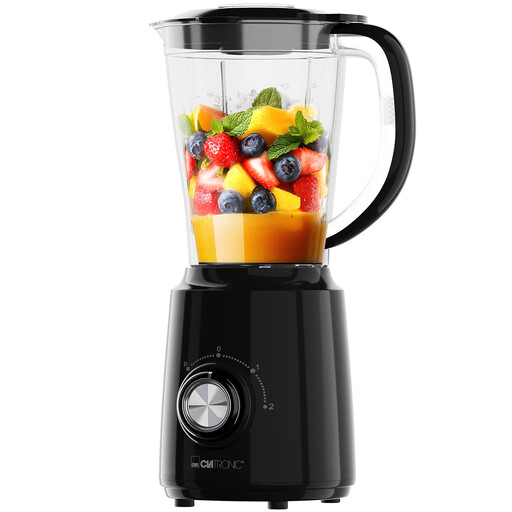
Why this product suits this profile: This jug blender has a 1.5-litre BPA-free jug, three speed settings, plus pulse and ice-crush functions for everyday tasks.
The fill markings and removable jug make the capacity easy to check and cleaning straightforward. The pulse function is clearly separate from the standard speed settings.
500-watt motor, four-part stainless steel blades and rubberised feet.
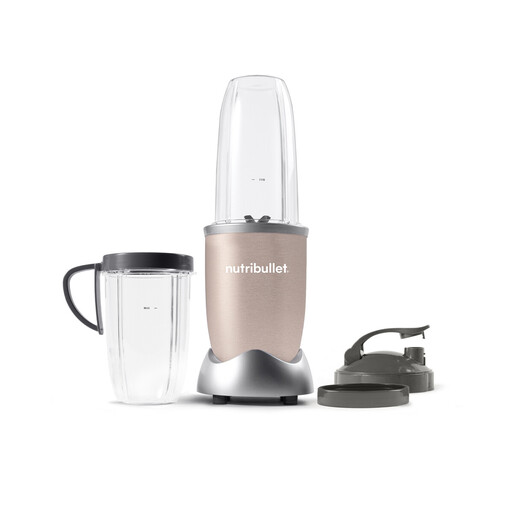
Why this product suits this profile: It comes with two BPA-free cups, with capacities of 925 ml and 700 ml, plus drinking lids for single portions.
One-touch controls, a clearly stated 60-second operating limit and dishwasher-safe parts make it easier to choose and use.
900-watt motor, six-blade stainless steel blade and compact design.
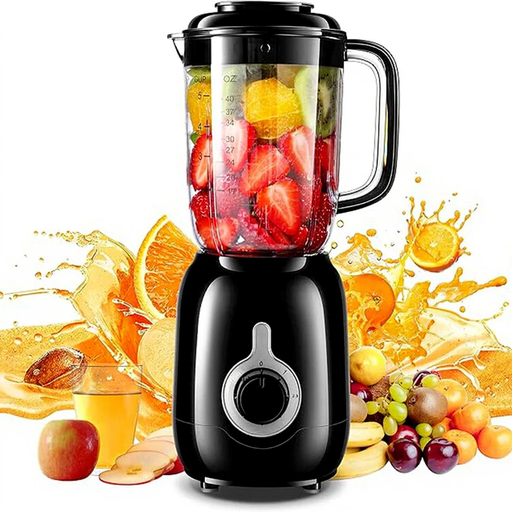
Why this product suits this profile: The 6-litre stainless steel bowl and three attachments are ideal for households that regularly make cakes, bread, pizza or pastries.
Recommended use with limited dough quantities, overload protection and six speed settings put the wattage into practical context.
450-watt motor, six speeds with pulse function, dough hook, whisk and beater.
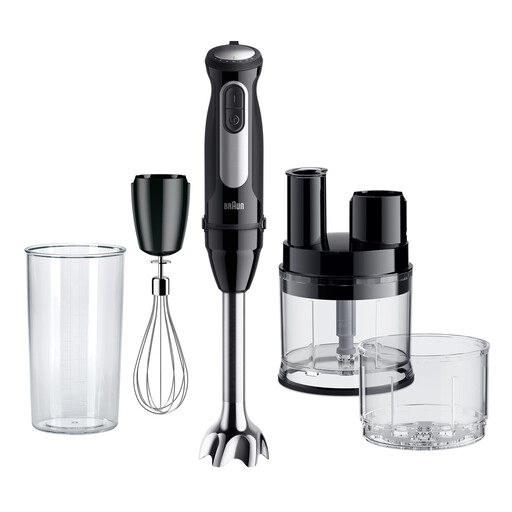
Why this product suits this profile: This hand blender combines 25 speed settings and a turbo function with several attachments for puréeing, chopping, slicing and whisking.
Each attachment is designed for specific tasks, while EasyClick Plus makes them easy to swap and SplashControl is designed to reduce splashes.
1000-watt motor, 25 speeds plus turbo, and dishwasher-safe attachments.
We’ve put together a comprehensive, regularly updated list of products that meet these strict selection criteria and fully comply with the safety regulations in force in the EU.
A personal blender with a drinking cup is handy for single portions. For several people, a jug blender with a larger capacity gives you more flexibility. Look for a pulse or ice-crush function, a clearly marked MAX fill line and a stated operating time.
Its lifespan depends on how you use and clean it, the workload and whether you follow the manufacturer’s instructions. Overfilling, running it for too long and using hard ingredients it wasn’t designed to handle can put extra strain on the motor and blades. Clean the appliance after each use and allow it to dry completely.
You can work out the electricity cost by looking at the appliance’s power consumption, how long you use it for and your electricity tariff. A 1000-watt appliance running for ten minutes would theoretically use 0.167 kilowatt-hours. In practice, a mixer usually runs in shorter bursts. Short operating times, suitable portion sizes and easy cleaning are also worth considering when choosing a model.