
Lieferung heute & morgen

Qualitätsgarantie

Willkommens-Angebote freischalten: KOSTENLOSE Lieferung | Bis zu 80 % RABATT | Kostenlose 30-Tage-JoyPlus-Testphase
App herunterladen
A kitchen mixer should do more in everyday use than simply combine ingredients. Depending on its design, it can prepare smoothies, purée soups, chop vegetables, whip cream or knead dough. The choice ranges from a blender and hand blender to a hand mixer and a complete food mixer.
However, anyone who focuses only on wattage or a long list of accessories can easily buy a machine that does not suit their actual needs. The key factors are the combination of motor power, capacity, controls, materials and cleaning requirements.
A high power rating may sound impressive, but it does not automatically describe how well the appliance will perform in everyday use. The motor design, blade shape, maximum operating time and intended purpose are also important.
A mixer for smoothies and soups requires different features from a dough mixer. A compact appliance may be sufficient for short blending tasks involving fruit and liquid. Heavy yeast dough, on the other hand, requires a sturdy gearbox, the right mixing action and a sufficiently large bowl.
The size of the container does not always correspond to the maximum amount of liquid it can hold. For example, a 2.1-litre container may have a lower recommended filling level. Safety markings such as “MAX LIQUID” should therefore always be observed.
A large container is not necessarily practical for a one-person household. Families or people who prepare meals in advance, however, can benefit from a larger smoothie maker or blender.
A food processor, chopper, whisk and several discs expand the range of possible uses. At the same time, they add extra individual parts that need to be washed, dried and stored.
Before buying, check the following:
A blender works with a fixed container and is suitable for drinks, purées and sauces, as well as ice, depending on the model. A blender with an ice-crushing function should only be used for this purpose if the product description expressly states that it is suitable.
A hand blender is used directly in a saucepan or tall container. This is practical for soups and sauces, but hot liquids require particular care. Not every appliance is approved for boiling or very hot ingredients.
A hand mixer is designed for whipping and combining ingredients. Its beaters and dough hooks can be used to prepare dough, cream or egg whites, for example. A food mixer with a bowl, on the other hand, offers greater stability for regular baking tasks.
Do not compare wattage alone. Also consider the number of speed settings and whether the appliance has a pulse function. Low settings allow for controlled mixing, while high settings are intended to create finer textures.
A pulse function is suitable for short, targeted bursts, such as when chopping ingredients or crushing ice. Always observe the maximum operating time stated in the instruction manual. Some appliances may only be used for short periods without a break to prevent the motor from overheating.
For containers, BPA-free materials or the specific material stated are relevant considerations. Stainless-steel blades should be securely fitted and safe to handle when cleaning. A non-slip base is particularly important at high speeds or when kneading.
You should also look for:
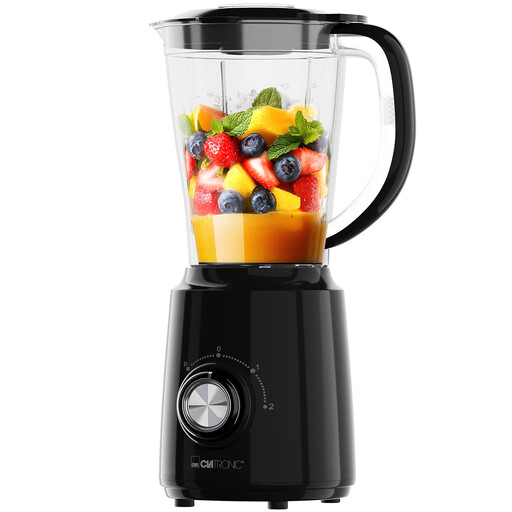
Why this product suits this profile: This blender has a 1.5-litre container, four speed settings including pulse/turbo mode, and an ice-crushing function for typical household recipes.
The technical specifications clearly state the container size, blades and operating functions, rather than promoting the appliance solely with a general power rating.
Removable BPA-free container, detachable stainless-steel blades and rubberised feet.
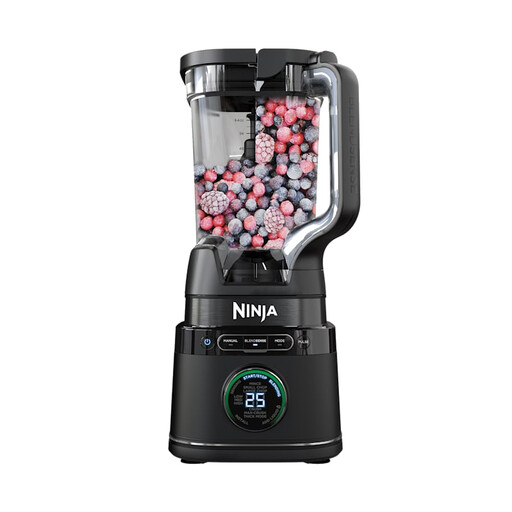
Why this product suits this profile: A 2.1-litre container, 1,000 watts and three speeds plus a pulse function are available for family portions and meal preparation.
The product data distinguishes between the 2.1-litre container capacity and the maximum liquid quantity of 1.9 litres.
Six-blade stainless-steel blades, BPA-free container and removable dishwasher-safe parts.
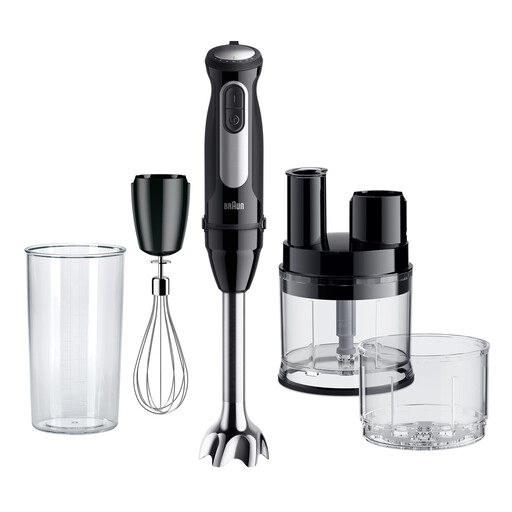
Why this product suits this profile: This hand blender combines 25 speed settings plus turbo with a whisk, chopper, measuring jug and accessories for crushing ice.
The versatile equipment does not automatically replace every appliance, but it provides specific attachments for clearly defined tasks.
1,000-watt motor, EasyClick Plus system and dishwasher-safe parts.

Why this product suits this profile: This food mixer is designed for households that regularly prepare cakes, bread, pizza or pasta and need a fixed mixing bowl for the job.
The bowl capacity, recommended use, accessories and overheating protection are clearly specified. The stated noise range is 68–72 dB at a distance of one metre.
6-litre stainless-steel bowl, dough hook, beater and whisk attachments, plus a tilting head.
We have put together a complete, regularly updated list of products that fully meet these strict selection criteria and the safety regulations applicable in the EU.
That depends on the task. For light mixing and whipping, 300 to 500 watts may be sufficient. More powerful appliances are often available for hard ingredients, ice or larger quantities. Wattage and the intended operating time should be considered together.
Not every model is suitable for this. Some blenders expressly prohibit blending hot liquids. With a hand blender, you must also check whether the attachment and instruction manual allow it to be used in a hot saucepan. The lid, splash guard and temperature instructions should be checked before use.
It is not possible to give a reliable general lifespan. This depends on how often the appliance is used, the ingredients, cleaning and compliance with the maximum operating time. Overloading, running the appliance empty and improper cleaning can place greater strain on the motor and blades. Observing filling levels and recommended breaks, and cleaning removable parts after every use, helps to reduce common causes of wear.