
Lieferung heute & morgen

Qualitätsgarantie

Willkommens-Angebote freischalten: KOSTENLOSE Lieferung | Bis zu 80 % RABATT | Kostenlose 30-Tage-JoyPlus-Testphase
App herunterladen
A kitchen oil dispenser should let you pour cooking oil with control, keep your worktop clean and be easy to refill. In practice, the differences often only become clear after a few weeks: the spout drips, the lid doesn’t fit properly or narrow openings make cleaning unnecessarily fiddly.
If you’re looking for an olive oil dispenser, an oil bottle with a spout or a set of oil and vinegar bottles, don’t focus on design alone. The construction, material, capacity and suitability for everyday use all matter.
Narrow spouts may seem practical at first, but can become blocked by thick oil or residue. Oil can also run back down the outside if the spout doesn’t have a suitable anti-drip feature. Look for a clearly described spout design and check whether the lid protects the spout from dust.
A kitchen oil can with a 1,000 ml capacity means fewer refills, but it may be heavier to hold and take up more space. For everyday use by the hob, 280 to 500 ml is often easier to handle. Households that use a lot of oil may benefit from a larger container, provided the handle and base are a good fit.
A removable spout or a wide bottle neck makes rinsing easier. Oil residue is more likely to remain in very narrow spouts that are fixed in place. When choosing a refillable oil bottle, check which parts can be taken apart, the recommended cleaning method and whether the materials are suitable for it.
A glass oil dispenser lets you see how much oil is left at a glance. Clear glass also makes it easier to tell olive oil, rapeseed oil and other liquid condiments apart. Glass is fragile, however, so it should be handled with care.
A stainless steel oil dispenser is usually opaque and therefore less prone to visible discolouration. For stainless steel models, check the exact material description, the finish of the spout and the cleaning instructions. For the models featured here, the term 304 stainless steel describes the material used for the container; it isn’t a general quality guarantee for the whole product.
A suitable spout for cooking oil should:
A wider opening can make it easier to refill the dispenser without a funnel. This is particularly handy when pouring oil straight from a larger bottle.
Before buying, consider how much oil you use day to day and where you plan to keep the dispenser. A non-slip handle helps with one-handed use. For glass bottles, a sturdy base and stable footing are important. If you want to store the dispenser alongside vinegar, a set with a holder can be a good choice, provided you have enough space for it.
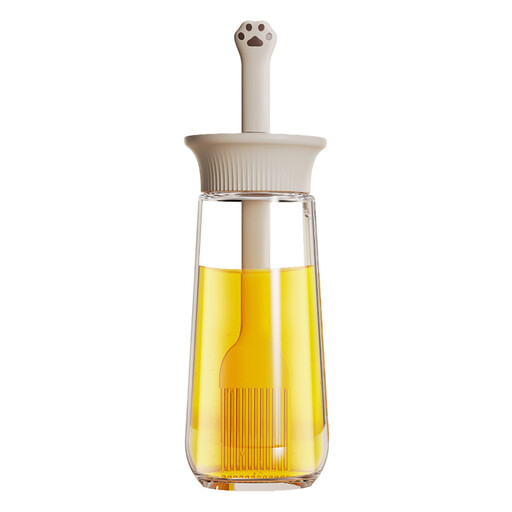
Why this product suits this type of household: Its compact capacity makes it a good fit for smaller kitchens and everyday use by the hob. The integrated silicone brush can be used to brush oil onto food.
The wider, funnel-shaped bottle opening makes pouring and refilling easier. The removable parts also make cleaning easier.
Soda-lime glass, food-safe silicone brush and integrated cover.
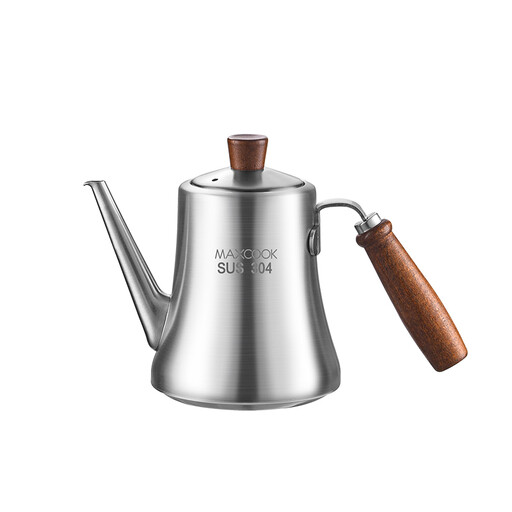
Why this product suits this type of household: The stainless steel container and ergonomic handle are designed for one-handed use while cooking.
The Eagle-Style spout is designed for controlled pouring and reduced drips running back down the bottle. The wide opening makes refilling and cleaning easier.
304 stainless steel container, integrated dust cover and non-slip handle.
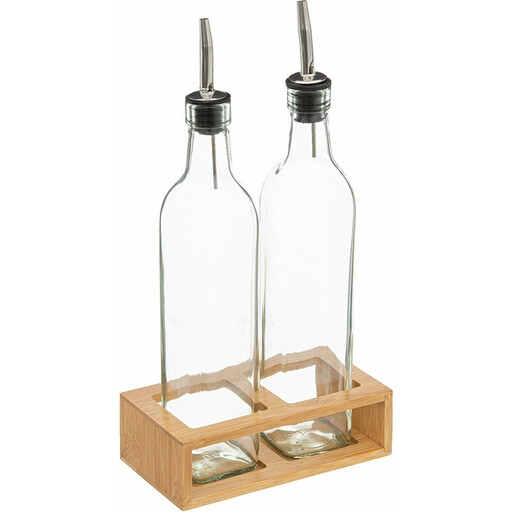
Why this product suits this type of household: With two clear bottles, each holding around 0.48 litres, this set is ideal for households that want to keep oil and vinegar neatly together.
The refillable bottles help you avoid single-use containers. The stand keeps both bottles together and makes it easier to tell them apart.
Glass bottles, stainless steel and silicone elements, and a bamboo stand; hand-washing is recommended.
Before using the dispenser for the first time, clean all removable parts according to the manufacturer’s instructions and dry them thoroughly. Don’t leave oil residue sitting in the spout for long periods. Handle glass models carefully to avoid knocks and sudden changes in temperature. Containers with wooden handles shouldn’t be left in water for extended periods.
Don’t fill the dispenser right up to the lid, as oil may spill out when you put it on. Follow the manufacturer’s safety instructions when using hot liquids. Keep the oil dispenser out of reach of young children.
We’ve put together a complete, regularly updated list of products that meet these strict selection criteria and fully comply with the safety regulations in force in the EU.
Glass is transparent, making it easier to check what’s inside. Stainless steel is opaque and, when well made, can be a practical choice for everyday use. More important than the material description are food-safe construction, a secure lid and easy access for cleaning.
Choose a spout with an anti-drip feature or cover, and wipe it regularly. After pouring, leave the container upright for a moment. Avoiding overfilling can also help, as less oil is pushed towards the rim when you put the lid on.
If you use it every day, it’s a good idea to clean it thoroughly at regular intervals, especially if you notice residue or a sticky spout. Clean removable parts separately and dry them completely before refilling the dispenser.