
Lieferung heute & morgen

Qualitätsgarantie

Willkommens-Angebote freischalten: KOSTENLOSE Lieferung | Bis zu 80 % RABATT | Kostenlose 30-Tage-JoyPlus-Testphase
App herunterladen
A kitchen oil dispenser should keep oil, vinegar or liquid seasonings clean and make it easy to pour just the right amount. In practice, though, problems often only become apparent after you buy one: the spout drips, the stopper is hard to clean or the bottle is unstable because of its shape.
As a Joybuy Product Recommendation Officer, I focus on the most important product features and assess them in the context of how you might use them. This makes it easier to find the kitchen oil bottle that suits your habits and work out which marketing claims deserve a closer look.
Calling something a leakproof oil dispenser is not enough to guarantee quality. What matters is how securely the lid fits, how the spout connects to the bottle and whether it has a drip-return feature. If the spout is too short or too open, oil can run down the outside and make a mess of your worktop.
Look for specific details such as a silicone seal, dust cover, drip-return feature or snug-fitting stopper. If these details are missing, don’t assume the dispenser is leakproof just because the product name says so.
A 1-litre bottle isn’t necessarily practical for every kitchen. It takes up more space and can become much heavier when full. A smaller olive oil dispenser is often enough if you only use olive oil occasionally. If you fry food every day or use several liquid seasonings, a larger stainless steel oil dispenser may be a better fit.
Check the footprint and height, too. A narrow spout won’t be much use if the bottle won’t fit under a kitchen shelf or tips over when you reach for it.
Oil residue can build up around threads, seals and narrow spouts. A decorative design is no substitute for parts you can get to easily. With a refillable oil bottle, the opening should be wide enough to refill without a funnel. Removable parts also make cleaning easier.
With glass models, bear in mind that the contents are easy to see, but the glass can be damaged by knocks. Stainless steel is less vulnerable to light and breakage, but makes it harder to see how much is left.
A glass oil bottle lets you see the contents at a glance and often works well as part of an oil and vinegar set. The 5Five bottle is made of glass, with a stainless steel and silicone spout. The manufacturer recommends hand washing. The set includes two bottles, each with a capacity of approximately 0.48 to 0.5 litres, and a bamboo stand.
A stainless steel oil dispenser is worth considering for everyday use if durability and a secure grip are priorities. According to the product details, the Maxcook dispenser is made from 304 stainless steel and has an eagle-shaped spout, a silicone dust cover and a handle made from 201 stainless steel and beech wood. Hand washing is recommended; the wooden handle should not be left under water for long periods.
Plastic can be lightweight and space-saving. However, the product details should clearly explain whether it is suitable for food and how it should be cleaned. Not every storage container is designed to be a kitchen oil dispenser.
A narrow spout helps you pour with control, while a wide opening makes filling and cleaning easier. Ideally, a dispenser offers both: a generously sized filling opening and a carefully shaped spout.
For baking and marinating, an oil dispenser with a brush may be more useful than a bottle designed just for pouring. The 280 ml Maxcook model combines a bottle, lid and silicone brush. According to the product description, the parts can be removed. The bottle is made from soda-lime glass, PP and silicone. The supplier says it can be used for egg, honey or jam as well as oil. Follow the relevant safety instructions when using hot contents.
Common sizes in the range include 160 ml, 280 ml, 500 ml, 620 ml and 1,000 ml. Smaller bottles are suitable for speciality oils you use less often or kitchens with limited worktop space. Larger models mean fewer refills, but they’re heavier when full.
A stand can keep two bottles together and make them easier to put down. Even so, check that the base is wide enough and that you can get a secure grip on the bottles when taking them out.
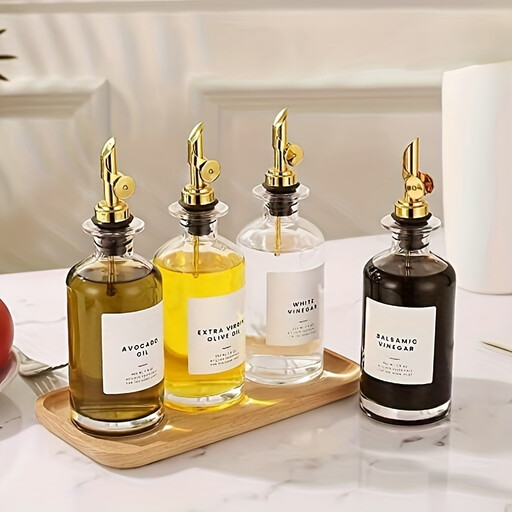
Why this product suits this shopper: Two bottles offer a simple way to keep, for example, olive oil and vinegar separate. This compact set is a good option for households looking for a straightforward starter set.
Having two bottles helps you avoid buying one oversized bottle for different liquids. The product details name the responsible person, but don’t provide detailed information about the materials, so check this before buying.
Two separate bottles; a space-saving way to store oil and vinegar.
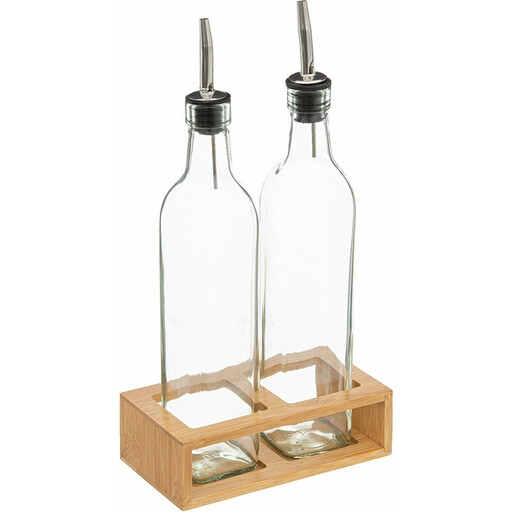
Why this product suits this shopper: This set pairs glass bottles with a bamboo stand. It’s designed for shoppers who value organisation, a clear view of the contents and keeping their bottles together.
The spouts and separate stand give the bottles a dedicated place to sit. Hand washing is recommended and the glass is fragile, so the care requirements are clear.
Two glass bottles; bamboo stand; each holds approximately 0.48 to 0.5 litres.
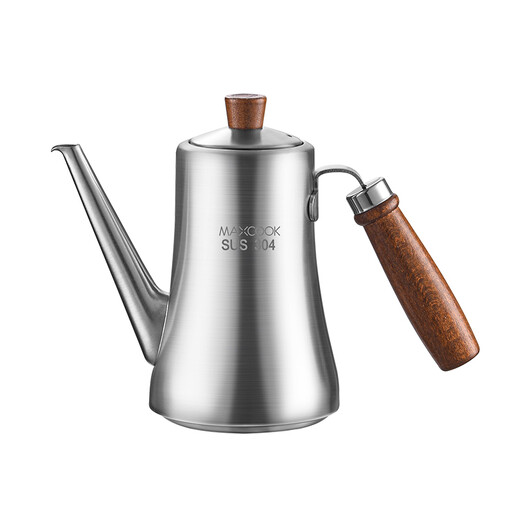
Why this product suits this shopper: Its generous capacity is designed for frequent use with oil, soy sauce or sesame oil. The handle makes it easy to use one-handed while cooking.
According to the product details, the wide neck makes it easier to refill without a funnel. The built-in silicone dust cover helps protect the open spout, and hand washing is recommended.
304 stainless steel; 1,000 ml capacity; eagle-shaped spout; non-slip handle.
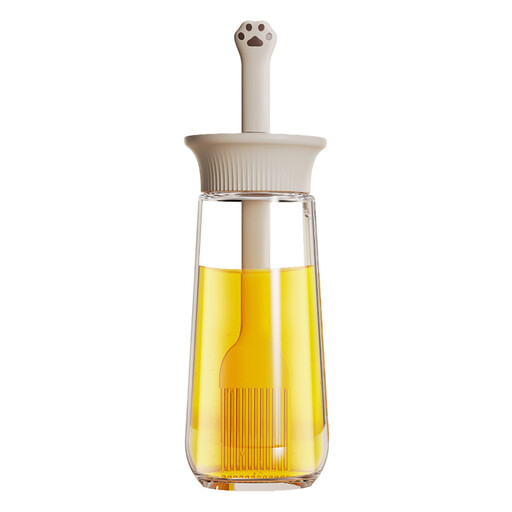
Why this product suits this shopper: The built-in silicone brush is handy for greasing baking tins and brushing oil over dough or food. With a 280 ml capacity, it’s easy to handle and suits smaller worktops.
The removable design makes it easier to reach the different parts. The product description also highlights the wider bottle neck and says the design helps prevent spills when pouring.
280 ml capacity; built-in, removable silicone brush; clear soda-lime glass bottle.
We’ve put together a complete, regularly updated list of products that meet these strict selection criteria and fully comply with the safety regulations in force in the EU.
First, remove any remaining oil and take apart the spout, seal and lid if the instructions say you can. Wash the parts in warm water with washing-up liquid, then leave them to dry completely before adding fresh oil. Depending on the manufacturer, glass bottles may be dishwasher-safe. Hand washing is usually the safest option for wooden handles and some types of seal.
Its lifespan depends on the material, wear to the seals and how well it’s cared for each day. Protect glass from knocks. Stainless steel can become scratched or discoloured if you use abrasive cleaning products. Check regularly that the stopper still fits securely and that the spout pours freely.
A set with two separate bottles is handy if you want to store oil and vinegar together. Keeping different liquids in separate containers is more hygienic and makes them easier to tell apart. Look for bottles that are easy to identify, clear labels and stoppers that protect each liquid properly.