
Lieferung heute & morgen

Qualitätsgarantie

Willkommens-Angebote freischalten: KOSTENLOSE Lieferung | Bis zu 80 % RABATT | Kostenlose 30-Tage-JoyPlus-Testphase
App herunterladen
A kitchen oil dispenser should keep olive oil, vinegar and other liquids neatly stored and make them easy to pour in a controlled way. In practice, though, problems are common: oil runs down the spout, lids get sticky or cleaning becomes such a chore that the bottle is rarely used. Before you buy, it’s worth considering the design, materials and how you’ll actually use it.
A decorative oil bottle may look good on your worktop, but that doesn’t necessarily mean it feels comfortable to hold. Tall, narrow models need a stable base and should be easy to grip when full. Check the dimensions, weight and handle design before you buy. For example, a 500-millilitre container around 30 centimetres tall will need enough clearance above it.
A leak-proof oil bottle should have specific design features to back up the claim. These include a securely fitting lid, a well-finished spout and a suitable seal. If you want an oil dispenser that gives you precise control, it’s also worth checking whether the spout helps prevent liquid flowing back or oil running down the outside of the bottle after pouring.
A narrow neck may look compact, but it makes refilling and rinsing more difficult. Olive oil or vinegar can build up around threads, seals and spouts in particular. Removable parts and a wide opening are therefore useful features. If you choose a stainless steel model with a wooden handle, check the care instructions too.
A glass oil dispenser lets you see the fill level and the liquid inside. That’s helpful if you use several varieties, such as olive oil, rapeseed oil and vinegar. Borosilicate glass is often used for its resistance to temperature changes, but that doesn’t automatically mean every model is suitable for hot liquids. Always follow the manufacturer’s instructions.
A stainless steel oil dispenser is opaque and feels sturdy in many kitchens. Some product descriptions specifically state that models are made from 304 stainless steel. A wooden handle can make the dispenser easier to use, but it usually needs gentler cleaning and shouldn’t be left to soak for long periods.
Plastic bottles can be lightweight and easy to carry. If a product has a squeeze function, check which liquids and temperatures it’s designed for. A drinking or sports bottle isn’t automatically suitable for use as a kitchen oil dispenser.
For everyday use, many suitable options hold between about 280 and 600 millilitres. A 280-millilitre model is a good choice if you only need small amounts or want to keep several oils ready to use. Capacities of 500 to 600 millilitres mean less frequent refilling, but need a suitably stable surface. A 1-litre oil can is worth considering if you use a lot, although it can be considerably heavier when full.
Look for a wide base, a non-slip grip area and a well-balanced weight. The container shouldn’t tip when you pour with one hand.
A narrow spout can make it easier to control the amount you pour, while a wider opening makes refilling and cleaning simpler. Models with an integrated dust cover keep the spout covered when the dispenser is stored. If you’re considering an oil bottle with a brush, check whether the brush, lid and bottle can be separated for cleaning.
It’s a good idea to label containers clearly if you use them for both vinegar and oil. A vinegar dispenser may look much like an olive oil dispenser, but different spouts or seals can make a practical difference depending on how thick the liquid is.
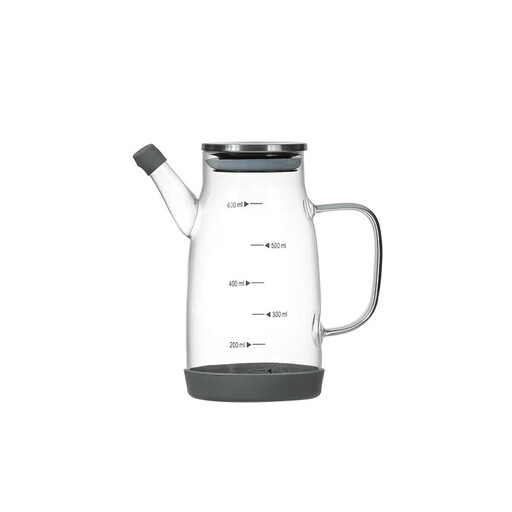
Why it suits this profile: This 600-millilitre transparent model makes it easy to see how much is left and is suitable for regular use in the kitchen.
The glass makes the fill level visible, reducing the chance of reaching for the bottle and finding it unexpectedly empty. Before you buy, check that the opening and spout suit your preferred cleaning method.
Transparent borosilicate glass, according to the product details; 600-millilitre capacity.
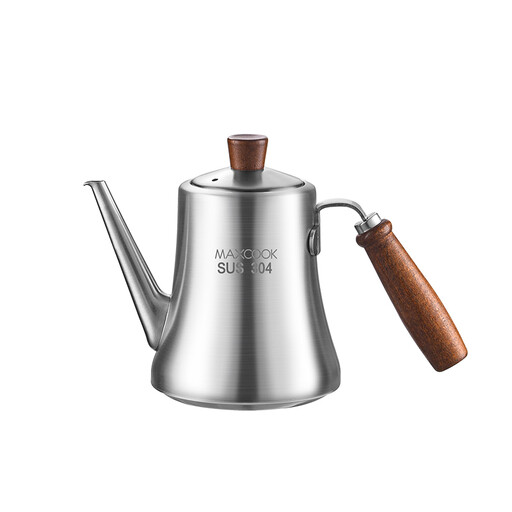
Why it suits this profile: Its one-handed operation and ergonomic handle are designed for frequent pouring while you cook.
According to the product description, the Eagle-style spout is designed for controlled pouring, reduced backflow and less residue. The integrated dust cover keeps the spout covered.
304 stainless steel container; wide opening for refilling and cleaning; handle made from stainless steel and beech wood.
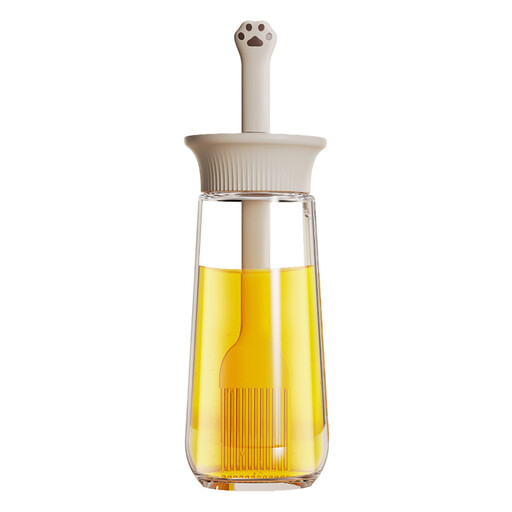
Why it suits this profile: This model is for households that want to spread oil with an integrated silicone brush when baking, frying or marinating.
According to the product details, the removable components make cleaning easier. The funnel-shaped opening is designed to simplify filling and reduce spills.
280-millilitre capacity; silicone brush; removable design; materials: glass, PP and silicone, according to the product details.
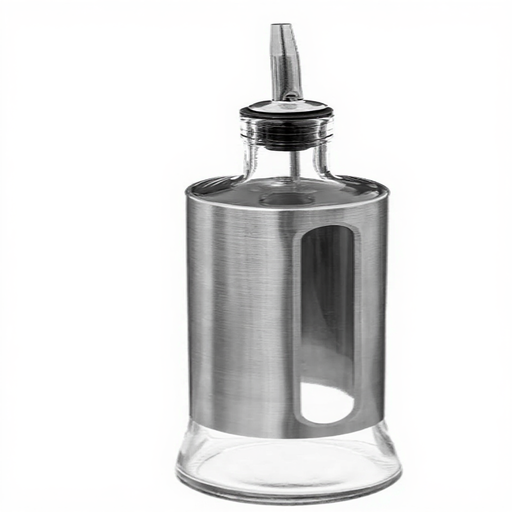
Why it suits this profile: The glass body and stainless steel spout combine a visible fill level with an understated look that works well on the worktop.
The product description mentions a dosing function and a compact footprint. Even so, check that the 30-centimetre-high container will fit in the kitchen cupboard or space you have in mind.
0.5-litre capacity; glass container with stainless steel spout; dimensions of 7.3 × 7.3 × 30 centimetres, according to the product details.
We’ve put together a complete, regularly updated list of products that meet these strict selection criteria and fully comply with the safety regulations in force in the EU.
If you choose a 1-litre model such as the Maxcook 304 Stainless Steel Olive Oil Dispenser with beech wood handle, the product details advise against leaving the handle underwater for long periods. Olive oil and vinegar are also best stored away from direct sources of intense heat.
For occasional cooking, 280 to 500 millilitres is often enough. If you use oil every day or don’t want to refill regularly, you could choose a model with a capacity of 600 millilitres or more. The key things to consider are weight, stability and the space available.
Glass lets you see the fill level and makes it easier to tell different liquids apart. Stainless steel is opaque and durable when it’s well made. The more practical option depends on your cleaning routine, the look you want and your preferred handle design.
Choose a spout with backflow control or a dust cover, keep the opening clean and give the spout a quick wipe after use. Avoid overfilling the bottle and check that the seal is in good condition to help reduce drips and sticky residue.