
Lieferung heute & morgen

Qualitätsgarantie

Willkommens-Angebote freischalten: KOSTENLOSE Lieferung | Bis zu 80 % RABATT | Kostenlose 30-Tage-JoyPlus-Testphase
App herunterladen
A well-organised kitchen does not need to be large. What matters is whether crockery, washing-up essentials and cleaning cloths have a designated place and can be dried easily after use. When choosing kitchen organisation and cleaning accessories, specific information about dimensions, materials, drainage and care is therefore more important than eye-catching marketing claims.
A dish-drying rack may hold plenty of plates yet still have an awkward footprint. Particularly on narrow worktops, the base area is more important than a general capacity claim. Before buying, measure the available width, depth and height. For a model intended for a kitchen cabinet or positioned over the sink, you should also take doors, taps and wall cupboards into account.
A dish-drying rack without a suitable drip tray can direct water onto the work surface. This means more wiping and may put delicate surfaces under strain. Look for an integrated drip tray, controlled water drainage or an outlet directed towards the sink. The design should also be easy to clean regularly and allow all parts to dry completely.
A washing-up sponge that sits permanently in a puddle stays damp for longer and may develop unpleasant odours. A sink organiser with a hollow base, drainage holes or raised base improves air circulation. Washing-up cloths should not be left folded on the worktop either; spread them out or hang them up to dry.
For a small kitchen, narrow or vertically designed solutions are ideal for space-saving kitchen storage. A two-tier dish-drying rack makes use of vertical space, while a single-tier model is generally quicker to set up. Check the following:
For example, the Maxcook Dish Drying Rack with Drainboard is listed as measuring approximately 40 × 23,6 × 28,7 cm and has two tiers. This may be of interest to households with limited worktop space, provided that the dimensions fit the available area.
For a kitchen dish-drying rack, rust-resistant materials, sturdy connections and an easy-to-clean surface are important criteria. Stainless steel is generally easy to care for; nevertheless, standing water should be removed regularly. With plastic or composite materials, smooth surfaces and accessible drainage areas are practical features.
For a kitchen sponge holder or sink organiser, the material is not the only consideration. Check whether the holder stands securely, whether it has any sharp edges and whether the individual parts can be removed. According to the product details, the Maxcook Kitchen Sink Caddy MCZW5554 is made from plastic and metal, has a drainage design and a separate holder for brushes. It requires no installation and should be rinsed regularly and air-dried.
Kitchen cleaning cloths should be selected according to the surface and task. Absorbent, lint-free cloths are suitable for worktops and smooth surfaces. Cotton cloths are versatile for drying and soaking up liquids. With textured washing-up cloths, it is important to follow the care instructions, including the permitted washing temperature.
Loofah washing-up sponges can be an alternative to conventional washing-up sponges. Check the specific material details and allow them to dry completely after use. A description such as biodegradable or compostable should refer to the actual product description and should not automatically be applied to every item of packaging or accessory.
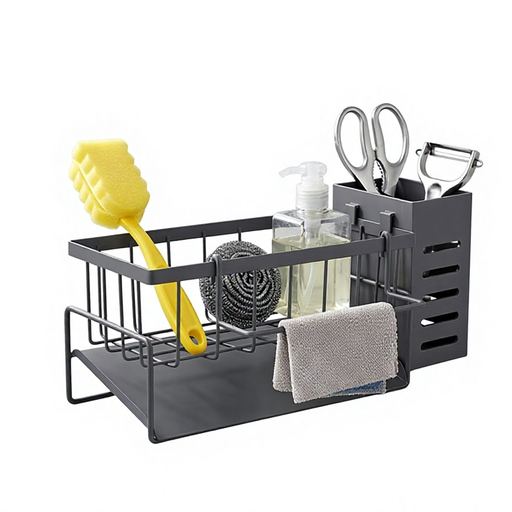
Why this product suits this profile: This compact organiser keeps a sponge, brush, washing-up liquid and washing-up cloth together in one designated place on the worktop.
The hollow base supports drainage, rather than leaving sponges sitting directly in pooled water.
Removable utensil holder, integrated brush compartment and an understated grey design.

Why this product suits this profile: The stated size of 42 × 29 × 12,7 cm provides a clearly defined footprint for everyday washing-up.
The separate PP drip tray collects water, while a rotating outlet supports controlled drainage.
Stainless steel construction, integrated storage compartments and assembly without complicated installation.
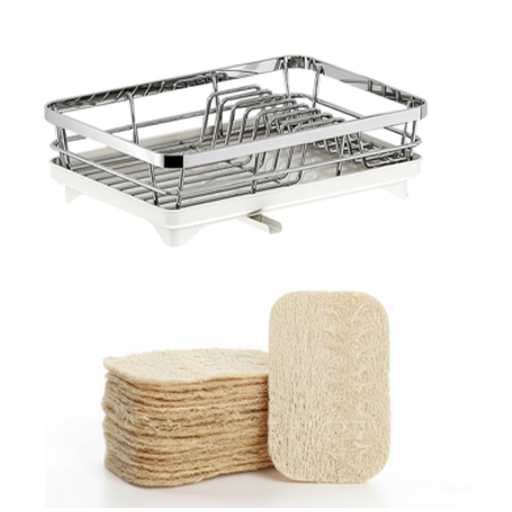
Why this product suits this profile: The set combines a single-tier stainless steel dish-drying rack with 30 listed washing-up sponges made from natural loofah.
The product details specify the materials, dimensions and contents, making it easier to plan the combination of drying and washing-up.
42 × 29 × 12,7 cm rack, PP drip tray and a stated pack of 30 loofah sponges.
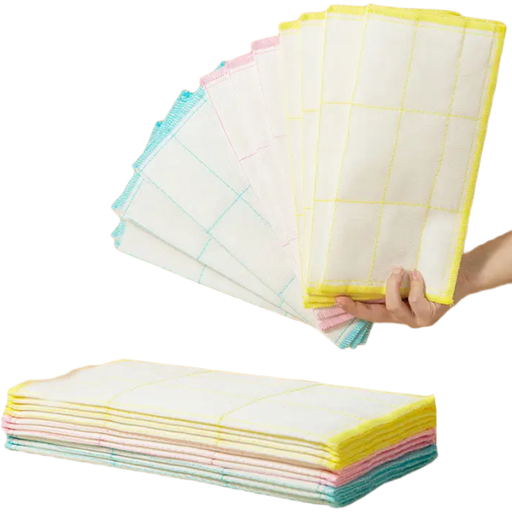
Why this product suits this profile: Ten cloths make it easier to assign them to different tasks, such as worktops, crockery and smaller spills.
The product description specifies the quantity, absorbency and lint-free design, rather than making only general care claims.
Cotton material, suitable for absorbing water and oil, with 10 pieces per pack.
Washing-up cloths, household cloths and cotton kitchen towels should be rinsed after every use and dried thoroughly. Using different colours can help you reserve cloths for different areas. Always follow the care instructions for the product in question. For example, the Jeden Tag washing-up cloth with raised dots is listed as measuring 38 × 35 cm, is available in a two-pack and can be washed at up to 60 °C, according to the product description. Bleaching, tumble-drying and ironing are not recommended.
Dish-drying racks should be cleaned regularly with a mild detergent and a soft cloth. Remove water from the drip tray and check the connections, feet and drainage holes. For sponge holders, rinsing with water is often sufficient; the parts should then be allowed to dry completely.
We have put together a complete, regularly updated list of products that fully meet these strict selection criteria and the safety regulations applicable in the EU.
First, measure the free space next to the sink. For two-tier models, allow for the height of the crockery when it is standing in the rack. For small kitchens, narrow models or vertical storage solutions are often more suitable than wide versions.
Rinse the sponge after use, wring it out and store it where air can reach all sides. A sponge holder with drainage holes or a hollow base is more practical for this purpose than a closed container. If the sponge shows clear signs of wear or develops a persistent odour, it should be replaced.
That depends on the material, quantity, washability and washing effort involved. Multi-piece sets can make it easier to change cloths around the home. The key is to wash the cloths according to the care instructions and dry them completely. This makes it easier to assess their useful life based on their actual condition rather than on a general manufacturer claim.