
Lieferung heute & morgen

Qualitätsgarantie

Willkommens-Angebote freischalten: KOSTENLOSE Lieferung | Bis zu 80 % RABATT | Kostenlose 30-Tage-JoyPlus-Testphase
App herunterladen
A well-organised kitchen not only saves time when cooking but also reduces food waste and creates a more pleasant living environment. However, the market for storage solutions is vast and confusing. Many products promise more than they can deliver. As your Joybuy Product Recommendation Officer, I'll help you identify the typical pitfalls and make an informed decision for your kitchen organisation system.
Before you invest, you should be aware of the most common problems that often only become apparent after a few weeks of use.
To avoid these problems, focus on three objective features. These determine the durability, safety, and functionality of your kitchen organisation.
The choice between glass and plastic is fundamental and depends on the intended use.
An effective kitchen organisation system must be flexible. Instead of rigid sets, you should opt for modular systems.
The quality of a container is evident in its lid. A good lid should have a silicone seal that ensures an airtight and watertight closure. Four-sided click-lock mechanisms have proven to be particularly reliable. They distribute pressure evenly, ensuring the contents stay secure and fresh.
Here are some product suggestions tailored to specific user profiles that meet the quality criteria mentioned above.
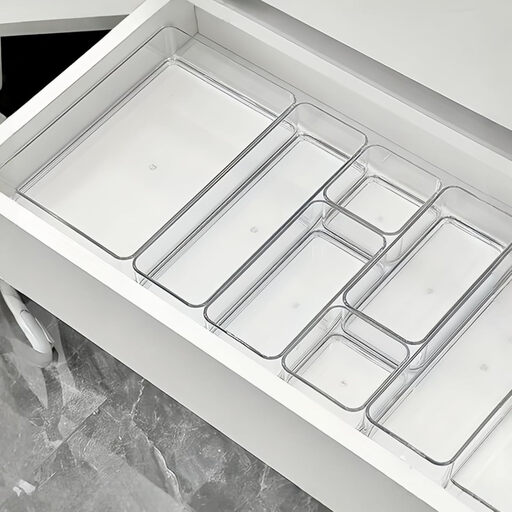
Why This Fits Their Persona: Ideal for those seeking a customisable solution for cluttered kitchen, bathroom, or desk drawers. The different sizes allow for individualised organisation of cutlery, utensils, or small items.
This set bypasses the "one-size-fits-all" trap. The modular arrangement of the 15 individual pieces in 4 different sizes allows for optimal and flexible use of space in almost any drawer.
The transparent design provides an instant overview. The sturdy, clear plastic is easy to clean and versatile.
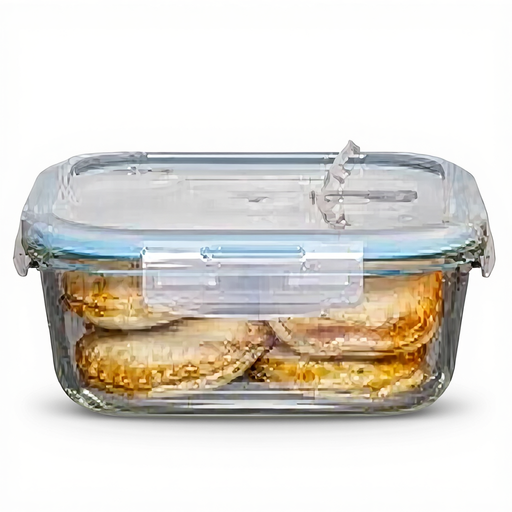
Why This Fits Their Persona: Perfect for preparing and taking meals on the go. Glass is hygienic, doesn't absorb odours, and the compartments keep ingredients neatly separated.
This container avoids the problem of inferior materials. The robust glass does not stain and is taste-neutral. The polypropylene lid with a silicone seal closes securely.
Hygienic and durable. Suitable for the microwave (without lid), freezer, and dishwasher. The compartment design supports a varied diet.
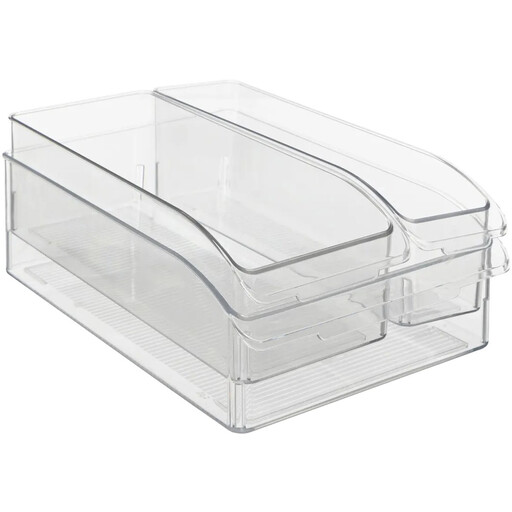
Why This Fits Their Persona: Families and bulk shoppers will benefit from this set, which brings order and clarity to a full fridge. Food is found faster and forgotten less often.
This set is specifically designed for the fridge, solving the problem of mismatched individual boxes. The containers are sized to use space efficiently and create a cohesive system.
Made from durable, BPA-free PET plastic. The integrated handles make it easy to pull out the bins, even from fully loaded shelves.
We have compiled a complete, up-to-date list of products that fully meet these strict selection criteria and German safety regulations.
Fill the container with a mixture of warm water and a tablespoon of baking soda. Let the mixture sit for a few hours or overnight, then rinse it thoroughly. Airing it out in the sun can also help neutralise odours.
No, not necessarily. Always look for the microwave-safe symbol on the product or in the manufacturer's description. Plastics like polypropylene (PP) are generally microwave-safe, while PET (often used for drink bottles or fridge organisers) usually is not. Also, always heat food without the lid to prevent pressure build-up.
Modular means that a system is composed of individual, standardised components (modules) that can be flexibly combined and arranged. For a drawer organiser, this means you can assemble individual small compartments as needed, rather than using a fixed insert. This allows for a customised fit for your drawer and its contents.