
Lieferung heute & morgen

Qualitätsgarantie

Willkommens-Angebote freischalten: KOSTENLOSE Lieferung | Bis zu 80 % RABATT | Kostenlose 30-Tage-JoyPlus-Testphase
App herunterladen
A streamlined kitchen organisation system is the foundation for efficient workflows, a better overview of your food supplies, and reduced food waste. Through the strategic use of organisation solutions, you can optimise the available space in fridges, cupboards, and the pantry. This guide analyses the technical specifications and material properties of storage solutions to help you make an informed choice.
The functionality of kitchen storage boxes and other organisation systems is largely determined by their material and design. An objective evaluation of these criteria is crucial for practical utility.
Only certain plastics are suitable for direct contact with food. The most common materials for fridge organisers are:
When making a selection, look for the food-grade safety label (often represented by a glass-and-fork symbol) and manufacturer claims such as "BPA-free".
Beyond the material, specific design elements are important for space-saving storage:
The following products have been selected based on their technical specifications and functional design for specific applications in the kitchen.
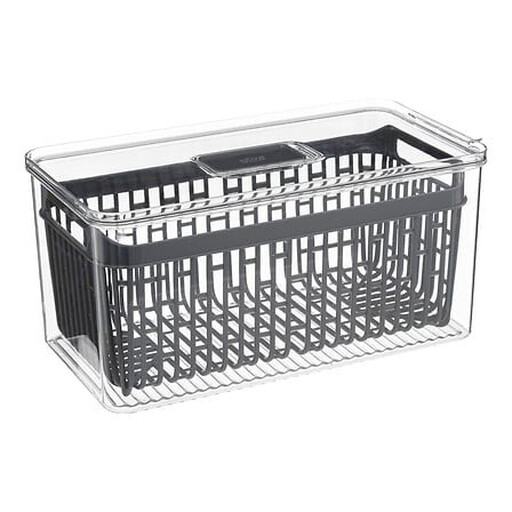
Why we recommend this product: This organiser box combines multiple functional elements in one product. The material combination of transparent PET for the box and PP for the basket is designed for durability and food safety. The integrated ventilation valve and the removable basket, which also serves as a colander, offer a well-designed solution for keeping fruit and vegetables fresh. Its mould-resistant and stackable construction is designed to maximise fridge space.
Pros:
Who it's for: For individuals seeking a specific solution for the optimal storage of fresh fruit and vegetables in the fridge, who value features that extend shelf life.
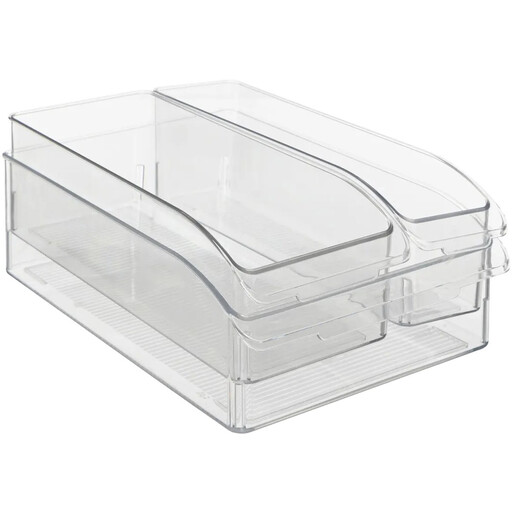
Why we recommend this product: This set provides an instant starter kit for creating order in the fridge. It consists of three bins made from robust, transparent PET. The integrated handles are a key feature, allowing you to pull the bins out like drawers and thus facilitating access to food stored further back. According to the manufacturer, the material is BPA-free.
Pros:
Who it's for: For households that need a straightforward, ready-to-use basic solution for sorting various food items in the fridge. Ideal for side-by-side organisation on shelves.

Why we recommend this product: This plastic wine rack is an example of a modular and stackable bottle rack. Its design allows for the storage of up to 12 standard wine or beverage bottles within a minimal footprint. The tool-free assembly system makes it easy to set up and take down. The transparent material allows for bottle identification without having to remove them from the rack. It is suitable not only for wine bottles but also for organising water or soft drink bottles in the pantry.
Pros:
Who it's for: For those looking for a flexible, space-saving solution to store wine and other beverage bottles on countertops, in the cellar, or in the pantry.
The products featured cover specific kitchen organisation use cases. For a wider selection of organisation solutions tailored to different fridge sizes, cupboard depths, and individual needs, we recommend exploring specialised ranges.
Discover more options in our Fridge Storage category.
1. How can I create more order in my fridge? An effective method is to use transparent, modular fridge organisers. Group similar foods (e.g., dairy products, spreads, vegetables) in separate containers. Stackable boxes make use of the vertical space in compartments, while bins with handles facilitate access to items at the back.
2. What material is suitable for kitchen storage containers? For direct contact with food, materials like PET and PP are a common choice. They are robust, durable, and considered food-safe. Look for the "BPA-free" label to ensure the plastic does not contain potentially harmful plasticisers. Glass is an alternative, but it is heavier and more fragile.
3. How can I organise a pantry to save space? To organise a pantry, vertical and modular systems are effective. Utilise the full height of your shelves with stackable containers for dry goods like pasta or flour. A stackable bottle rack can store beverages compactly. Label opaque containers to quickly identify their contents.