
Lieferung heute & morgen

Qualitätsgarantie

Willkommens-Angebote freischalten: KOSTENLOSE Lieferung | Bis zu 80 % RABATT | Kostenlose 30-Tage-JoyPlus-Testphase
App herunterladen
A small kitchen calls for smart storage and organisation. A kitchen rack or dish rack should dry your dishes, keep pots within easy reach or store cups neatly, without taking up your worktop permanently. But product images and marketing claims don’t always show whether a model will fit your space and suit your kitchenware in everyday use.
As a Joybuy Product Recommendation Officer, I’ve focused on the key things to consider and grouped suitable options by how you plan to use them.
A two-tier dish rack may look compact on paper, but you’ll also need to allow space for the drainage channel, handles and plates that stick out. Before buying, measure not just the length and width, but also the clearance beneath wall cupboards and the distance from the tap.
If you’re buying a kitchen draining rack, check that the drip tray fits fully on your worktop. A kitchen rack that’s just a few centimetres too large could cause water to run off the side or stop cupboard doors from opening.
“Large capacity” doesn’t automatically mean a product can support a heavy load. Heavy cast-iron pans call for a different level of support from lightweight plates and cups. Look for a stated weight limit per tier or a clear maximum load for the whole rack.
A tall kitchen rack should stand on a level surface. If you have children or pets, also consider the risk of it tipping over and whether it can be secured to a wall or cupboard. Always place heavier items on the bottom.
A dish drying rack is regularly exposed to moisture. Coated steel, stainless steel, plastic and wood all have different care requirements and uses:
A well-designed drainage channel or adjustable spout helps prevent water from pooling. If there’s no drainage feature, empty and clean the drip tray regularly.
Measure the available space, including room to move plates and open cupboard doors, as well as clearance for the tap. A space-saving kitchen rack makes good use of vertical space, but shouldn’t be so tall that the upper tiers are hard to reach.
Check the internal dimensions too: plates, pan handles and lids all need enough room. Separate sections or a pot and pan holder are often more practical for pots and pans than one simple, continuous shelf.
For example, the SRD Kitchen Storage Rack is listed as having 8 adjustable tiers and a stated weight limit of up to 9 lb per tier. That’s approximately 4.1 kg per tier. According to the product description, these figures apply to the intended use; actual stability also depends on assembly, the surface it stands on and how evenly the weight is distributed.
A triangular reinforced metal frame, non-slip silicone pads or raised edges can help stop lids and dishes from sliding. However, they’re no substitute for placing the rack securely.
For a dish drying rack, the drip tray should be easy to remove or access. On models with a drainage spout, make sure the outlet points towards the sink and isn’t blocked by other items.
If you’re choosing a kitchen organiser with hooks, check which items can actually be hung from them. A kitchen rack with hooks is suitable for cups, kitchen utensils or tea towels, for example, but not necessarily for heavy pans.
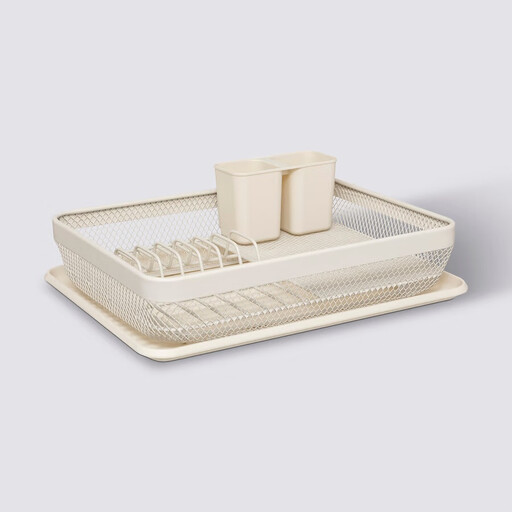
Why it suits this type of household: Measuring 43 x 31.3 x 12.8 cm, this single-tier rack is ideal for households that want to air-dry a modest amount of washing next to the sink.
Its low profile and raised edge help keep dishes in place. The product description says it holds up to 10 plates and includes a cutlery holder.
Steel and ABS plastic construction, space for six glasses according to the product information, and no special installation required.
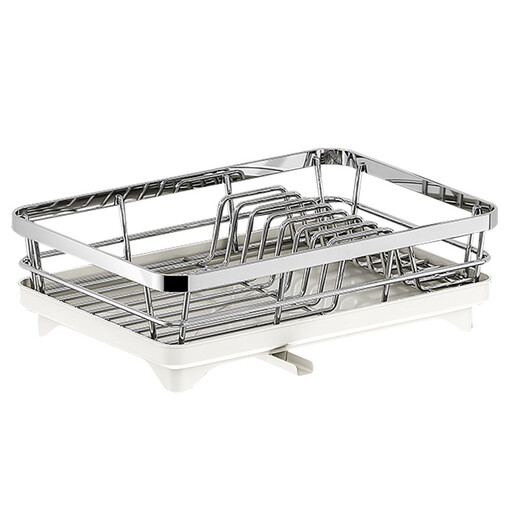
Why it suits this type of household: This model is designed for households that wash dishes daily and need an organised drying area with effective drainage.
Its dimensions of 42 x 29 x 12.7 cm are clearly stated. The PP drip tray and rotating spout help tackle the common problem of water getting onto the worktop.
Stainless steel rack, integrated drip tray and no assembly required, according to the product description.
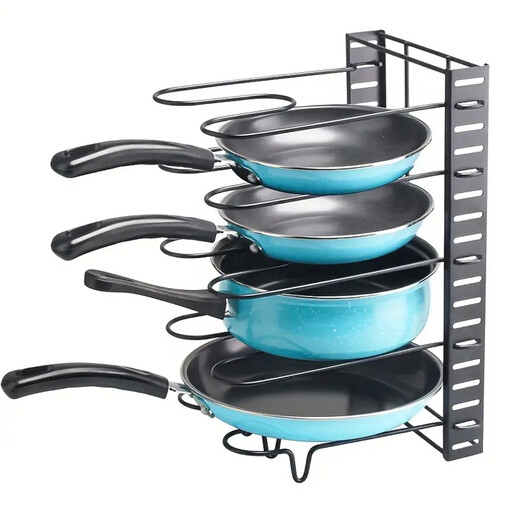
Why it suits this type of household: This flexible solution is designed for frequent use, with space for several pots, pans and lids. It’s also a good fit for kitchens with limited storage.
The rack can be set up in three ways: vertically on both sides, vertically on one side or horizontally. This makes it easier to adapt the layout to alcoves and cupboard spaces.
Eight adjustable tiers, U-shaped holders with silicone pads and two integrated hooks, according to the product description.
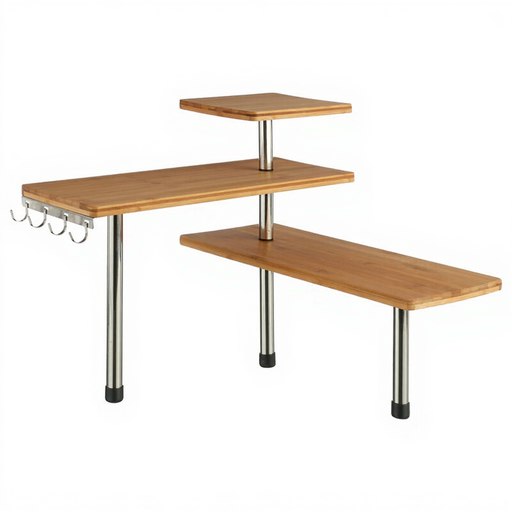
Why it suits this type of household: This L-shaped corner rack makes use of otherwise wasted space and combines shelves with hooks for cups, small kitchen utensils or tea towels.
Check that the dimensions of 43.5 x 43.5 x 39 cm fit your corner before buying. The care instructions recommend drying the bamboo straight after wiping it with a damp cloth.
Three bamboo shelves, four side hooks and a freestanding design for organising your kitchen or bathroom.
We’ve put together a complete, regularly updated list of products that meet these strict selection criteria and the safety regulations in force in the EU.
It depends on how much washing you do each day and how much worktop space you have. A single-tier rack may be enough for a small household. If there are several people in your home or you wash dishes frequently, a two-tier dish rack provides more vertical storage. Measure the space next to the sink and allow room for water to drain away.
Choose a model with a drip tray and, if possible, an adjustable spout that drains into the sink. Empty the tray regularly and clean it with a mild detergent. Even a correctly positioned rack can’t reliably prevent water from pooling if the worktop isn’t level.
A dessert stand or tiered serving stand is mainly designed for displaying cakes, pastries and small dishes. It’s only suitable for heavy pots, pans or dishes that stay wet if the materials, stability and weight capacity are specifically designed for that purpose. So check the stated intended use before using one as a kitchen organiser.