
Lieferung heute & morgen

Qualitätsgarantie
App herunterladen
Kategorien
In Germany, the proper separation of waste is regulated by the Circular Economy Act and is a fundamental part of daily life. A functional waste separation system in the kitchen is therefore not an option, but a necessity. It not only helps with compliance with legal requirements but also streamlines workflows, promotes hygiene, and can be aesthetically integrated into your kitchen design. The choice of the right system depends on objective criteria such as household size, available space, and specific requirements for materials and operation.
The decision for a particular model should be based on an analysis of technical specifications and practical features. The following parameters are relevant for making an informed choice.
The configuration of a recycling system depends on local disposal regulations and individual waste generation.
The capacity is specified in litres. For a 1- to 2-person household, 2x 15 litres is often sufficient. A family of four, on the other hand, benefits from a larger total capacity of 50 to 60 litres, divided among the compartments, to reduce the frequency of emptying.
The material affects the durability, hygiene, and appearance of the waste collector.
The method of operation is crucial for hygiene and user convenience.
Based on the technical criteria mentioned above, we present three models that stand out for their specific design features and applications.
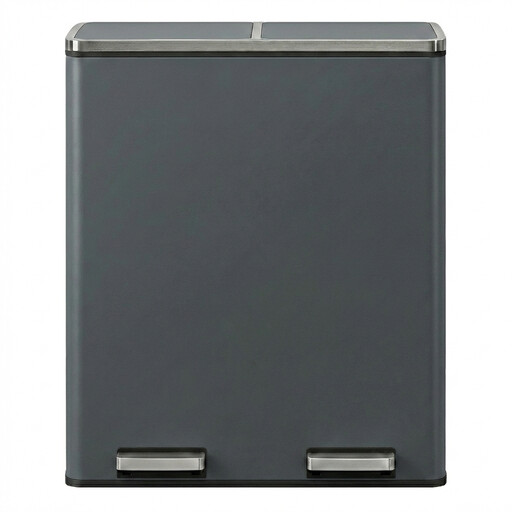
Why we recommend this product: This model combines a large capacity with a durable design. The steel body ensures stability, while the two generous 30-litre inner buckets allow for efficient separation of large amounts of waste. The soft-close mechanism and pedal operation meet the demands for comfortable and quiet use.
Pros:
Best for: Families and multi-person households looking for a durable, high-capacity solution for basic waste separation (e.g., general waste and recyclables).
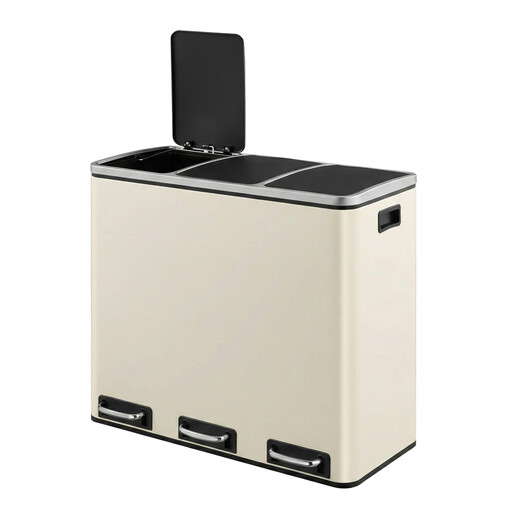
Why we recommend this product: This 3-compartment bin is designed for detailed waste separation. With three separate 18-litre containers, it allows for the simultaneous collection of, for example, general waste, organic waste, and recyclables in one place. The rust-resistant steel body and modern beige design blend harmoniously into contemporary kitchens.
Pros:
Best for: Environmentally conscious households that value precise and convenient waste separation directly in the kitchen and need a solution for three waste streams.
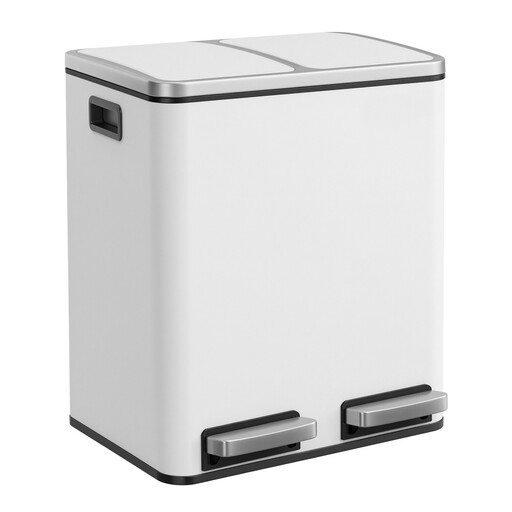
Why we recommend this product: This model is designed for efficiency in compact spaces. With a total capacity of 30 litres, divided into two 15-litre compartments, it offers a functional separation solution for smaller kitchens. Its special feature is the two separate pedals, which allow for targeted access to each compartment and further enhance hygiene.
Pros:
Best for: Singles, couples, and households with limited space who are looking for a compact yet fully functional kitchen recycling bin system with a smart design.
For kitchens where a freestanding solution is not desired for reasons of space or design, built-in bins are an excellent alternative. These systems are mounted directly inside a kitchen base cabinet and are invisible when the door is closed. They make efficient use of existing storage space and ensure a particularly tidy appearance. You can find a selection of suitable built-in models in our under-counter bin category.
1. What is the most effective way to clean a recycling bin with inner buckets? Remove the inner buckets and rinse them with warm water and a mild detergent. For stubborn odours, a solution of water and vinegar can help. Dry the buckets completely before putting them back. The outer casing, especially if it's stainless steel, should be cleaned with a soft, damp cloth.
2. What capacity per compartment is practical for a 2-person household? For a 2-person household, a capacity of 10 to 15 litres per compartment is generally sufficient, especially for general and organic waste. For recyclables, which are often more voluminous, a larger compartment of 20 to 30 litres can be advantageous. A system with 2 x 15 litres is a good starting point.
3. What is the advantage of a soft-close mechanism on a pedal bin? The main advantage is noise reduction. The lid doesn't slam shut, which minimises noise pollution in the kitchen. Additionally, the dampened closing action protects the material of the lid and hinge, which can contribute to the product's longevity.