
Lieferung heute & morgen

Qualitätsgarantie

Willkommens-Angebote freischalten: KOSTENLOSE Lieferung | Bis zu 80 % RABATT | Kostenlose 30-Tage-JoyPlus-Testphase
App herunterladen
Efficient waste separation is a key part of protecting the environment, but in practice, it can quickly make a kitchen look cluttered. Multiple individual bins take up valuable space and disrupt the room's aesthetic. A well-designed kitchen recycling system solves this problem by consolidating different types of waste into a single, compact container.
As your Joybuy Product Recommendation Officer, I'm dedicated to introducing you to practical and functional products that make everyday life easier. In this guide, you'll find a selection of top recycling systems and helpful tips to help you make an informed decision for your home.
Before you decide on a model, there are a few key criteria to consider. These will help you find a system that perfectly fits your needs and your kitchen's layout.
The size of your household and your consumption habits will determine the volume you need. A 60L trash can total capacity is often a good choice for families, while 30 to 40 liters may be sufficient for smaller households. Consider which types of waste you generate most frequently. A 2-compartment pedal bin is ideal for basic separation of general waste and recyclables. Models with three compartments allow for even more detailed sorting, for example, for organic waste or paper. Such a dual-compartment bin or a three-chamber model is the foundation for effective waste separation.
A stainless steel trash can is a popular choice for a kitchen bin due to its durability and ease of cleaning. Many models feature a special coating that resists fingerprints, ensuring a consistently clean appearance. The design should blend harmoniously with your kitchen decor. Whether you prefer classic silver, modern black, or other colors, there's a wide selection available.
A kitchen bin with a lid is essential for containing odors and maintaining a hygienic environment. Models with a pedal mechanism are particularly practical, as they allow for hands-free operation. Another convenient feature is a soft-close mechanism. A soft-close bin shuts the lid gently and quietly, preventing disruptive noises in your daily routine. Some systems also offer a stay-open function, which makes changing bin liners or peeling vegetables easier.
Here, we present three models that stand out for their functionality and design, catering to a range of different needs.

Why It Stands Out This model combines a large capacity with a classic design. The two separate 30-liter buckets allow for straightforward, large-scale separation of general waste and recyclables. Its robust construction and thoughtful details make it a durable solution for family life.
Pros
Who It's For Families and shared living spaces looking for a simple yet high-capacity solution for waste separation. This recycling bin is perfect if you primarily need to separate two types of waste.
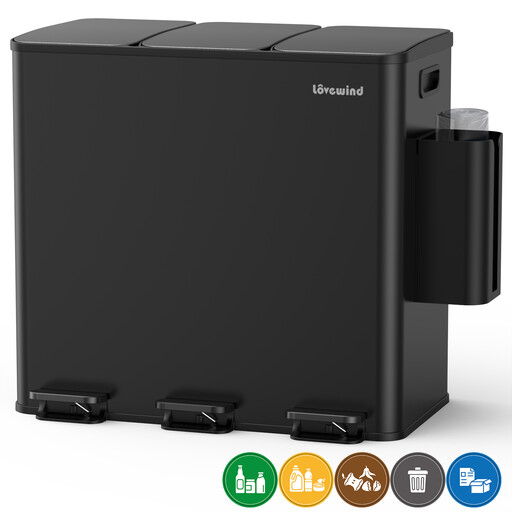
Why It Stands Out This system is designed for detailed waste separation. With three separate compartments and magnetic color-coded labels, sorting general waste, recyclables, and organic waste becomes effortless. Its thoughtful design integrates seamlessly into modern kitchens.
Pros
Who It's For Eco-conscious households that value precise, well-organized waste separation directly in the kitchen and prefer an all-in-one solution.
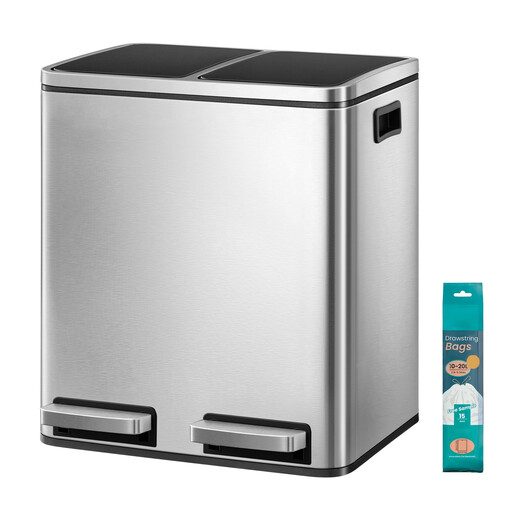
Why It Stands Out With its compact dimensions, this dual-compartment bin is the ideal solution for kitchens with limited space. Despite its small footprint, it offers all the conveniences of a modern recycling system, including separate pedals and soft-close lids.
Pros
Who It's For Singles, couples, and small families living in compact apartments who need an efficient yet discreet solution for waste separation.
If the models featured here don't quite match what you're looking for, or if you're searching for specific designs like a mosaic finish, there are more options to explore. A unique design can transform a purely functional item into a stylish kitchen accessory.
Discover our wider selection of mosaic trash cans to find the perfect addition to your kitchen.
A recycling system is a single waste container that is divided into multiple separate compartments inside. Each compartment is intended for a different type of waste, such as general waste, recyclables, paper, or organic waste. This allows you to sort waste as you generate it without needing multiple individual bins.
The ideal volume depends on your household size and individual habits. As a general guideline:
For regular cleaning of a stainless steel trash can, a soft, damp cloth, perhaps with a little mild dish soap, is usually sufficient. Afterward, wipe it dry with a clean cloth to prevent water spots. For models with a fingerprint-resistant coating, a dry microfiber cloth is often all you need. Avoid aggressive or abrasive cleaners, as they can scratch the surface. The plastic inner buckets can be easily washed out with soap and water.