
Lieferung heute & morgen

Qualitätsgarantie

Willkommens-Angebote freischalten: KOSTENLOSE Lieferung | Bis zu 80 % RABATT | Kostenlose 30-Tage-JoyPlus-Testphase
App herunterladen
A well-designed recycling system is the cornerstone of an organised and hygienic kitchen. However, the sheer number of options can be overwhelming. Many models promise durability and convenience, only to prove impractical after a short time. As your Joybuy Product Recommendation Officer, I'm here to help you identify the common pitfalls and make an informed decision that will genuinely simplify your daily routine.
Before we dive into the key features, let's look at the problems that often only surface after the purchase. Knowing these can help you avoid costly mistakes.
To avoid these issues, you should check three core parameters before buying. These will determine whether a kitchen waste bin will bring you long-term satisfaction.
The right configuration is crucial for effective waste separation. Consider which types of waste you generate most frequently.
The material affects not only the appearance but also the durability and hygiene.
Small details make a big difference in daily use. Look for removable plastic inner buckets that are easy to clean. Integrated handles on the buckets and a liner retainer to prevent the bag from slipping are also practical features. Some models also offer a "stay-open" function, allowing the lid to remain open for extended kitchen tasks.
Here are three models tailored to different needs and household sizes that meet the quality criteria mentioned above.
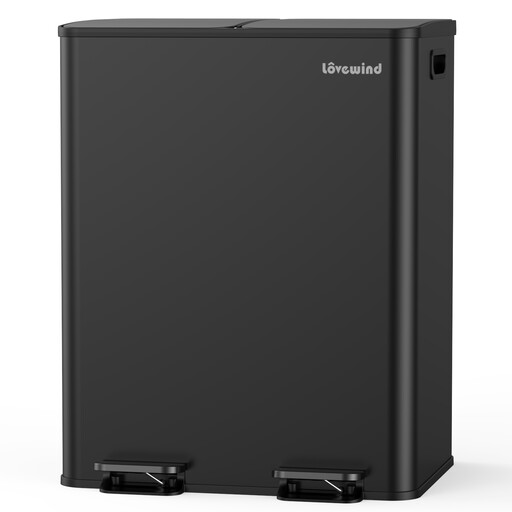
Why This Fits Their Persona: With a total volume of 60 litres, this system is ideal for families that generate a lot of waste daily. The two large 30-litre compartments make separating general waste and recyclables straightforward and reduce how often it needs emptying.
The high-density stainless steel pedal is built for durability. The stainless steel surface is described as fingerprint-resistant, minimising cleaning effort. The large volume is perfectly suited for a multi-person household.
Large Capacity: 2 x 30 litres is ideal for daily family life. Convenience Features: Soft-close lid, separate pedals for each compartment, and a 90° stay-open function.
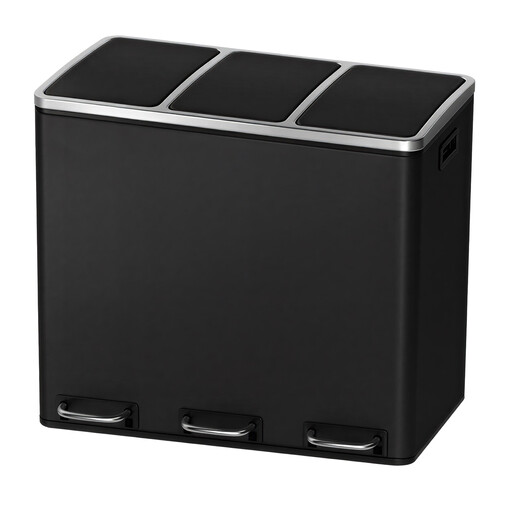
Why This Fits Their Persona: For those who take waste separation seriously and need more than two streams. With three separate 18-litre containers, general waste, recyclables, and organic waste or paper can be collected neatly in one place.
The rust-resistant steel body and robust pedals are designed for intensive use. The three inner buckets with handles can be removed individually, which simplifies handling and cleaning for multiple waste types.
Efficient 3-Way Separation: Perfect for detailed waste sorting directly in the kitchen. Quiet Soft-Close Lids: Each of the three lids closes gently and silently.
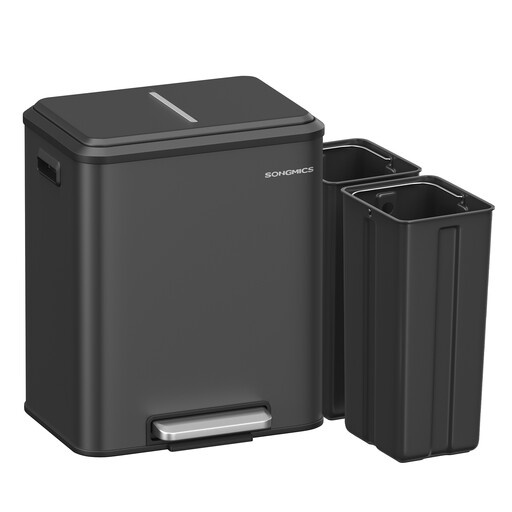
Why This Fits Their Persona: This compact 2 x 15-litre system is ideal for smaller households that value aesthetics. The elegant, ink-black finish of the steel body blends seamlessly into modern kitchens without sacrificing functionality.
The wide, sturdy pedal promises reliable operation. Its compact size is appropriate for the needs of a two-person household, avoiding the drawbacks of an oversized bin.
Elegant Design: The ink-black steel body is a visual highlight. Compact Dimensions: At 2 x 15 litres, it's ideal for kitchens with limited space.
We have compiled a complete, up-to-date list of products that fully meet these strict selection criteria and safety standards.
1. How do you properly clean a stainless steel recycling system? Regularly wipe the stainless steel surface with a soft, damp microfibre cloth. For tougher grime, you can use a special stainless steel cleaner or a mild dish soap solution. Avoid abrasive sponges or harsh cleaning agents, as they can scratch the surface. The plastic inner buckets can be easily washed out with soap and water.
2. What capacity is suitable for a 4-person household? For a 4-person household, a total capacity of 50 to 60 litres is generally a good rule of thumb. A 2-compartment pedal bin with 30 litres for general waste and 30 litres for recyclables is a very common and practical solution. If you generate a lot of organic waste, a 3-compartment bin with a total capacity of around 54 litres (e.g., 3 x 18 litres) may also be a suitable choice.
3. What does "soft-close" mean on a bin? "Soft-close" refers to a damping mechanism in the lid's hinge. It ensures that when you release the pedal, the lid doesn't slam shut but closes slowly and silently. This enhances user comfort, reduces noise in the kitchen, and protects the bin's material.