
Lieferung heute & morgen

Qualitätsgarantie

Willkommens-Angebote freischalten: KOSTENLOSE Lieferung | Bis zu 80 % RABATT | Kostenlose 30-Tage-JoyPlus-Testphase
App herunterladen
A kitchen recycling system should make it easy to sort your waste, stay hygienic and fit into the space you have. In practice, though, it’s often unclear measurements, hard-to-reach inner bins or the wrong capacity — rather than obvious design features — that lead to a disappointing purchase. Before you buy, think about how you’ll actually use it, not just the product photos and marketing claims.
A kitchen bin with two compartments takes up more floor space than a simple bin. You’ll also need enough room for the lid to open fully. For example, the JOYFURNOS model measures 59 × 36,5 × 62,4 cm externally. According to the product information, there should be at least 5 cm clearance between the bin and the wall behind it so the lid can open properly.
So don’t just measure the available width. Check the depth, the clearance beneath wall cabinets and the space in front of the bin, too.
A two-compartment bin can have different internal layouts. Two similarly sized bins are useful for general waste and packaging. For food waste, however, a smaller kitchen compost bin is often enough, while paper or recyclable materials may need more space.
Check the capacity of each compartment, not just the total capacity. A 60-litre recycling bin might have two 30-litre compartments or two differently sized sections.
A soft-close bin lowers its lid gently, helping to reduce noise. But the feature doesn’t replace regular cleaning. Crumbs, spills or overfilled bin bags can get in the way of the mechanism. A pedal bin should also be placed on a level surface and not overloaded.
Removable inner bins with handles are a practical choice. They make changing the bag easier and let you clean the outer casing and inner bins separately.
A small 3-litre bathroom or cosmetic bin may be enough for one person. In the kitchen, the capacity you need depends on how often you cook, how frequently your bins are emptied and how you sort your waste.
The capacity in litres tells you the volume, not necessarily the maximum weight the bin can hold. Always follow the manufacturer’s safety guidance.
A stainless steel bin can be cleaned with a soft, damp cloth. Coated surfaces may help reduce fingerprints, but don’t clean them with wire wool or abrasive products. Plastic inner bins are a good choice if they can be removed and washed with warm water and a mild cleaning product.
For a kitchen compost bin, a tightly fitting lid is also important to help keep smells and moisture from escaping into the room. You’ll still need to empty it regularly.
A pedal lets you open the bin without touching it by hand. That’s especially useful when you’re cooking and your hands aren’t clean or free. Before you buy, check:
In households with children, make sure the area around the pedal and lid is accessible, but not used as a play area. Soft-close mechanisms can reduce the risk of trapped fingers, but can’t eliminate it completely.
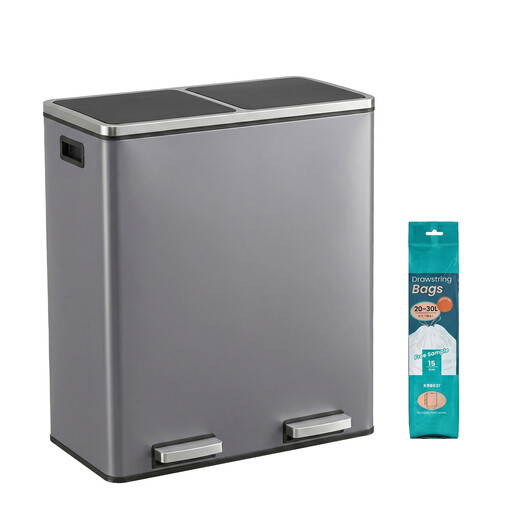
Why this product suits this profile: Two separate inner bins make it easier to start sorting general waste and recyclable materials. The pedal-operated lid means you don’t have to open it by hand.
The removable PP inner bins have handles to make emptying and cleaning easier. The external dimensions provided also help you plan where to put it.
Two compartments, soft-close lid, pedal operation and 15 bin bags included.
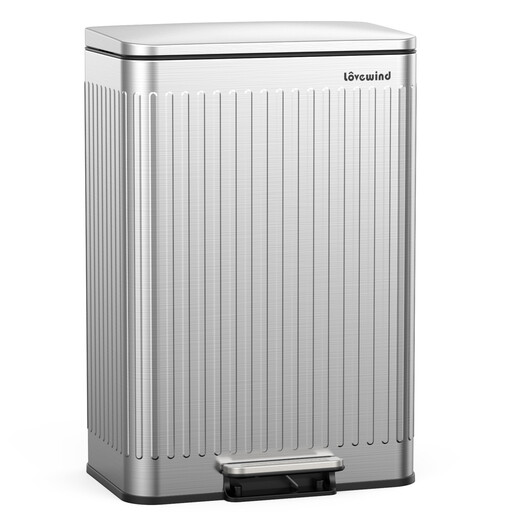
Why this product suits this profile: Its coated stainless steel finish, two removable inner bins and 90-degree stay-open function are designed for regular use in the kitchen or office.
The inner bins can be removed and have carrying handles and bag holders. This helps keep bin bags in place when you change them.
60-litre total capacity, soft-close lid, stainless steel pedal and a fingerprint-resistant coating, according to the product description.
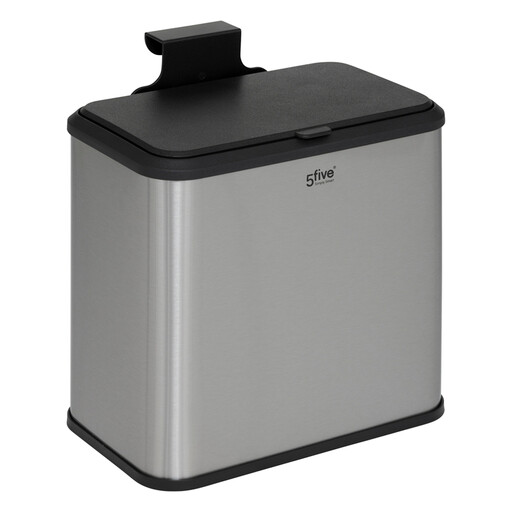
Why this product suits this profile: This compact bin is suitable for a kitchen worktop or the space under the sink if you want to keep food waste separate and empty it regularly.
With a 5-litre capacity, it stays manageable in size. It’s a good fit for households that prefer to empty food waste frequently rather than leave it in a large bin for a long time.
Compact dimensions of 25,5 × 15,5 × 37,8 cm, with stainless steel and PP components, according to the product description.
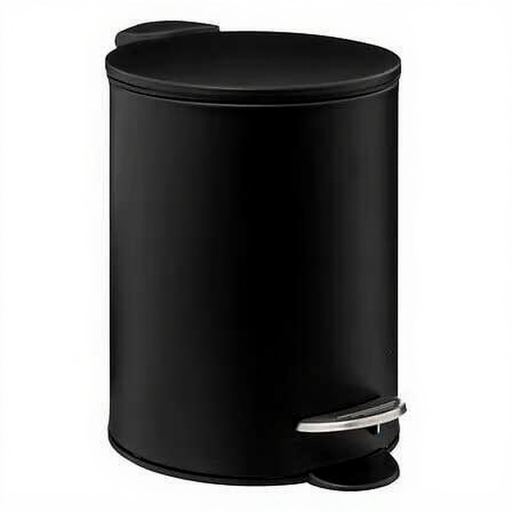
Why this product suits this profile: This small pedal bin is designed for bathrooms, guest toilets, bedrooms or utility rooms, and takes up very little space.
Its compact size helps prevent a small room from being dominated by an oversized kitchen bin. The inner capacity is designed for light waste.
3-litre capacity, foot pedal, removable plastic inner bin and soft-close mechanism, according to the product information.
We’ve put together a complete, regularly updated list of products that meet these strict selection criteria and the safety regulations in force in the EU.
A kitchen recycling system will keep working well when you look after each of its components:
A quiet-closing mechanism can help reduce everyday noise, but it needs to move freely and stay clean. If the pedal or lid is visibly damaged, stop using the product.
It depends on the number of people in your household, how often you cook and how frequently your bins are emptied. A 60-litre bin may be a good choice for a larger household. If you dispose of food waste separately and frequently, you could also use a kitchen compost bin of around 5 litres.
Soft-close can stop the lid from slamming and help reduce noise. It’s particularly useful in open-plan kitchens, offices and households where people keep different schedules. But the internal layout, ease of cleaning and dimensions that suit your space are still key.
Use bin bags that fit, wipe up spills promptly and clean removable inner bins regularly. Avoid abrasive cleaning products on stainless steel bins to prevent unnecessary scratches.