
Lieferung heute & morgen

Qualitätsgarantie

Willkommens-Angebote freischalten: KOSTENLOSE Lieferung | Bis zu 80 % RABATT | Kostenlose 30-Tage-JoyPlus-Testphase
App herunterladen
Proper waste separation is an integral part of modern, sustainable living. A well-designed recycling system in the kitchen significantly simplifies this process, promoting better hygiene and order. Choosing the right system depends on individual needs, such as household size, available space, and the types of waste to be sorted. This guide analyses the key technical criteria to consider when selecting a kitchen waste bin.
The decision to purchase a recycling bin should be based on objective features. The following parameters are crucial for its functionality and durability.
The number of compartments determines how many waste streams can be sorted directly in the bin.
Capacity is measured in litres and should correspond to your household size. For a 1- to 2-person household, a total capacity of 30 to 40 litres is often sufficient. Families typically require systems with a total capacity of 50 to 60 litres to avoid having to empty the bin too frequently.
The material affects the bin's durability, hygiene, and aesthetics.
The opening mechanism is a key criterion for hygienic and convenient use.
The following products have been selected based on their technical specifications and practical utility for daily kitchen use.
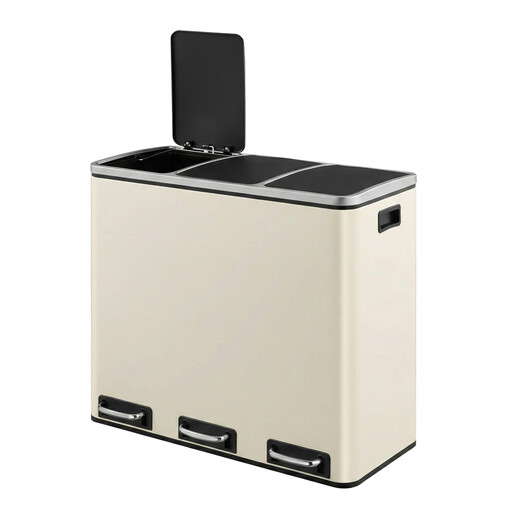
Why we recommend this product With three separate 18-litre compartments, this model offers a comprehensive solution for waste separation. The total capacity of 54 litres is designed for medium-sized households. The steel body ensures stability, while the Soft-Close lids provide quiet operation. The pedal for each compartment allows for hygienic and separate disposal.
Advantages:
Ideal for:
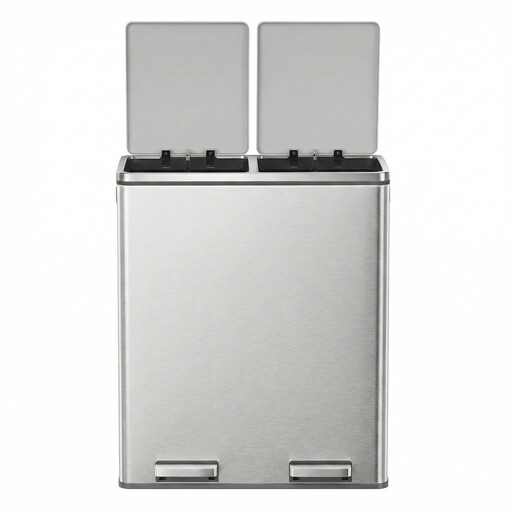
Why we recommend this product With a total capacity of 60 litres, divided into two 30-litre compartments, this recycling bin is specifically aimed at families and shared living spaces with a high volume of waste. The stainless steel body is durable and has an unobtrusive design. The combination of large capacity, a Soft-Close lid, and pedal operation makes it a functional choice for high-traffic kitchens.
Advantages:
Ideal for:
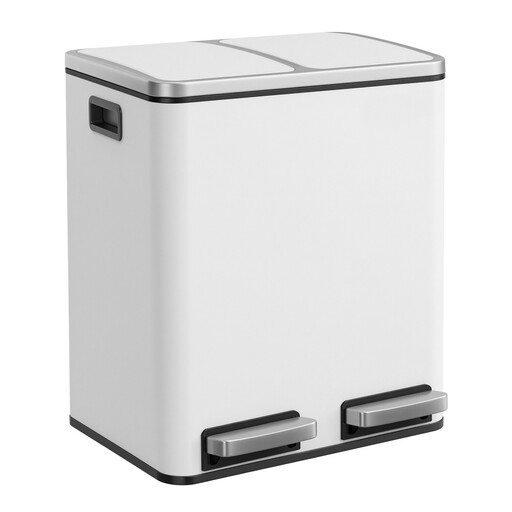
Why we recommend this product With its compact dimensions and a total capacity of 30 litres (2 x 15 litres), this model is designed for kitchens with limited space. A special feature is the two separate pedals, which allow for targeted opening of each compartment. The side carrying handles make it easy to reposition the bin. The combination of a space-saving design and thoughtful functionality makes it a practical solution.
Advantages:
Ideal for:
For collecting larger amounts of waste or housing regular wheelie bins outdoors, Wheelie Bin Storage Units are an excellent option. They protect the bins from weather and animals and ensure a tidy appearance on your property. They are a sensible addition to the recycling system inside your kitchen.
1. What goes into each compartment of a recycling system? The division depends on local regulations. A common separation includes:
2. How do you clean a kitchen waste bin hygienically? Regular cleaning is essential for hygiene. The removable inner buckets should be cleaned weekly, or as needed, with warm water and a mild detergent. The body, especially on a stainless steel bin, can be wiped down with a soft, damp cloth. It is advisable to let the buckets dry completely before inserting new bin liners.
3. What are the advantages of a pedal bin with a soft-close feature? A pedal bin allows you to open the lid without hand contact, which reduces the spread of germs. The Soft-Close feature adds to this convenience by closing the lid gently and silently. This prevents loud slamming, which is especially beneficial in open-plan kitchens, and minimises wear and tear on the lid mechanism.