
Lieferung heute & morgen

Qualitätsgarantie

Willkommens-Angebote freischalten: KOSTENLOSE Lieferung | Bis zu 80 % RABATT | Kostenlose 30-Tage-JoyPlus-Testphase
App herunterladen
Proper waste separation is standard practice in modern households. But the search for the right system can quickly become overwhelming: Which bin fits my kitchen? How many compartments make sense? And how can it all be implemented in a way that is both hygienic and aesthetically pleasing?
This article serves as your guide. We will introduce various concepts for recycling bins and highlight the criteria that will help you choose a functional and durable solution for your home.
Before you decide on a model, a few fundamental aspects should be considered. The following points will help you define your requirements and narrow down your options.
The first decision concerns where to put the bin. Do you have enough space for a freestanding model, or do you prefer a solution hidden away in a kitchen cabinet?
The number of compartments depends on how meticulously you want to separate waste directly in the kitchen. Typically, containers are needed for general waste, organic waste, paper, and packaging/recyclables.
Modern recycling bins offer more than just storage for waste. The material and additional features significantly contribute to hygiene and ease of use.
Based on the criteria mentioned, we have curated a selection of models that cater to different needs and kitchen sizes.
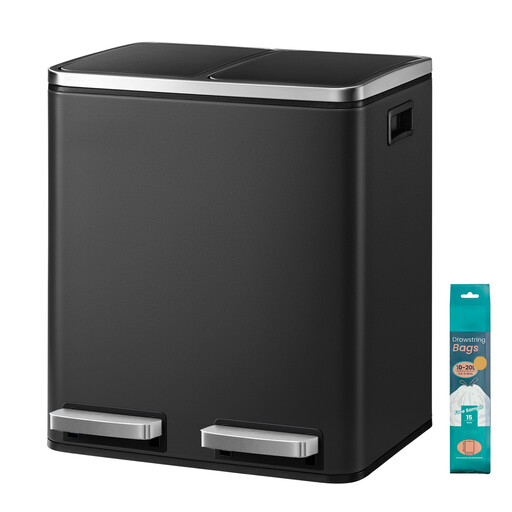
What makes it stand out: This model is a compact and efficient solution for 2-way waste separation. With two separate pedals for the two inner buckets, it enables clear separation and hygienic operation.
Benefits:
Best for: Small to medium-sized households looking for a stylish and functional 2-compartment separation solution for the kitchen.
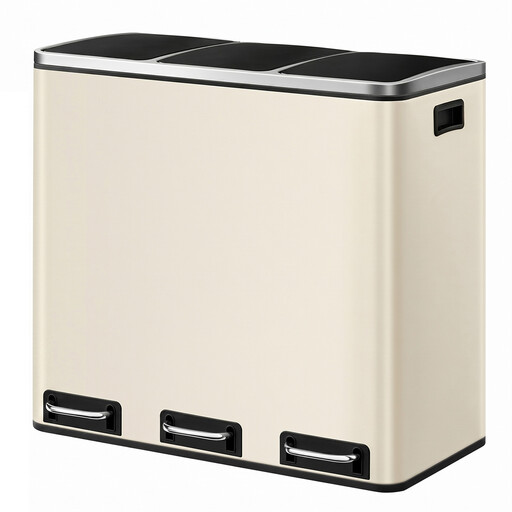
What makes it stand out: With three separate containers, this recycling system offers a comprehensive solution for households that value detailed waste separation directly in the kitchen.
Benefits:
Best for: Families and eco-conscious households that need an all-in-one system for thorough waste separation.
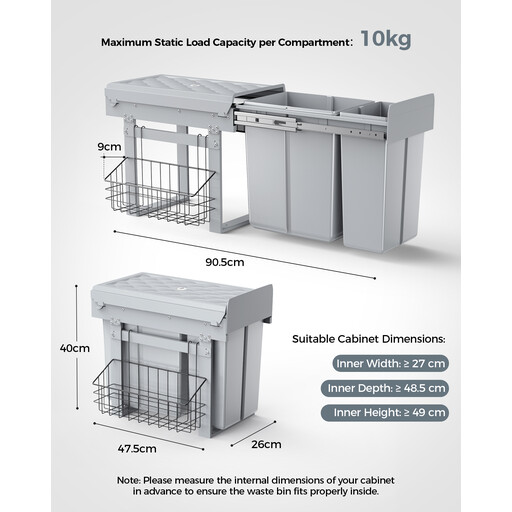
What makes it stand out: This system is designed as a built-in under-cabinet bin and disappears completely behind the kitchen cabinet door. It's an excellent solution for saving floor space and maintaining a seamless look.
Benefits:
Best for: Users who prefer an invisible, space-saving waste separation solution and appreciate a tidy, minimalist kitchen.
The requirements for a recycling system are as individual as any kitchen. If you are looking for solutions for specific applications, such as for mobile use or a particular colour scheme, other models might be of interest to you.
Discover more designs, like our selection of grey waste bins for caravans, to find the perfect solution for your individual needs.
A recycling system with multiple compartments is the foundation. Label the individual containers to avoid mix-ups. Emptying the bins regularly, especially the organic waste, prevents odour build-up and keeps the kitchen hygienic.
Packaging waste often generates a lot of volume. A container with a capacity of at least 20 to 30 litres is practical for this. Most 2- or 3-compartment systems offer a bin of this size that is ideal for this purpose.
Yes, a bin with a lid is highly recommended from a hygiene perspective. It effectively contains odours, keeps pests away, and ensures a clean appearance. Models with a pedal mechanism also offer the advantage of hands-free opening, which reduces the spread of germs.