If you’ll mainly be cooking a pot of lentil Bolognese during your renovation, a portable single hob is a good temporary solution. If you want to cook the sauce and pasta at the same time, you’ll need a second cooking zone. Induction requires suitable ferromagnetic-based cookware, while a built-in hob can only be planned once the cut-out and professional electrical connection are suitable for your finished kitchen. Before buying, also check the instructions and the required markings for the specific appliance.
Which option is right for you?
Cooking with one pot during a renovation
If you’ll mainly be making the sauce during your renovation and can prepare a side dish later, a portable single hob should be enough. ROMMELSBACHER and CASO’s product information includes suitable examples of a single portable cooking zone.
Cooking with two pots at once
If you want to cook lentil Bolognese and pasta at the same time, you’ll need two cooking zones and enough worktop space. SEVERIN lists two cooking zones and a Schuko plug for its DK 1031 model.
Planning your kitchen for after the renovation
If you’re already planning your finished kitchen, make sure the cut-out and fixed electrical connection are suited to the specific hob. Bosch lists fixed installation dimensions for the PIE611BB5E, while HEA states that a fixed hob connection should be carried out by a registered electrical installer.
What to consider when choosing
| What you need |
What to check before buying |
Who is this most important to? |
| A hob to use during the renovation |
Check the appliance dimensions, a suitable place to use it, the instructions and the available socket. |
If I mainly need to cook a pot of sauce during the renovation, a single portable cooking zone is essential. Around 36% of consumers prioritise this. |
| Cooking sauce and a side dish at the same time |
Compare the number of cooking zones, appliance width, total power and available circuit. |
If I want to cook the sauce and pasta at the same time, I need space for two pots and suitable connections. Around 29% of consumers prioritise cooking two dishes at once. |
| Continuing to use your existing pots |
Check your pots’ bases and sizes against the heating technology and cooking zone of the specific model. |
If you don’t want to replace your existing cookware, first check that the bases are suitable for the heating technology you choose. Around 21% of consumers prioritise this. |
| Fitting a hob in your finished kitchen |
Make sure the cut-out, installation dimensions, connected load and connection type of your chosen model match your kitchen plans. |
If I’m already planning my finished kitchen, the cut-out and fixed connection need to suit the specific hob. Around 14% of consumers prioritise a permanent built-in solution. |
Common mistakes
-
Assuming that glass ceramic means induction
Glass ceramic describes the surface, not the heating technology. An induction model such as the ROMMELSBACHER CT 2010/IN needs a ferromagnetic pan base, whereas the CT 2203/TC TM uses a HiLight radiant heating element.
Check the heating technology against your pan bases before choosing a model.
-
Choosing a double hob based only on the number of cooking zones
Two cooking zones need more worktop space. Total power, the plug and the available circuit also matter. ROMMELSBACHER advises against using an extension lead with multiple sockets for its high-powered double hobs.
Check the appliance dimensions, connection and instructions. Don’t rely on the number of zones or the wattage alone.
-
Planning to use a built-in hob as a portable temporary solution
A fixed hob needs to fit the worktop cut-out and the planned electrical connection. Bosch states that the PIE611BB5E is supplied without a plug and should be connected by a qualified electrician.
Decide separately which appliance you’ll use during the renovation and which one you want fitted in your finished kitchen.
-
Underestimating the residual heat from a portable hob
The Clatronic EKP 3582 instructions warn that the cooking zone can cause burns after cooking and require a clearance of 30 cm from easily flammable objects.
Follow the placement instructions for your specific model and wait for the cooking zone to cool before moving the hob.
Brands and models to consider
ROMMELSBACHER
The CT 2010/IN and CT 2203/TC TM use different heating technologies in portable single hobs.
- The manufacturer says the CT 2010/IN has ten power levels, while the CT 2203/TC TM has a larger switchable cooking zone and a residual heat indicator.
- The CT 2010/IN needs a ferromagnetic pan base. Information about one model does not necessarily apply to the other.
SEVERIN
The portable DK 1031 double induction hob is an option if you need to heat two pots at the same time during your renovation.
- SEVERIN lists two cooking zones, a total power output of 3.400 W and a Schuko plug for this model.
- Make sure the available worktop space and electrical connection suit your renovation plans.
CASO Design
The S-Line 2100 is a portable single induction hob for use with a suitable pan.
- CASO lists twelve power levels, a suitable pan size of 12 to 24 cm, and CE and GS markings for this model.
- The manufacturer’s information does not provide independent test results for simmering performance.
Clatronic
The EKP 3582 is an electric single hob with a cast-iron plate, for buyers whose pans are not suitable for induction.
- The manufacturer lists one cooking plate measuring approximately 180 mm in diameter and rated at 1.500 W.
- The model-specific instructions require clearance from easily flammable objects and warn that the cooking zone remains hot after use.
Bosch
The PIE611BB5E is a built-in induction hob designed for a finished kitchen.
- Bosch lists four cooking zones and specific installation dimensions for this model.
- The hob is supplied without a plug and is intended to be connected by a qualified electrician; it is not a freestanding portable hob for temporary use.
Portable induction hobs at Joybuy
The following Joybuy products are portable induction hobs with one or two cooking zones. They may suit you as a temporary solution, provided your cookware and electrical connection are compatible with the model.
 No image available
IsEasy portable single induction hob, 2100 W
A portable cooking zone for use with an induction-compatible pan.
Nine heat settings, an 8-hour timer and suitable for magnetic cookware with a base measuring 12–26 cm.
Joybuy
 No image available
Portable induction hob with two cooking zones
For heating sauce and a side dish at the same time, if you have enough worktop space.
Two independently controlled cooking zones and five temperature settings.
Joybuy
 No image available
Portable single induction hob, 3500 W
A portable cooking zone for one pan; the pan base must be suitable for induction.
Ten temperature settings and a timer.
Joybuy
 No image available
Portable single induction hob, 3500 W
A single portable cooking zone for use with induction-compatible cookware.
Eight temperature settings and a 3-hour timer.
Joybuy
 No image available
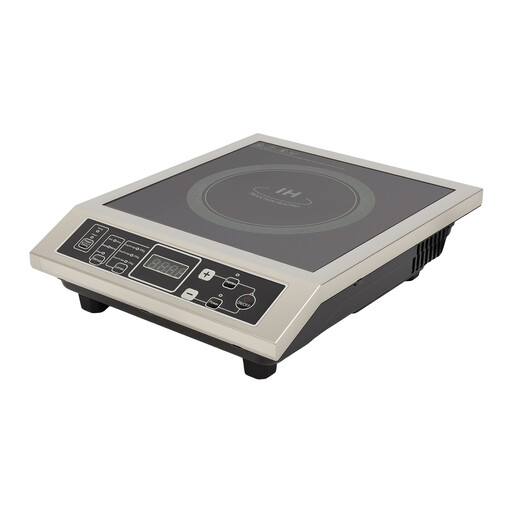
Tabletop induction hob, 3500 W
A portable single cooking zone for an induction-compatible pan.
Ten power levels, a timer and IPX4 splash protection, according to the product description.
Joybuy
Frequently asked questions
Does the term ‘glass ceramic’ mean my pan will work on the hob?
No. Glass ceramic describes the surface, not the heating technology. The ROMMELSBACHER CT 2010/IN uses induction and needs a ferromagnetic pan base, while the CT 2203/TC TM uses a HiLight radiant heating element. So check the heating technology of the specific appliance against your pan base.
Can I put a portable hob anywhere or use it with an extension lead with multiple sockets?
No. Always follow the instructions for your specific appliance and check the available electrical connection. The Clatronic EKP 3582 instructions require a level surface that is resistant to moisture and heat, a clearance of 30 cm from easily flammable objects, and prohibit use beneath wall cabinets. ROMMELSBACHER advises against using extension leads with multiple sockets for its high-powered double hobs. These instructions apply to the appliances and manufacturer guidance mentioned here, not necessarily to every hob.
Can I connect a built-in hob myself?
Arrange the fixed connection with a qualified electrician. HEA states that a fixed electric hob connection should be carried out by a registered electrical installer; Bosch specifically says that the PIE611BB5E is supplied without a plug and must be connected by a qualified electrician. Plugging in a portable hob designed for that purpose is not the same as working on a fixed electrical installation.
Is a GS mark required on an electric hob?
No. The German Federal Institute for Occupational Safety and Health describes the GS mark as a voluntary test mark. In Germany, new ready-to-use electrical products rated at 50 to 1,000 V AC must carry the CE marking. A test mark alone is no substitute for checking the specific product listing and its instructions.


