
Lieferung heute & morgen

Qualitätsgarantie

Willkommens-Angebote freischalten: KOSTENLOSE Lieferung | Bis zu 80 % RABATT | Kostenlose 30-Tage-JoyPlus-Testphase
App herunterladen
A precise kitchen scale is the foundation for successful recipes and mindful eating. However, the market is filled with models whose performance claims often don't hold up in practice. Before you make a decision, it's crucial to know the most common pitfalls that lead to inaccurate measurements and a short lifespan.
This guide will help you understand the technical features that truly matter and find a scale that meets your specific needs—whether for daily cooking, ambitious baking, or detailed nutritional analysis.
Many models look high-quality at first glance but reveal their weaknesses only after you start using them. Watch out for these three common flaws to avoid making a bad purchase:
To find the right digital kitchen scale, you should focus on three objective core parameters. These determine the accuracy, durability, and practical usability in your daily routine.
The required precision depends directly on your intended use.
The material affects not only the look but also the hygiene and durability.
Extra features should offer clear practical benefits.
Here are some recommendations tailored to different user profiles that specifically avoid the pitfalls mentioned.

Why This Fits Their Persona: This model focuses on the essentials: precise weighing for daily use. It's ideal for home cooks and bakers who want a reliable, easy-to-clean tool without unnecessary complexity.
The scale uses a sturdy stainless steel platform instead of a thin coating and offers consistent 1-gram accuracy thanks to its stable sensors.
Hygienic and durable: The stainless steel surface is easy to clean and resilient. Simple operation: Clear buttons and an easy-to-read LCD display.
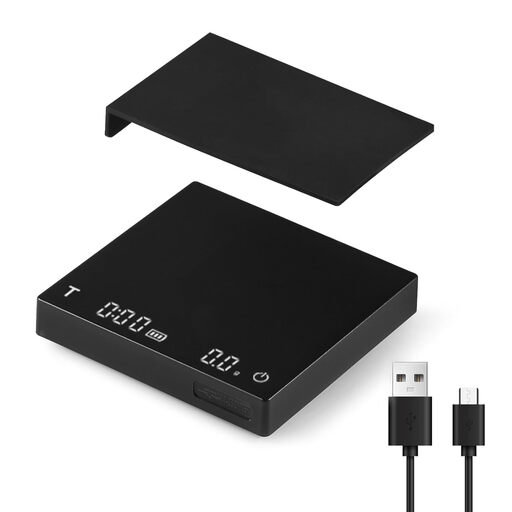
Why This Fits Their Persona: Designed for precise coffee brewing. The combination of 0.1g accuracy, an integrated timer, and a compact design makes it the ideal tool for espresso and pour-over lovers.
Its high-precision sensor is specifically designed for small weights, avoiding the inaccuracy of conventional scales. It offers specialised functions instead of bloated, unreliable smart features.
High precision: Measures in 0.1g increments up to 2000g. Smart features: Automatic timer start upon liquid detection and a rechargeable battery via USB-C.
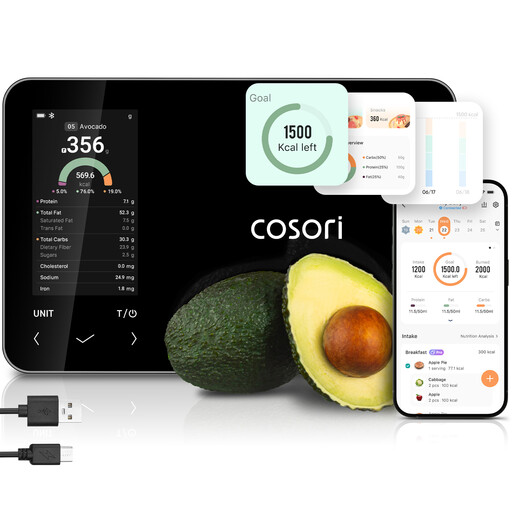
Why This Fits Their Persona: Perfect for anyone who wants to accurately track their nutrition and calorie intake. The scale combines precise weighing with a comprehensive app for nutritional analysis.
The VeSync app features a database of over 1 million food items and is actively maintained, bypassing the problem of unreliable smart functions. The hardware itself remains a precise scale with 1g accuracy.
Comprehensive nutrition tracking: Analyses 19 nutrients and allows for setting and tracking goals. Practical and rechargeable: Supports USB-C charging, which eliminates the need for battery changes.
We have compiled a complete, up-to-date list of products that fully meet these strict selection criteria and all relevant safety standards.
Most modern digital kitchen scales are factory-calibrated and do not require manual recalibration by the user. For precise results, it's important to always place the scale on a hard, level, and stable surface. The tare function should be used before each weighing to reset the display to zero, especially when using a container.
The main difference lies in precision and features. A standard kitchen scale typically measures in 1-gram increments. A coffee scale, on the other hand, offers higher accuracy of 0.1 grams, which is crucial for determining the exact ratio of coffee to water. Additionally, many coffee scales have an integrated timer to control the extraction time.
Battery life depends heavily on the frequency of use and the model. Most scales have an auto-off feature that conserves power after a period of inactivity. With average use, batteries can last from several months to over a year. Some models also offer the advantage of a USB-C rechargeable battery, eliminating the need for disposable batteries.