
Lieferung heute & morgen

Qualitätsgarantie

Willkommens-Angebote freischalten: KOSTENLOSE Lieferung | Bis zu 80 % RABATT | Kostenlose 30-Tage-JoyPlus-Testphase
App herunterladen
A precise kitchen scale is the foundation for successful recipes, exact coffee brewing, and a mindful diet. However, the market is flooded with models whose advertised features often fail to deliver in practice. As your Joybuy Product Recommendation Officer, I'm here to help you separate the wheat from the chaff and make an informed decision. We'll highlight the typical pitfalls and show you which objective criteria truly matter.
Many buyers are disappointed with their new scale after a short time. This is often due to problems that aren't apparent in the product description. Pay attention to these three points to avoid a bad purchase.
To find the right digital kitchen scale, you should focus on the following objectively measurable criteria. These determine the functionality and longevity of your device.
The precision of a scale is indicated by its increment (also called graduation). This is the smallest weight step the scale can display.
Also, pay attention to the minimum and maximum weighing range. Most scales start at a few grams and have a maximum load of 5 kg, which is generally sufficient for home use.
The material of the weighing surface has a direct impact on the hygiene and lifespan of the scale.
Some models are sold as a kitchen scale with a bowl. A removable, ideally dishwasher-safe bowl is particularly practical, as you can weigh and mix ingredients directly in it.
Not every feature is a gimmick. Some significantly simplify daily kitchen routines.
Here are some recommendations tailored to specific user profiles that avoid the pitfalls mentioned.
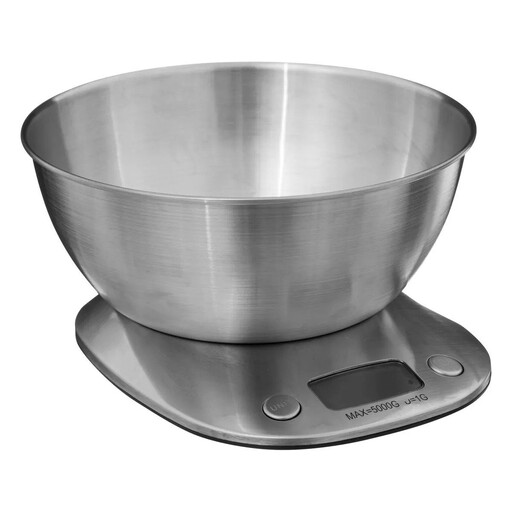
Why This Fits Their Persona: Ideal for anyone looking for a straightforward and functional scale for daily cooking and baking. The included bowl enhances its practical use and eliminates the need for a separate container.
Avoids the pitfall of impractical design. The removable, dishwasher-safe stainless steel bowl is hygienic and extremely easy to clean. The device focuses on core functions without failure-prone extras.
Includes a practical stainless steel bowl. Reliable tare function. Maximum load of 5 kg and 1g increment for all common recipes.
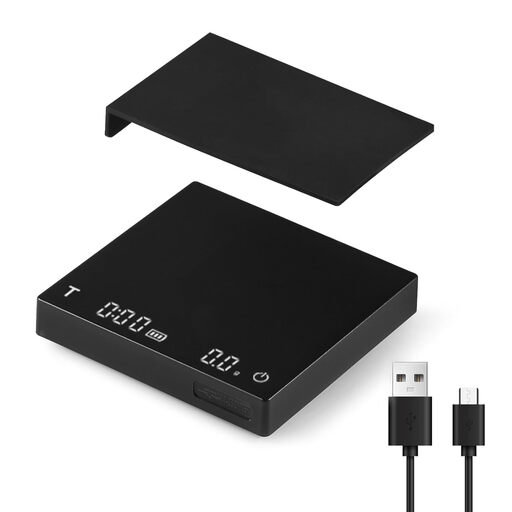
Why This Fits Their Persona: Designed for (home) baristas who make no compromises when preparing espresso or filter coffee. The high precision, integrated timer, and smart automatic functions streamline the workflow.
This is a specialised tool that bypasses the "superfluous features" pitfall. Every function, like the automatic timer that starts upon liquid detection, is tailored to the brewing process and offers real value instead of being a gimmick.
High precision with 0.1g increments. Intelligent auto-timing function. Compact design that fits most portafilter machines. Rechargeable battery via USB-C.
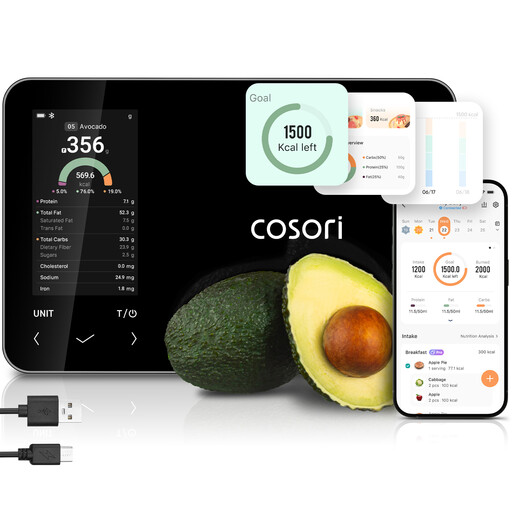
Why This Fits Their Persona: Perfect for users who want to precisely track their food intake, calories, and macronutrients for diet or fitness goals. The scale becomes a central tool for nutritional management.
Sidesteps the "bad app" pitfall by connecting to the established VeSync app. According to the manufacturer, it accesses a database of over 1 million food items, providing a reliable and extensive nutritional analysis.
Precise analysis for 19 nutrients. Syncs with the VeSync app to track goals. Barcode scanning and AI scan function. Rechargeable via USB-C.
We have compiled a complete, up-to-date list of products that fully meet these strict selection criteria and German safety regulations.
1. What is the tare function and how do I use it? The tare function (or add-and-weigh function) is one of the most important features of a digital kitchen scale. When you place a bowl on the scale, it will show its weight. By pressing the tare button, the display resets to zero. Now you can add your ingredient, and the scale will show only the net weight of that ingredient. You can repeat this process for additional ingredients.
2. How often do I need to calibrate my kitchen scale? For normal household use, regular calibration is generally not necessary. Modern digital scales are calibrated at the factory. However, you should always use the scale on a flat, stable surface. If you have doubts about its accuracy, you can check it with a reference weight (e.g., a full, unopened 1-litre carton of water or milk, which should weigh 1 kg).
3. Which precision level (1g or 0.1g) is right for me? This depends on your intended use. For daily cooking and baking of cakes, bread, or main dishes, a scale with 1-gram increments is sufficient and often easier to handle. However, if you are a passionate coffee enthusiast who uses pour-over methods, or if you need to measure very small amounts of potent ingredients like spices, saffron, or leavening agents exactly, a precision scale with 0.1-gram increments is the better choice.