Those brewing a pot
If you’re making filter coffee for guests, you can use the tare function and a suitable bowl to weigh your grounds consistently before brewing.


If you mainly weigh out ground coffee for a pot, a digital kitchen scale with a tare function and a clear gram display is often all you need; you can use a separate timer to keep track of the brewing time. For pour-over, a coffee scale with a timer is handy if you want to track weight and time together. In either case, check that the container, its contents and, where applicable, the water stay within the maximum capacity and fit securely on the weighing platform.
If you’re making filter coffee for guests, you can use the tare function and a suitable bowl to weigh your grounds consistently before brewing.
When making pour-over coffee, a scale with a timer can help you keep track of weight and time at the same time.
If you mainly make single espressos, a compact footprint that fits under your cup matters more than space for a pot.
A good fit if: you mainly portion out ground coffee or beans and measure the brewing time separately when needed.
The trade-off: an integrated brewing timer isn’t necessarily included, and a large pot may cover the weighing platform or display.
A good fit if: you want to track weight and time together when making pour-over coffee.
The trade-off: a timer and other brewing functions aren’t essential if you’re only weighing your coffee beforehand.
A good fit if: you make single espressos and need a small scale that fits under your cup.
The trade-off: a small footprint won’t necessarily accommodate a large filter coffee pot.
| What you need | What to look for | Who is it important for? |
|---|---|---|
| Easy portioning of ground coffee | A tare function and a clear gram display; check that your container fits on the weighing platform. | If you’re preparing a pot for several guests, you’ll want to weigh out the coffee easily. Around 40% of consumers prioritise straightforward portioning. |
| Keeping track of pour-over | Check whether the weight and timer are both easy to read while you pour. | If you make coffee by hand, you’ll want to keep track of the weight and brewing time together. Around 30% of consumers prioritise this level of control when using a pour-over dripper. |
| Weighing a pot and its contents | Compare the total weight with the maximum capacity, and check the platform size and display visibility. | If you brew directly into a pot or server, it needs to sit securely and remain within the maximum capacity, including its contents. Around 20% of consumers prioritise this fit. |
| Making single espressos | Check the dimensions against the space by your machine and the area needed for your cup. | If you make single espressos in a confined space, a compact design is important. Around 10% of consumers give priority to saving space. |
When you brew on the scale, the container and its contents add to the weight of the grounds. A container may also be too large for the weighing platform.
Check the complete brewing set-up against the scale’s maximum capacity and platform size.
According to the manufacturer, the Beurer KS 36’s display increments vary with the load: 0.1 g below 500 g, 0.2 g from 500 g to 1 kg, and 0.5 g from 1 to 2 kg. The display increment and measurement error are two different things.
Check the increments for the specific model and the weight range you’ll actually be using.
According to the manufacturer, the Acaia Lunar measures 105 × 105 mm and has a maximum capacity of 2 kg. Capacity alone doesn’t tell you whether a large pot will sit securely.
Check the base of your pot and make sure the display will remain visible in your chosen set-up.
The KS 36 is a precision kitchen scale for portioning coffee before brewing.
The V60 Drip Scale is designed to help you track weight and time together when making pour-over coffee.
According to the manufacturer, the Basic 2.0 combines weighing, tare, a timer and a flow-rate display for making coffee and other kitchen tasks.
Acaia positions the Lunar as a compact espresso scale.
The following Joybuy products are digital coffee scales for pour-over brewing. Depending on the model, check which features you’ll actually use and whether your container will fit securely on the weighing platform.
 No image available
For pour-over brewing if you want to use the timer, flow rate and coffee-to-water ratio as you brew.
Features listed in the product name: timer, flow-rate and ratio functions; switches between ounces and kg; espresso and pour-over modes.
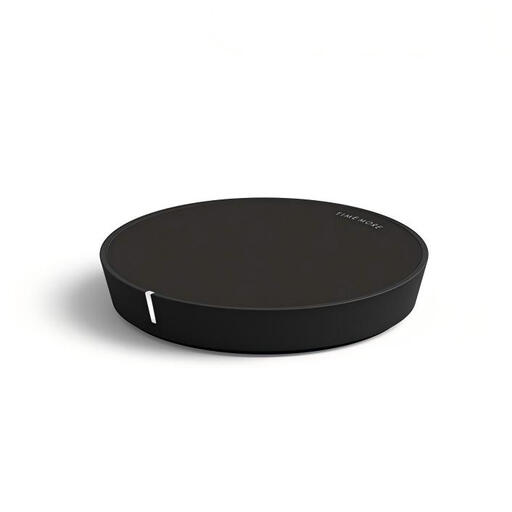 No image available
For pour-over brewing if you want to take the timer, flow rate and coffee-to-water ratio into account as you pour.
Features listed in the product name: timer, flow-rate and ratio functions; switches between ounces and kg; espresso and pour-over modes.
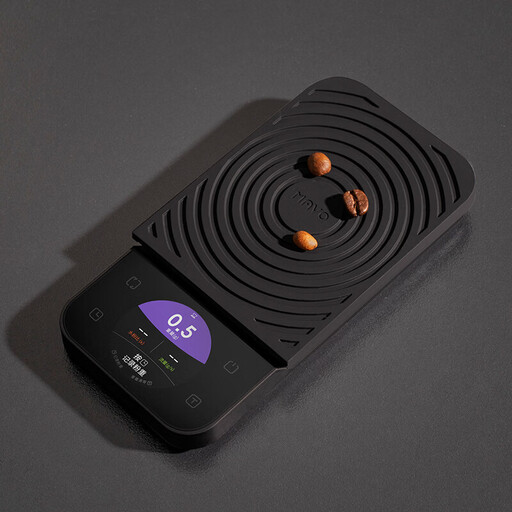 No image available
A digital coffee scale for pour-over brewing; check that the listed features suit your brewing routine before buying.
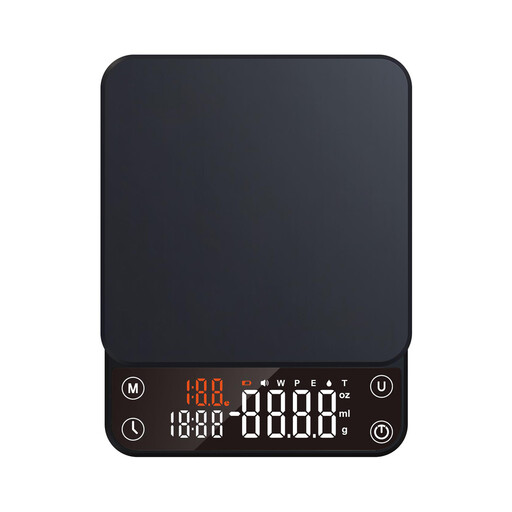 No image available
For coffee drinkers considering a digital scale with auto-tare and several brewing modes.
Features listed in the product name: LED display, timer, ratio and volume display, auto-tare and rechargeable operation. According to the product information, keep it away from water and do not immerse it.
 No image available
For pour-over brewing if you want to use the timer and flow-rate function, and weigh a pot and its contents together.
Features listed in the product name: timer, flow-rate function, 0.1 g increments and 2000 g maximum capacity. According to the product information, do not immerse in water.
Put your grounds container on the scale, tare it, then weigh out the amount of coffee specified in your recipe. Coffee Circle gives 65 g of coffee to 1 litre of water as an example for filter coffee; adjust the ratio to suit your taste.
No. If you’re only weighing the grounds beforehand, you can time the brewing separately. For pour-over, a scale with a timer can show weight and time together; according to HARIO Europe, the Hario V60 Drip Scale displays both.
Compare the base of the container and its total weight, including contents, with the weighing platform and maximum capacity of the specific scale. Capacity alone doesn’t prove that the pot will sit securely; also check that the display remains visible.
No. A display increment is not the same as a measurement error. On the Beurer KS 36, the stated display increments vary depending on the load: 0.1 g below 500 g, 0.2 g from 500 g to 1 kg, and 0.5 g from 1 to 2 kg.
In Germany, electrical waste must be collected separately rather than put in household rubbish. The German Environment Agency also points out that used batteries and rechargeable batteries must not go in household rubbish.