Households with staggered mealtimes
If you portion out dry rice for individual meals, you can weigh each serving separately. For cooked rice, you’ll also need a safe plan for cooling or keeping it hot.


For weighing out dry rice regularly, an easy-to-use tare function is essential. If you use large bowls, you’ll also want a suitable weighing platform, a clear display and enough capacity for the combined weight. A scale won’t keep cooked rice safe to store: the German Federal Institute for Risk Assessment recommends cooling it quickly to no more than 7 °C, or keeping it hot at a minimum of 60 °C throughout.
If you portion out dry rice for individual meals, you can weigh each serving separately. For cooked rice, you’ll also need a safe plan for cooling or keeping it hot.
If you use the same bowl for rice and other ingredients, a tare function makes it easy to reset the scale to zero between additions.
A suitable platform and an easy-to-read display are important when your bowl needs to sit on the scale while you weigh.
First, check that the scale can weigh your portions using tare. Then make sure the bowl, display and care requirements suit your kitchen routine.
| What to consider | What to look for | Who it matters most to |
|---|---|---|
| Weighing rice portions | A display in grams and a suitable weighing range; if accuracy is important, also consider independent test results. | If I’m weighing dry rice separately for people eating at different times, I want to be able to keep track of each portion. Around 36% of consumers prioritise portion planning in this scenario. |
| Weighing ingredients one after another | Check how easy it is to use the tare function with your bowl, and make sure the combined weight of the container and contents stays within the stated maximum capacity. | If you add rice and other ingredients to the same bowl one after another, you won’t want to keep transferring them. Around 29% of consumers prioritise weighing ingredients in stages. |
| Bowl and display | Compare the platform dimensions and display position with your bowl, and check that the display is still easy to read with the bowl in place. | If a large bowl might hide the display or barely fit on the platform, I want to be able to keep an eye on both the weight and the bowl. Around 21% of consumers prioritise bowl fit and readability. |
| Power and care | Check the battery type, what’s included and the care instructions for the model you’re considering. | If you don’t want weighing interrupted by flat batteries or fiddly cleaning, pay particular attention to power and care. Around 14% of consumers say these are their main buying considerations. |
A specification such as 0.5 g or 1 g increments describes how the display changes within a given weight range. It doesn’t, on its own, tell you the scale’s actual measurement error.
Compare the increments in the range you need. If accuracy is especially important, also look at relevant independent test results.
Tare removes the container’s weight from the display, but it doesn’t increase the scale’s stated capacity.
Check that the maximum load and weighing platform are suitable for your heaviest usual bowl and its contents.
When mealtimes are staggered, storage is a concern for cooked rice. A timer on the scale doesn’t measure its temperature.
Plan to cool the rice quickly or keep it hot enough, whichever scale you choose. The German Federal Institute for Risk Assessment recommends cooling it to no more than 7 °C or keeping it at a minimum of 60 °C throughout.
The details below apply to the specific models and variants listed, not necessarily to each brand’s entire range.
The Optiss BC50U0 is a slim scale with a tare function, a large glass platform and a backlit display.
The KS 19 Pure White is a slim glass scale with a tare function and touch controls.
According to the manufacturer, the SCORE can be used for weighing without a mobile device; the nutritional analysis app is optional.
The CMMF 3201010493 digital scale combines a tare function with a large weighing platform and a timer.
The Joybuy products listed are digital kitchen scales for weighing rice portions. Depending on your bowl, important things to consider include the tare function, maximum capacity and whether the display is easy to read with the bowl in place.
 No image available
The tare function and display in grams make it easy to weigh rice and other ingredients in the same bowl.
The product name lists a 5 kg capacity, stainless steel, an LCD and a connection to an app for nutritional analysis.
 No image available
The tare function is handy if you want to weigh dry rice directly into a bowl.
The product name lists a 10 kg capacity, 1 g increments and dimensions of 21 × 15,5 × 2,9 cm. The materials are listed as stainless steel and plastic.
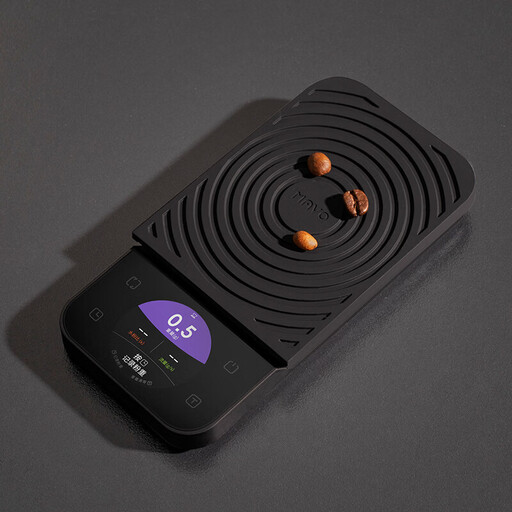 No image available
This model could work as a kitchen scale for small rice portions if you’re looking for a compact option.
The product name describes it as a digital, portable coffee scale and a kitchen scale.
 No image available
The tare function is useful for weighing ingredients in a bowl; the product name also lists several weighing units.
The product name lists a 10 kg capacity, 1 g increments, toughened glass and app connectivity.
Place the bowl on the scale, select grams and use the tare function to reset the display to zero. You can then weigh in the dry rice. If you add more ingredients, make sure the combined weight of the bowl and its contents stays within the maximum capacity.
No. Weighing it doesn’t make storage any safer. The German Federal Institute for Risk Assessment recommends cooling cooked rice quickly to no more than 7 °C, or keeping it hot at a minimum of 60 °C throughout. This helps reduce risks including those associated with Bacillus cereus.
Check the care instructions and the battery type required for the specific model. Tefal says two AAA batteries are included with the Optiss BC50U0; GEFU says the SCORE isn’t dishwasher-safe.
For a consumer purchase in Germany, statutory rights are separate from a voluntary guarantee. The retailer is generally responsible for handling statutory rights; the Verbraucherzentrale explains the difference between the two.
The German Environment Agency lists local collection points and recycling centres as places to return old electrical equipment. Remove the batteries where possible and return them separately from the appliance.