Planning family portions
If you want to weigh out dry rice according to the number of people eating, check whether portion guidance refers to uncooked or cooked rice. REISHUNGER and the Verbraucherzentrale offer guidance on planning portions.


For dry rice, a digital kitchen scale with a clear gram display and tare function is a practical place to start. The right design depends mainly on whether you use your own bowl, prefer one that comes with the scale or regularly weigh heavy containers. The weight increments shown on a display alone do not prove how accurately a particular model measures.
If you want to weigh out dry rice according to the number of people eating, check whether portion guidance refers to uncooked or cooked rice. REISHUNGER and the Verbraucherzentrale offer guidance on planning portions.
If you weigh rice in a bowl, look for an easy-to-reach tare function, a stable base and a display that remains visible beside the container. The specifications from Tefal, Beurer and ZWILLING relate to different models and designs.
If you want to clean and put the scale away quickly after cooking, check which parts can be removed, how they can be cleaned and what power source the specific model uses.
A good fit if: you already have a bowl and want to store the scale away neatly after cooking.
Bear in mind: check that your container sits securely on the platform and does not block the display.
A good fit if: you like portioning rice in a container supplied with the scale.
Bear in mind: the bowl needs storage space. For the Beurer KS 25, the manufacturer states a maximum capacity of 3 kg, including the bowl and its contents.
A good fit if: you regularly weigh larger or heavier containers as well as rice.
Bear in mind: a higher capacity on its own does not prove that the scale weighs small amounts of rice more accurately.
The following percentages refer to consumers choosing a digital kitchen scale for rice for a family meal, grouped by their main consideration.
| Consideration | What to look for when buying | Who it matters most to |
|---|---|---|
| Weighing rice portions | Gram display and tare function; check whether the recipe refers to dry or cooked rice. | If I want to plan how much to serve, I weigh out dry rice to suit the meal. Around 31% of consumers focus mainly on portion planning. |
| Bowl and tare function | Subtract the container’s weight; check the capacity for the bowl and contents together, and make sure it will sit securely. | If I weigh rice in my own bowl or one supplied with the scale, I want to be able to subtract the container’s weight easily. Around 31% of consumers prioritise ease of use with the container and tare function. |
| Readability and ease of use | Check that the display is visible with your usual container in place; consider the display lighting and buttons. | When I’m cooking, I want to read the weight easily with a bowl on the scale and operate it without fuss. Around 23% of consumers prioritise readability and ease of use. |
| Cleaning and storage | Check the cleaning instructions for each part; make sure the design and power source suit your storage space and preferred routine. | If the scale needs to be cleaned and put away quickly after a meal, I check which parts can be removed and how the model is powered. Around 15% of consumers focus on care and storage. |
The weight increments shown do not automatically tell you how accurately a model measures under specific conditions. Test results apply only to the model that was tested.
Compare the full model number, and take independent measurements into account only if they relate to that exact model.
When weighing with a bowl or pan, the combined weight of the container and its contents matters. A scale with a supplied bowl and a platform designed for heavier containers meet different needs.
Check the capacity, platform size and visibility of the display using a container similar to the one you usually use.
Rice absorbs water as it cooks, so the weight of dry rice is not the same as its weight after cooking.
Check whether a recipe gives the quantity for dry or cooked rice, then weigh the right amount.
The Optiss BC50U0 is a flat glass platform scale with a tare function and a capacity of 5 kg, according to Tefal.
The KS 25 is designed for users who want to weigh rice in a bowl supplied with the scale.
The Enfinigy 53011-051-0 is designed for larger containers, according to the manufacturer, and features a tare function and a USB-rechargeable battery.
The Page Profi 100 is a specific kitchen scale model from Soehnle.
This selection includes digital kitchen scales for weighing rice: flat platform models, a model with a removable bowl, and scales with additional weighing or app features.
 No image available
This flat scale is a good choice if you want to weigh rice in your own container.
The product title lists a tare function, 1 g increments and a capacity of up to 5 kg.
 No image available
The product title describes this as a portable scale for coffee and the kitchen. Check whether these additional uses suit your needs.
 No image available
This bowl-style model is worth considering if you like portioning rice in a removable container.
 No image available
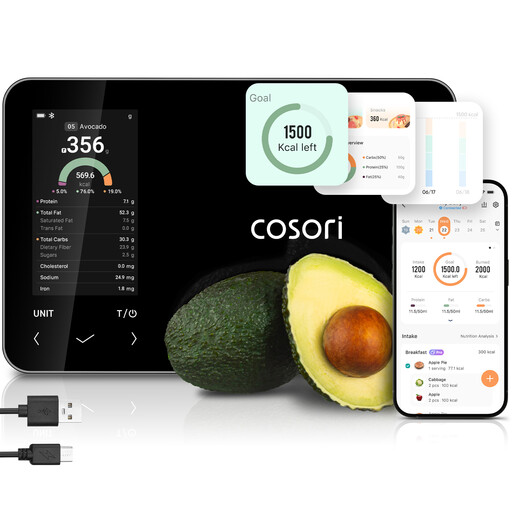
This scale may suit you better if you also want to use the app features mentioned in the product title when weighing ingredients.
 No image available
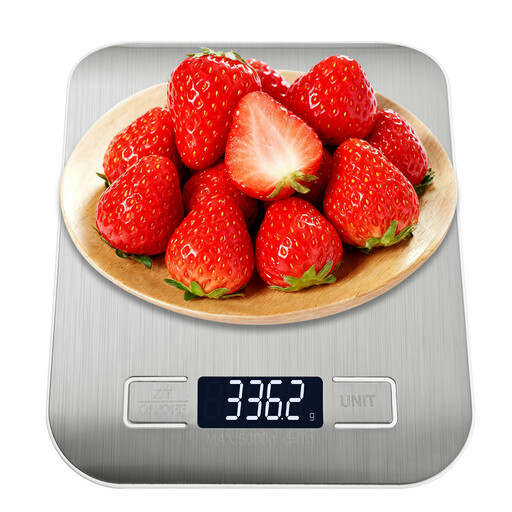
This platform model is a good option if you’re looking for a scale with a gram display to use with your own bowl.
The product title lists 1 g increments, a capacity of 5 kg, multiple units and a stainless steel surface.
Weigh the rice before cooking, and base the amount on whether it’s being served as a side or a main course. REISHUNGER recommends 60 g of dry rice per person as a side, or 240 g for four people; for a rice-based main course, it suggests 100–120 g per person. Adjust the quantity to suit appetites and any other dishes you’re serving.
Place the empty bowl on the scale and use the tare function to reset the display to zero before adding the dry rice. The maximum capacity needs to be sufficient for the bowl and its contents together.
A dishwasher-safe bowl does not mean that the electronic scale unit can go in the dishwasher too. Beurer describes the removable bowl supplied with the KS 25 as dishwasher-safe; follow the instructions for the relevant model when cleaning its other parts.
If a product is faulty, you have statutory rights against the seller; these are separate from any voluntary manufacturer’s guarantee. The Verbraucherzentrale lists repair or replacement as possible remedies.
The applications subject to legal metrology requirements described by the Physikalisch-Technische Bundesanstalt do not include a verification requirement for weighing ingredients while cooking at home, unlike certain types of commercial weighing. This says nothing about commercial use or the actual measuring accuracy of a household model.
In Germany, old electrical appliances must not go in household waste. The Umweltbundesamt lists recycling centres and suitable retail take-back points among the available options; where possible, removable batteries should be handed in separately.