For weighing ingredients in the same bowl
You add almonds and other biscuit ingredients to the same bowl one after another and want to reset the reading between additions.


When you’re adding almonds and other biscuit ingredients to the same bowl one after another, a scale with a tare function is a sensible place to start. Also check that the bowl, display and button are easy to use together. If storage space is limited, a slim design matters; a high capacity is mainly useful for heavy bowls, while 0.1 g increments are relevant if you regularly weigh very small amounts. The stated increments alone do not prove independent measurement accuracy.
You add almonds and other biscuit ingredients to the same bowl one after another and want to reset the reading between additions.
You want to store the scale flat after weighing, but you also need to make sure your bowl sits securely and the display and buttons remain accessible.
As well as almonds, you weigh very small quantities of ingredients and need to balance finer increments against capacity and weighing-platform size.
First, check that the bowl and ingredients are within the maximum capacity, and that the tare button and display remain accessible. Then consider your available storage space and whether you need finer increments.
| Buying priority | What to check | Who is it important to? |
|---|---|---|
| Weighing ingredients | Tare function; position of the display and button when a bowl is on the scale. | If I’m weighing several ingredients in the same bowl, I want to be able to tare the scale after each addition and reach the controls easily. Around 36% of consumers in this scenario say that weighing ingredients is their main priority. |
| Limited storage space | Compare the scale’s dimensions with the space available; check the bowl base against the weighing platform. | If worktop space is limited during a renovation, I want to be able to store the scale flat after baking. Around 29% of consumers say storage is their main priority. |
| Large bowl | Check the maximum capacity for the bowl and contents together; make sure the bowl is stable and the display remains visible. | With a heavy or wide mixing bowl, I want it to sit securely and the total weight to remain within the maximum capacity. Around 21% of consumers prioritise capacity and bowl stability. |
| Small additional amounts | Assess the increments you need, maximum capacity and weighing-platform size separately. | If I regularly weigh very small quantities of spices as well as almonds, finer increments matter to me; however, they don’t prove the scale’s measurement error. Around 14% of consumers say small additional amounts are the deciding factor. |
A display showing increments of 1 g or 0.1 g describes the scale’s resolution, not necessarily its measurement error. F.A.Z. Kaufkompass reports test results for a different, specific model; these cannot be applied to every scale with the same increments.
Choose increments that suit the quantities in your recipes, and only apply independent test results to the model that was actually tested.
The maximum capacity applies to the total load on the scale, including the bowl.
Before buying, check the weight of your bowl together with its expected contents against the model’s stated capacity.
A small design saves storage space, but it may make it harder to position your bowl or read the display. CASO gives suitable bowl-base diameters for the KitchenEcostyle, depending on its position: 5–12 cm or 9–18 cm.
Before deciding, compare your bowl’s base with the weighing platform, and check the position of the display and buttons.
The Page Compact 300 is a slim everyday option for weighing ingredients and storing away.
The KS 36 is designed for very small quantities, while the KS 34 Stainless Steel offers a larger weighing platform and higher capacity.
The digital kitchen scale with the reference 3201000339 is an option for weighing ingredients.
The KitchenEcostyle is a digital scale that, according to the manufacturer, generates its operating power when its scale arm is moved.
The Joybuy options below include digital kitchen scales and a scale described as suitable for coffee and kitchen use. Depending on your recipe, check that the bowl will sit properly, the controls are easy to use and the stated capacity suits your needs.
 No image available
The tare function is useful when adding several ingredients to the same bowl one at a time.
The product title mentions an LCD display, a Bluetooth connection to an app and 5 kg. Check that the stated capacity is sufficient for the bowl and ingredients together.
 No image available
The tare function is useful when adding more ingredients to the same bowl.
The product title lists both 10 kg and 5 kg or 5,000 g. Check the specific maximum capacity before buying; the title also states an accuracy of 1 g.
 No image available
The tare function makes it easy to weigh several ingredients in the same bowl one at a time.
The product title lists a capacity of 10 kg, an accuracy of 1 g and dimensions of 21 × 15,5 × 2,9 cm.
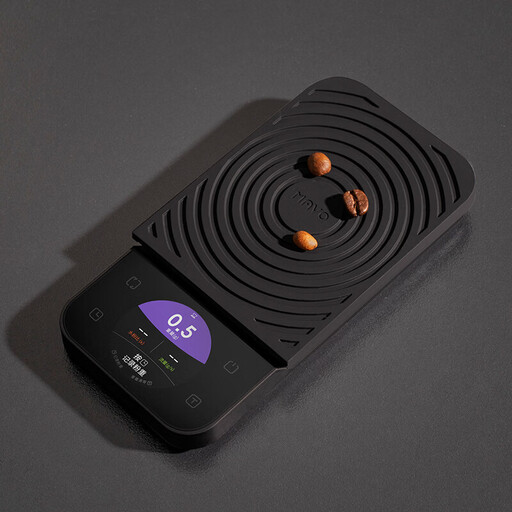 No image available
The product description says it is for weighing coffee and food; check that the weighing platform and controls suit your mixing bowl.
Place the bowl securely on the scale and use the tare function to reset the display before adding the next ingredient. At each step, make sure the bowl and its contents together remain within the maximum capacity and that you can still reach the button.
It depends on the part and model. Beurer describes the removable bowl of the KS 25 as dishwasher-safe; WMF says that the digital kitchen scale with the reference 3201000339 is not dishwasher-safe. Don’t assume that information about the bowl also applies to the electronic scale.
Check the power supply for the specific model, along with its warranty and spare-parts information. CASO says the KitchenEcostyle generates power when its scale arm is moved; before buying, check whether this way of operating it suits your kitchen routine.
The scope of Germany’s Measurement and Verification Ordinance does not require verification when you’re weighing biscuit ingredients purely for private use. The Federal Ministry of Justice also explains the rules for commercial transactions in the Measurement and Verification Ordinance (MessEV). A scale used for measurements in a commercial setting must be assessed separately for that different purpose.
The Federal Environment Agency advises that old electrical appliances must not be put in household waste; local collection points and suitable return points are options. Remove the battery before returning the scale if it can be done easily, and take the battery separately to a battery collection point.