What should you look for when buying?
First, check that the maximum capacity can handle the combined weight of the bowl and its contents. Then make sure the platform, display and controls suit the way you plan to portion your fruit.
| What matters |
What to look for when buying |
Who is this particularly important for? |
| Capacity for the container and fruit |
Check the maximum capacity for the combined weight; if you’re using a large bowl, compare the usable platform size too. |
If I’m weighing a large bowl of prepared fruit in one go, the scale needs to support the combined weight; around 36% of consumers put capacity for the bowl and fruit first. |
| Tare when portioning |
Look for a tare button that remains easy to reach when the container is in place. |
If I’m weighing several freezer portions one after another, I want to be able to tare the container each time; around 29% of consumers prioritise tare for repeated portioning. |
| Readability with a bowl in place |
Compare the display position and platform dimensions with the bowl base; a hold function can be useful after weighing larger items. |
If a wide container might cover the display, I need to be able to see the reading while filling it; around 21% of consumers prioritise being able to read the display with a bowl in place. |
| Cleaning and power supply |
Check the care instructions for the specific model and decide whether batteries or a rechargeable battery better suit the way you’ll use it. |
If I want to remove fruit residue after weighing and choose a power option that suits me, care and power supply matter; around 14% of consumers prioritise these features. |
Joybuy products for freezer portions and large containers
This Joybuy selection includes digital kitchen scales for weighing food in containers, including models with a higher maximum capacity for larger portions of fruit.
 No image available
Digital kitchen scale with LCD display, 10 kg capacity and tare
For larger portions of fruit in a container; the tare function shows the net weight of the ingredients.
Maximum capacity of 10 kg, 1 g increments and dimensions of 21 × 15,5 × 2,9 cm. The product details specify an LCD display with large digits and an easy-to-clean platform.
View at Joybuy
 No image available
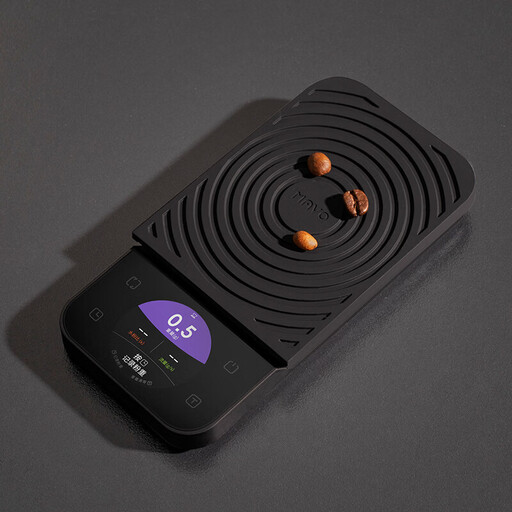
Digital coffee scale with automatic tare
For smaller amounts weighed in individual batches; the automatic tare function is designed for weighing ingredients in a container.
Maximum capacity of 3.000 g; according to the product details, the increments are 0,1 g or 1 g from 1 kg. The scale charges via USB-C. Do not immerse in water; clean with a soft, damp cloth.
View at Joybuy
 No image available
Unique Bluetooth kitchen scale, 10 kg
For larger amounts in one container; the product details also list several selectable units of measurement.
Maximum capacity of 10 kg, 1 g increments, electronic LED display and glass platform. The product details mention app integration. Clean with a soft, damp cloth and do not immerse the scale.
View at Joybuy
Frequently asked questions
How should I weigh fruit for making jam later?
Weigh the prepared fruit in a suitable container, in portions that suit your plans. The consumer advice centre recommends labelling frozen fruit with its contents, quantity and date of storage. For making jam later, the ratio depends on the jam sugar or recipe you choose; the Federal Centre for Nutrition explains the different ratios.
Can I clean my digital kitchen scale in the dishwasher?
It depends on the model. WMF explicitly states that kitchen scale 3201000339 is not dishwasher-safe; for other scales, check the manufacturer’s care instructions.
Do I need a calibrated scale to weigh fruit at home?
For the home weighing described here, the Physikalisch-Technische Bundesanstalt distinguishes household scales from weighing applications regulated by law. According to the institute, household scales are not subject to statutory minimum requirements. This does not apply to selling goods by weight.
Should I store finished jam in the same way as prepared fruit for the freezer?
No, these are different storage situations. For frozen fruit, the consumer advice centre recommends suitable containers and labelling. For jam, it recommends dark storage and keeping it in the fridge once opened. If you’re making your own spreads, follow the storage guidance in the recipe.


