For weighing grains in a bowl every day, first check that the tare function, display and footprint work with your own bowl. A flat scale is easier to put away, while a larger weighing platform and higher capacity are mainly useful for heavy or large containers. When it comes to power, consider whether you’d rather replace batteries, charge a rechargeable battery or activate the scale before weighing.
Which scale suits you?
For anyone who weighs grains in a bowl every day
If you put an empty container on the scale and then want to read off the amount of ingredients, the tare function is useful. The models featured here offer this function; try your bowl to check that the display and controls are still easy to reach.
For anyone short on storage space during a renovation
If you want to put the scale in a drawer or narrow alcove after lunch, its dimensions matter. ADE lists a height of 9 mm for the KE1800 Leonie. Even so, check that your bowl sits securely on the scale when weighing.
For anyone who uses larger bowls
If you use a larger bowl, consider the platform size, whether you can see the display and the combined weight of the container and its contents. ZWILLING lists a larger weighing platform and a maximum capacity of up to 10 kg for the Enfinigy 53011-051-0.
What to look for when buying
First, check that the tare function and display work with your usual bowl, then consider the space you have for using and storing the scale. Choose a power source that suits your kitchen routine.
| What matters |
What to check when buying |
Who it matters most to |
| Tare and increments |
Check the tare function, increments and maximum capacity for the specific model. The Physikalisch-Technische Bundesanstalt distinguishes display increments from measurement accuracy. |
When portioning grains in my usual bowl, I want to zero the container before adding ingredients and read the display easily. Around 36% of consumers prioritise portioning. |
| Space for use and storage |
Measure the space available for weighing and storage, then compare it with the appliance’s width, depth and height. |
With limited worktop and drawer space, I want to know before buying where the scale can sit securely and where I can put it away afterwards. Around 29% of consumers prioritise saving space. |
| Bowl stability and display |
Check that the bowl sits securely on the weighing platform and that you can still see the display. The container and its contents must stay within the maximum capacity when combined. |
When using a larger bowl, I want to read the weight without the container obscuring the display or wobbling. Around 21% of consumers pay particular attention to bowl size. |
| Power supply |
Check the battery type or charging port, and find out whether you need to activate the scale before weighing. |
During a kitchen renovation, I want to know whether I’ll need to replace batteries, charge a rechargeable battery or operate a lever before weighing. Around 14% of consumers prioritise the power supply. |
Common selection mistakes
-
Assuming 1 g increments mean measurement accuracy
Increments show the steps in which the weight appears on the display. On their own, they don’t indicate any particular maximum measurement deviation.
Compare the increments and maximum capacity separately. A 1 g increment doesn’t guarantee a particular level of accuracy.
-
Focusing only on the scale’s small dimensions
A compact scale may be easy to put away, but your bowl still needs to sit securely on it without obscuring the display. CASO Design lists a weighing platform with a diameter of 11.5 cm for the Kitchen EcoMate.
Try your bowl on the scale to check its stability, the tare controls and your view of the display, and measure the space available.
-
Assuming battery-free means ready to use straight away
According to the manufacturer, you need to operate a swivel lever on the CASO Kitchen EcoMate before weighing. It then provides power for up to three minutes. Battery-powered and rechargeable models have different day-to-day requirements.
Choose what suits your routine: replacing batteries, charging or activating the scale before weighing.
Brands and selected models
ADE Home
The KE1800 Leonie is an example of a slim platform scale for weighing ingredients in a container.
- ADE lists a height of 9 mm, a tare function, a maximum capacity of 5 kg and 1 g increments for this model.
- The scale takes a CR2032 coin-cell battery. Its low profile alone doesn’t tell you whether your bowl will sit securely or leave the display unobstructed.
Beurer
The KS 19 Black is a glass platform scale for adding ingredients to a container.
- Beurer lists a tare function, a maximum capacity of 5 kg and 1 g increments. The manufacturer says the glass surface is easy to clean.
- The KS 19 Black’s display isn’t backlit. Try it with your container and in your kitchen lighting to check that it’s easy to read.
CASO Design
The Kitchen EcoMate is a battery-free scale which, according to the manufacturer, is activated using a swivel lever.
- CASO Design lists a tare function and 1 g increments up to 5 kg, so there’s no need to replace batteries.
- It runs for up to three minutes after activation, and the weighing platform measures 11.5 cm in diameter. Check that this suits your routine and your bowl.
ZWILLING
The Enfinigy 53011-051-0 is a larger platform scale with a rechargeable battery that charges via USB.
- ZWILLING lists a tare function and a maximum capacity of up to 10 kg. The base measures 24.5 × 18.8 cm.
- Make sure you have enough space for the scale. The higher capacity isn’t necessarily needed for small portions at lunchtime.
Joybuy products
Here you’ll find digital scales for weighing ingredients. If you’re considering a portable coffee and kitchen scale, check that its tare function and capacity meet your needs before buying.
 No image available
Digital kitchen scale with LCD display and tare function
The product title lists a tare function for weighing ingredients in a container.
According to the product title: 5 kg maximum capacity, Bluetooth connection to an app and optional nutritional analysis.
View at Joybuy
 No image available
Digital kitchen scale with stainless steel surface and tare function
If you weigh ingredients in a container, the product title lists a tare function.
According to the product title: 5 kg maximum capacity, 1 g increments and selectable units of g, ml, oz, lb and fl.
View at Joybuy
 No image available
Digital kitchen scale up to 10 kg with tare function
The product title lists a tare function if you want to zero a container.
According to the product title: 10 kg maximum capacity, 1 g increments and dimensions of 21 × 15.5 × 2.9 cm. The listed materials are stainless steel and plastic.
View at Joybuy
 No image available
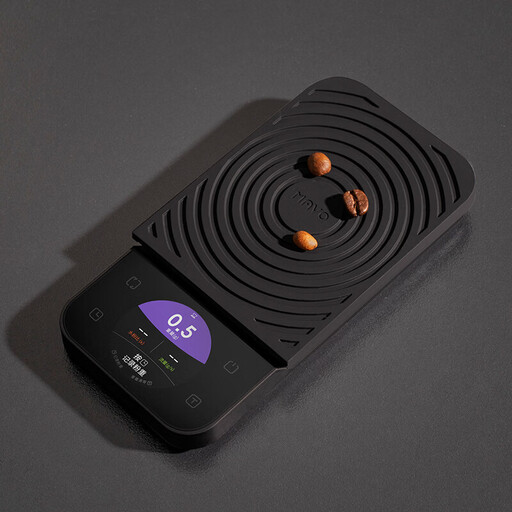
Portable digital coffee and kitchen scale
If you’re looking for a portable scale, this model, described as a coffee and kitchen scale, may be worth considering. Check first that it has a tare function and the capacity you need.
View at Joybuy
 No image available
Digital scale with removable bowl
The removable bowl may be useful for weighing ingredients directly. Check that it’s the right size for your portions.
According to the product description: 5000 g maximum capacity, dimensions of 20.5 × 18 × 4.5 cm and battery-powered operation.
View at Joybuy
Frequently asked questions
How do I weigh grains in a bowl?
Place the empty bowl on the scale and use the tare function to zero it. Then add the grains. Before you start, check that the bowl sits securely and the display remains visible.
Does a 1 g increment mean the scale weighs to within 1 g?
No. A 1 g increment describes the steps shown on the display; on its own, it doesn’t tell you the maximum measurement deviation.
What should I know about batteries, rechargeable batteries and disposal?
Check which power source the specific model uses and whether you need to charge it or activate it before weighing. The German Environment Agency recommends disposing of used batteries and rechargeable batteries responsibly at collection boxes in shops or at local authority collection points.
Does a kitchen scale need to be officially verified for personal portions in Germany?
For private household weighing, the Physikalisch-Technische Bundesanstalt lists household scales as scales with no statutory minimum requirements. This doesn’t automatically apply to commercial weighing: the Bavarian State Office for Weights and Measures says that measuring instruments used in commercial transactions must be officially verified.


