What should you look for when buying?
First, check the smallest amount of yeast your recipe calls for. Then make sure the bowl and remaining ingredients will fit on the scales. The right increments depend on the weight range you’ll actually be using.
| What you need |
What to check before buying |
Who should consider this? |
| Small amounts of yeast |
Check the recipe quantity against the minimum load and increments for the relevant weighing range. GEFU lists a 1 g minimum load and 0.1 g increments up to 1 kg for the PREZISO 16430; Ooni specifies 0.1 g increments on its small platform up to 200 g. |
If your recipe calls for a small amount of yeast, the precision range matters more to you than a high maximum capacity. Around 34% of consumers prioritise precise weighing when choosing scales. |
| One set of scales for preparing dough |
Check that there’s a tare function and that the increments will still suit your needs with the weight of the bowl and ingredients. Ooni has separate precision and larger-capacity platforms; GEFU lists stepped weighing ranges on a single surface for the PREZISO. |
If you want to weigh yeast and the other ingredients at one workstation using a single set of scales, being able to follow the whole process in the same bowl is important. Around 33% of consumers prioritise this one-scale approach. |
| Space and readability |
Compare the dimensions of the scales and weighing surface with your bowl and the space available. Beurer lists an 11.5 × 8.0 cm weighing surface for the KS 36; Tefal gives the Optiss BC50U0 a platform measuring 17.5 × 22.5 cm. |
If worktop space is limited or a bowl might obscure the display, you’ll need scales that fit well and are easy to read in your chosen spot. Around 20% of consumers prioritise space and ease of use. |
| Capacity for larger batches |
Calculate the combined weight of the bowl and ingredients, then compare it with the maximum capacity. Ooni lists a 10 kg capacity with 1 g increments for the large platform; WMF lists a 5 kg capacity and 1 g increments for its digital scales. |
If you often weigh larger quantities of dough in a bowl, the capacity needs to cover the combined weight. Around 13% of consumers prioritise larger batches. |
Joybuy products for the kitchen and baking
These product options are for digital kitchen and baking scales. When weighing yeast, pay particular attention to the stated increments and the weighing range they apply to.
 No image available
TIMEMORE Coffee Scale Basic 2.0, Electronic, White
The product title mentions kitchen and baking uses. Before weighing small amounts of yeast, check that the increments suit your recipe.
Features mentioned in the title: timer, flow rate function and switchable oz/kg units.
Joybuy
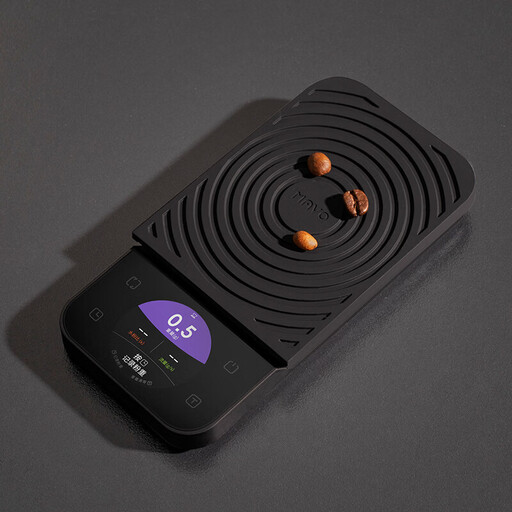 No image available
Smart Coffee Scale Pour Over Digital
The product title describes this model as a coffee and kitchen scale. Before using it for bread baking, check that its weighing surface and increments suit your bowl and the amount of yeast you need.
Joybuy
 No image available
Digital scales with removable bowl
The removable bowl could be useful for weighing ingredients directly. Check that it suits your recipe quantities and the level of precision you need.
Joybuy
 No image available
Digital kitchen scales with tare function, 5 kg
The tare function mentioned in the title is useful for adding ingredients one at a time to the same bowl. Check that the increments are fine enough for the amount of yeast you need to weigh.
Feature mentioned in the title: 5 kg maximum capacity.
Joybuy
 No image available
Digital kitchen scales with stainless steel surface, 5 kg, 1 g
The stated 1 g increments are more suitable if your recipe doesn’t call for finer yeast measurements and you want to add ingredients to the same bowl.
Features mentioned in the title: 1 g increments, 5 kg maximum capacity and tare function.
Joybuy
Frequently asked questions
Are 1 g increments enough for weighing yeast?
It depends on the amount your recipe calls for. If you need finer increments, check the relevant weighing range and minimum load; for larger quantities, 1 g increments may be enough. Stated increments aren’t a substitute for an independent accuracy test.
How can I weigh several ingredients using just one bowl?
Place the bowl on the scales and use the tare function before adding each ingredient. Make sure the combined weight of the bowl and ingredients stays within the maximum capacity, and that you can still see the display. The instructions for the GEFU PREZISO 16430 state that it switches off after 60 seconds without being used.
Can I immerse Ooni’s dual-platform scales in water?
No. Ooni advises against immersing its dual-platform scales in water; the manufacturer also says they aren’t dishwasher-safe. For other models, follow the instructions for the specific product.
Do kitchen scales need to be verified for home bread baking in Germany?
Home bread baking isn’t subject to the same requirements as scales used for business or official purposes. Germany’s National Metrology Institute (Physikalisch-Technische Bundesanstalt) distinguishes household scales from those subject to statutory metrological requirements. For business or official use, the specific application needs to be assessed separately.
How should I dispose of broken digital kitchen scales?
Take the scales to an appropriate collection point or return them through a retailer instead of putting them in your household rubbish. Germany’s Federal Environment Agency advises against disposing of waste electrical equipment with household rubbish. Remove the batteries if possible and recycle them separately.


