
Lieferung heute & morgen

Qualitätsgarantie

Willkommens-Angebote freischalten: KOSTENLOSE Lieferung | Bis zu 80 % RABATT | Kostenlose 30-Tage-JoyPlus-Testphase
App herunterladen
Kitchen scissors are a fixture in many homes, but people often choose them based on appearance or a low price. In practice, the blade material, handle design and intended use are what determine whether a pair will remain useful over time.
Three common marketing traps can make it harder to choose:
Stainless steel is widely used for kitchen scissors because, with proper care, it can resist corrosion. But the quality of the construction, the sharpening and the way the blades are joined are important too. A precision-ground blade may be suitable for paper, packaging and light food preparation. For slippery ingredients, micro-serrated or serrated blades can provide extra grip.
A sharp, straight-edged pair of kitchen scissors is often a good choice for general cutting tasks. Herb scissors have several parallel blades, while poultry shears usually have a sturdier design and may have serrated edges. Don’t use ordinary household scissors to cut through bones unless the manufacturer specifically says they’re suitable for this.
The right length depends on what you’ll be using the scissors for. Compact models fit neatly in a drawer and are handy for smaller cutting jobs. Longer kitchen scissors can give you more reach when cutting packaging or larger ingredients.
Look for:
Multi-purpose kitchen scissors may include extras such as a bottle opener or nutcracker. These features should be sturdy and shouldn’t unnecessarily reduce the cutting area.
Check the specific care instructions before you buy. Dishwasher-safe kitchen scissors are convenient for everyday use, while models with delicate coatings, complex blade gaps or special handle materials often need to be washed by hand.
For example, Brabantia specifically recommends hand-washing its TASTY+ herb scissors. The five blades should be cleaned with a brush and then dried. As a general rule, wipe moisture off stainless steel models after cleaning. Store kitchen scissors closed or in a safe place, out of reach of children.
The models below suit a range of needs. Product details are based on the manufacturer and listing information available for each model.
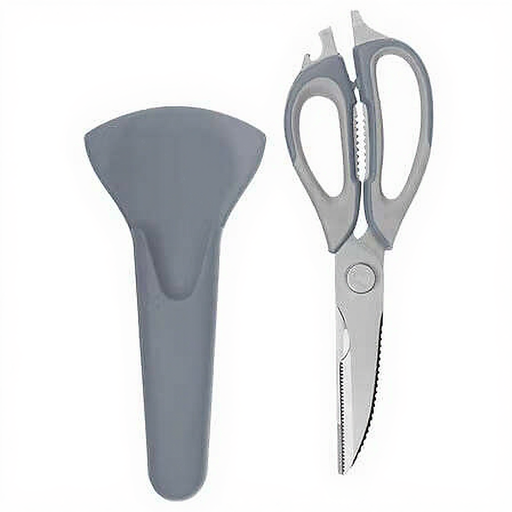
Why it suits this profile: These scissors are designed for everyday cutting tasks in the kitchen, around the home, in the office and for crafts. They’re a versatile choice for households looking for an all-rounder.
They’re described as suitable for a wider range of tasks than just kitchen use, reducing the risk of buying specialist scissors for general jobs.
Precision-ground stainless steel blades and ergonomic handles; suitable for paper, fabric and packaging.
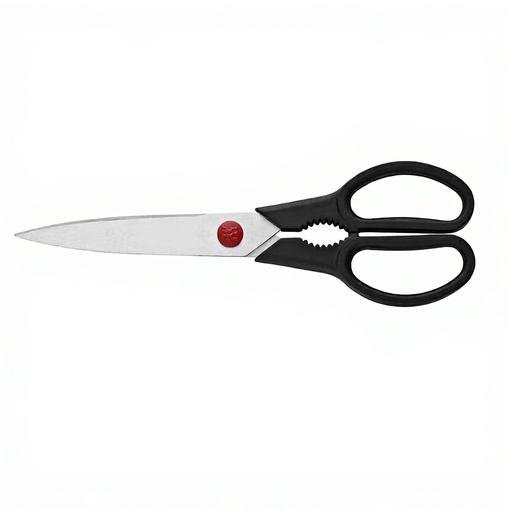
Why it suits this profile: This 23 cm model combines a longer design with rust-resistant stainless steel and non-slip plastic handles for use in the kitchen and around the home.
The product details specify the material, length, weight and care instructions, making it easier to check whether the size and handling are right for you.
23 cm overall length, 120 g weight and a precision-ground stainless steel blade; the manufacturer advises against cutting metal or hard materials.
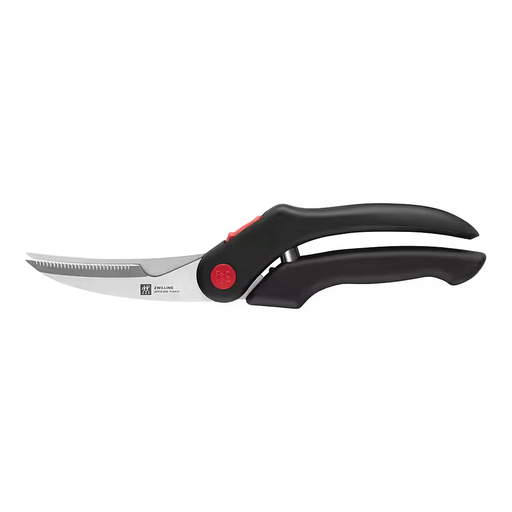
Why it suits this profile: Designed specifically for poultry, this 25 cm model is made for preparing poultry rather than just light household tasks.
The serrated edges are designed to provide a better grip while cutting. Their intended use is clearer than that of a basic pair of household scissors.
Specialist steel, serrated edges and glass-fibre-reinforced plastic handles; designed for poultry.
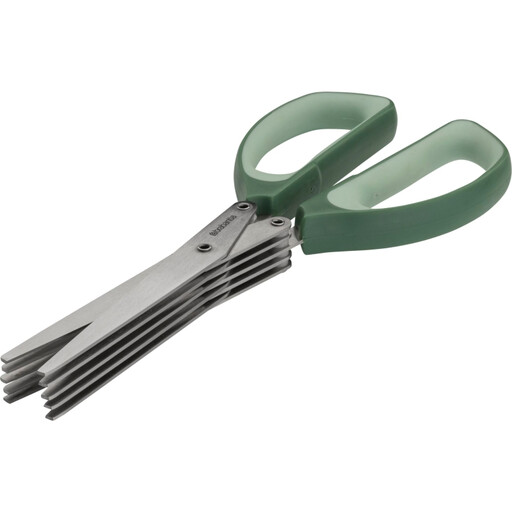
Why it suits this profile: These five-blade herb scissors are designed for chopping herbs and take up very little space in a kitchen drawer.
Their specialist purpose is clearly stated, so they’re less likely to be used incorrectly to cut meat and bones.
Five stainless steel blades, a rust-resistant design and soft-touch silicone on the handles; hand-washing is recommended.
We’ve put together a complete, regularly updated list of products that meet these strict selection criteria and fully comply with the safety regulations in force in the EU.
For poultry and certain areas around the bones, it’s best to use poultry shears specifically designed for the job. Only use general-purpose or household scissors in line with the manufacturer’s instructions. An unsuitable blade may be damaged or slip when cutting hard bones.
It depends on the model. Some Victorinox household scissors are described as dishwasher-safe, while the Brabantia herb scissors are listed as hand-wash only. Check the blades, handle materials and gaps between the blades before putting scissors in the dishwasher.
Wipe away any residue after use, dry the blades thoroughly and store the scissors somewhere dry. Don’t use them to cut wire, metal parts or unsuitable hard materials. On models with an adjustable screw, keeping the joint properly tightened can help maintain cutting performance.