
Lieferung heute & morgen

Qualitätsgarantie

Willkommens-Angebote freischalten: KOSTENLOSE Lieferung | Bis zu 80 % RABATT | Kostenlose 30-Tage-JoyPlus-Testphase
App herunterladen
Kitchen scissors need to do more than cut paper in everyday use. Home cooks use them for herbs, packaging, meat and poultry, while families often reach for a pair of general-purpose scissors for a range of jobs. But if you focus only on claims such as ‘extra sharp’ or ‘multi-functional’, you could miss important details.
Scissors with a bottle opener or nutcracker can be handy if you’ll actually use those features. But they’re no substitute for poultry shears with the right blade shape and a sturdy build. Similarly, fine herb scissors aren’t designed for bones or tough packaging.
So start by considering which tasks you do regularly:
When choosing stainless steel kitchen scissors, it’s worth checking the blade and handle materials separately. Stainless steel blades are more corrosion-resistant than uncoated steel, but they still need to be dried thoroughly after washing. A plastic handle can be comfortable and slip-resistant, while an all-steel design has different care and weight characteristics.
Coatings should also suit the intended use. A non-stick coating can make cleaning easier, but shouldn’t be treated with metal tools or abrasive cleaning products.
For dishwasher-safe kitchen scissors, the manufacturer’s instructions are key. Victorinox lists some models as dishwasher-safe, while hand washing is recommended for other products. Frequent washing at high temperatures can put more strain on handles, coatings and the movement of the screw joint.
After cleaning, open the blades, dry them thoroughly and store the scissors somewhere dry. This is especially important for scissors that come into contact with food.
Compact household scissors measuring around 10 to 16 cm overall are easy to store in a drawer and are well suited to smaller cutting jobs. Longer models offer more leverage and can feel more comfortable when cutting packaging, larger ingredients or tougher materials.
For poultry, choose poultry shears with a sturdy construction and, often, serrated blades. The serrations can help stop food from slipping as you cut. Even so, they’re no substitute for a suitable kitchen knife or professional butchery tools when dealing with particularly hard bones.
Herb scissors with several parallel blades are designed for fine, soft ingredients. The gaps between the blades need to be cleaned carefully, as plant matter can collect there.
Look for finger holes that are large enough, a slip-resistant surface and a design that doesn’t force your hand into an awkward position. A lightweight pair can feel comfortable when making lots of short cuts. For tougher jobs, a sturdy design that transfers force effectively is more important.
If you’re choosing household scissors for use with different materials, check whether they’re intended for food, packaging, paper or fabric. Not all general-purpose scissors are suitable for bones or hard materials.
Removable or separable blades make thorough cleaning easier. Follow the care instructions for models with a coating. Some scissors have a screw joint that can be adjusted, but don’t loosen it yourself unless the manufacturer says you can.
Store sharp kitchen scissors closed or somewhere children can’t reach. Don’t continue using blades that are damaged, stiff or noticeably blunt.
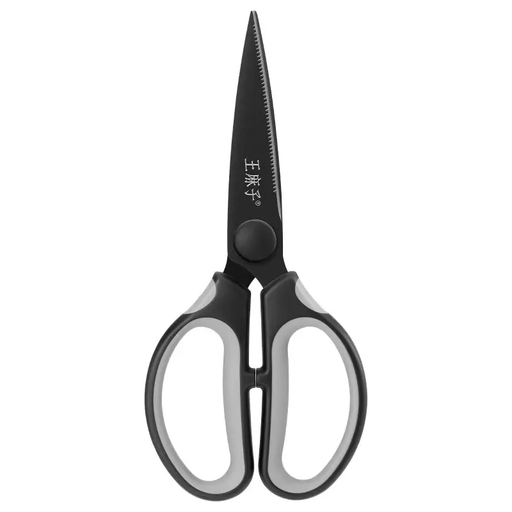
Why this product suits this profile: These scissors are described as suitable for a range of kitchen tasks, including cutting meat, vegetables, food packaging and poultry. That makes them a good option for households looking for a versatile pair.
The intended uses are clearly listed, making it easier to decide whether these multi-purpose scissors suit your kitchen routine.
Stainless steel construction, an ergonomic handle and several stated uses.
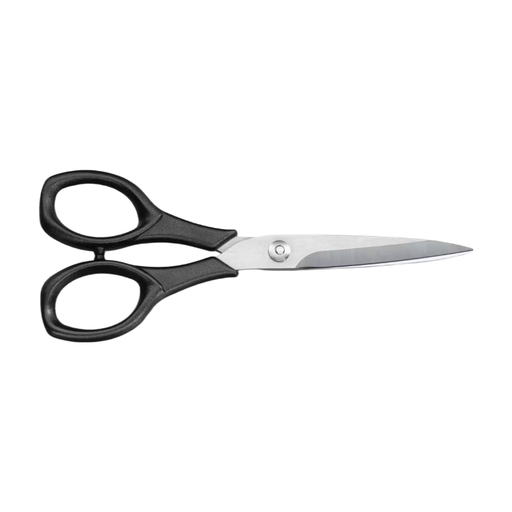
Why this product suits this profile: This model combines stainless steel blades with polyamide handles, weighs 50 g and has a separable design. It’s a good fit for anyone who values easy cleaning and clearly specified product details.
Details of the materials, dimensions, weight and dishwasher suitability make it easier to assess the scissors before buying.
Stainless steel blades, ergonomic polyamide handles, a separable design and, according to the product information, dishwasher-safe construction.
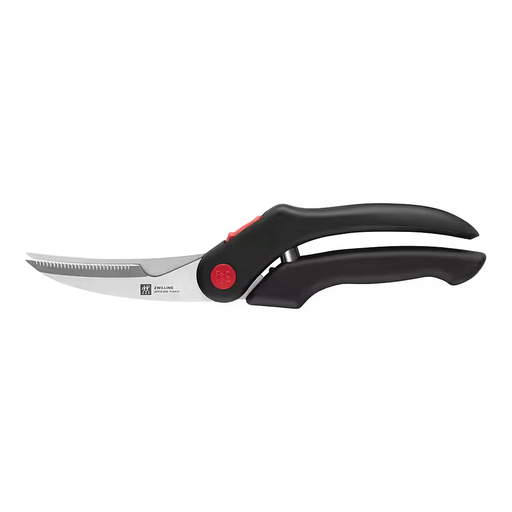
Why this product suits this profile: These 25 cm poultry shears are designed for people who prepare poultry regularly and need a purpose-built tool rather than a basic pair of household scissors.
The serrated blades are specifically described as providing a better grip while cutting. This clearly distinguishes them from a small pair of general-purpose scissors.
Specialist steel, serrated blades and fibreglass-reinforced plastic handles.
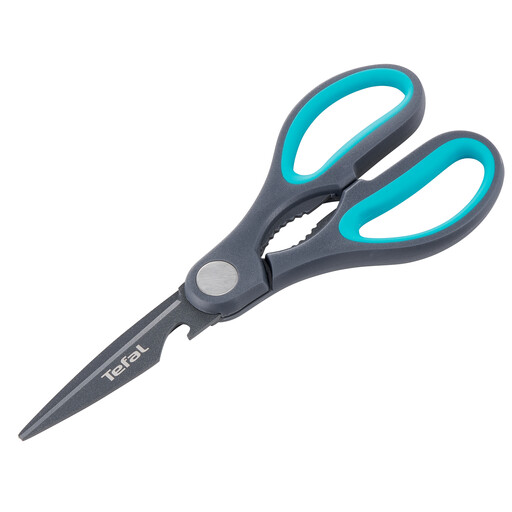
Why this product suits this profile: This model combines stainless steel blades with a non-stick coating, a bottle opener and a nutcracker. It’s designed for anyone who wants several functions in one kitchen tool.
The additional features are clearly listed, so you can decide whether you’d actually use scissors with a bottle opener and nutcracker at home.
Titanium-reinforced non-stick coating, soft-touch handle, built-in bottle opener and nutcracker; described as dishwasher-safe in the product information.
We’ve put together a complete, regularly updated list of products that meet these strict selection criteria and fully comply with the safety regulations in force in the EU.
For poultry, purpose-designed shears with a sturdy construction and serrated blades are a better choice than basic household scissors. Check the details on blade length, handle design and cleaning too.
It depends on the model. Some Victorinox and Tefal products are described as dishwasher-safe, while the Brabantia herb scissors should be washed by hand. Always follow the manufacturer’s instructions rather than relying on general marketing claims.
Use the scissors only with the materials they’re designed for, don’t cut wires or metal parts, and remove food residue straight after use. Dry the blades thoroughly and, if needed, maintain or adjust them in line with the manufacturer’s instructions.