
Lieferung heute & morgen

Qualitätsgarantie

Willkommens-Angebote freischalten: KOSTENLOSE Lieferung | Bis zu 80 % RABATT | Kostenlose 30-Tage-JoyPlus-Testphase
App herunterladen
At first glance, kitchen scissors seem like a simple kitchen utensil. In practice, however, models vary considerably in blade length, handle, care requirements and intended use. If you only look for terms such as “extra sharp”, “multifunctional” or “premium”, you can quickly end up with scissors that become stiff after a short time, crush food or are unsuitable for the task you have in mind.
This buying guide from the Joybuy Product Recommendation Officer explains which details really matter and which kitchen scissors are best suited to different households and cooking habits.
Multifunctional kitchen scissors may feature a bottle opener, nutcracker or cap lifter, for example. This is useful if you regularly need these functions. However, when cutting herbs, poultry or sturdy packaging, what really matters is whether the blade shape and handle are suitable for the job.
An integrated extra function is therefore not proof of better cutting performance. Check whether the scissors are primarily intended for food or for general household tasks.
With stainless steel kitchen scissors, you should distinguish between the blade and handle materials. Stainless steel blades can be corrosion-resistant and easy to care for, but the exact type of steel, blade construction and manufacturing quality remain important factors. A plastic handle can be lightweight and comfortable, while a model made entirely from metal offers a different feel and greater weight.
The term “rustproof” should not encourage careless maintenance either. Food residue, moisture and harsh cleaning products can affect the surface over time.
Dishwasher-safe kitchen scissors can generally be cleaned in the dishwasher, provided the manufacturer expressly states that they are suitable for this. Even so, hand washing is recommended for many pairs of scissors, as high temperatures, detergents and prolonged exposure to moisture can put greater strain on the blades, joint or handles.
With models that can be taken apart, both blades should be dried completely after washing and reassembled correctly. Ordinary household scissors that are not intended for food contact should also not be used on raw ingredients.
Blade length affects control and suitability for different tasks:
A serrated or micro-serrated edge can provide additional grip when cutting slippery materials. For herbs, on the other hand, a special herb scissors with several parallel blades is worth considering. It is designed for soft kitchen ingredients and should not be used to cut bones or tough packaging.
Look for sufficiently large finger openings, secure control and a weight suited to the intended use. A lightweight polyamide handle can be comfortable for frequent small cutting jobs. A heavy metal pair of scissors, by contrast, may feel more robust but can require greater hand strength during prolonged use.
For left-handed users, a reversible handle is an important feature. With scissors for cutting meat and herbs, you should also check whether the blades can be separated or the joint opened for cleaning.
Kitchen scissors should be cleaned and dried immediately after coming into contact with food. Store them closed or in a safe place. Depending on your household, models with a safety lock, magnetic holder or detachable blades may offer additional practical features.
Poultry shears are designed for bones and joints and should not be confused with ordinary universal scissors. Conversely, universal scissors may be suitable for packaging, herbs and light kitchen tasks, but should not automatically be used as poultry shears.
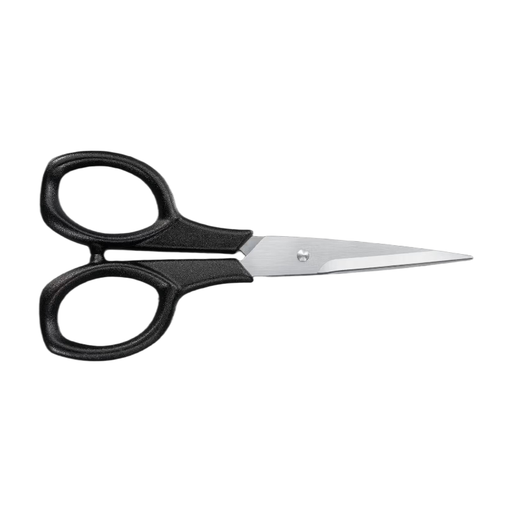
Why this product suits this profile: This compact model is designed for everyday, smaller cutting jobs and takes up little space in the kitchen drawer at 25 g.
The product details specify stainless steel blades, polyamide handles and a detachable design. This makes the materials and maintenance requirements clear.
4 cm blade length, 109 mm overall length and dishwasher suitability according to the product details; hand washing is recommended to help preserve the scissors.
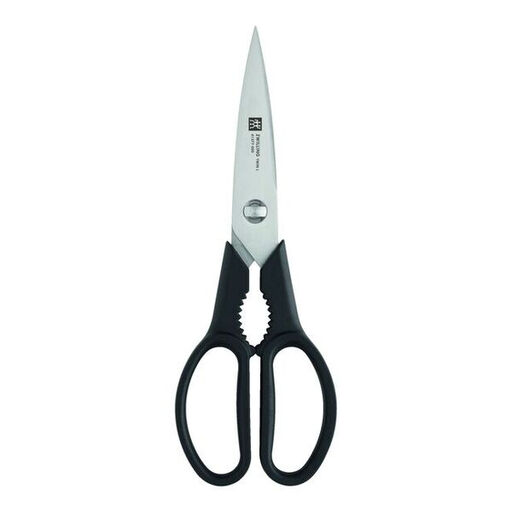
Why this product suits this profile: Measuring 20.5 cm in length, these scissors combine stainless steel blades with glass-fibre-reinforced plastic handles and are aimed at households with a range of uses.
The additional function is clearly specified: an integrated twist-off opener complements the cutting function, rather than simply making a vague multifunctional claim.
9.5 cm blade length, stainless steel and ergonomic handles; hand washing and drying immediately afterwards are recommended.
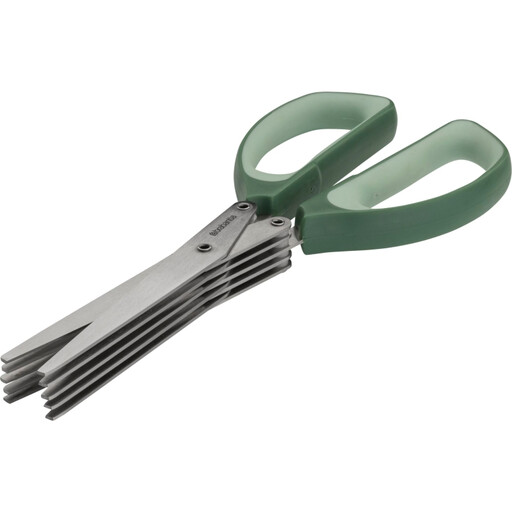
Why this product suits this profile: Five parallel stainless steel blades are specifically designed for cutting herbs and can save time during regular food preparation.
The intended use is clearly limited. These scissors are not dishwasher-safe and should be used exclusively for herbs and soft kitchen ingredients.
Five rust-resistant stainless steel blades, a length of 22.2 cm and a cleaning brush, or cleaning access between the blades.
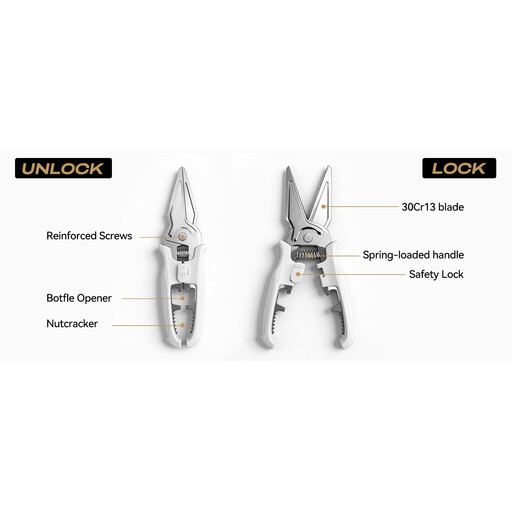
Why this product suits this profile: The product description lists uses for meat, poultry, fish, vegetables, herbs, barbecue preparation and camping.
The additional functions are listed individually: safety lock, magnetic storage, bottle opener and nutcracker. This makes it easier to check whether they match your actual needs.
30Cr13 stainless steel blade, spring mechanism and safety lock; the magnetic holder supports space-saving storage.
We have put together a complete, regularly updated list of products that fully meet these strict selection criteria and the safety regulations applicable in the EU.
With detachable kitchen scissors, the joint components should be checked regularly for residue. Do not force open a stiff joint. With models featuring several blades, such as herb scissors, cleaning between the cutting edges is particularly important.
Special herb scissors with several blades are sufficient for herbs. For meat or poultry, choose a model whose product details expressly state that it is suitable for this use. Ordinary universal scissors are not automatically suitable for bones or tough joints.
That depends on the individual model. Stainless steel kitchen scissors should only be put in the dishwasher if the manufacturer states that they are suitable for this. Even with dishwasher-safe versions, hand washing followed by drying can help protect the blades and moving parts.
Replacement is advisable if the blades continue to cut poorly despite cleaning, the joint develops play, rust spots appear or the handle is damaged. With high-quality kitchen scissors, clear material specifications, a suitable design and proper care are more important than general advertising claims.