
Lieferung heute & morgen

Qualitätsgarantie

Willkommens-Angebote freischalten: KOSTENLOSE Lieferung | Bis zu 80 % RABATT | Kostenlose 30-Tage-JoyPlus-Testphase
App herunterladen
Good kitchen shears are an indispensable tool in any kitchen. They cut herbs more precisely than a knife, break down poultry effortlessly, and open stubborn packaging in an instant. But buying them is often harder than it seems. Many models that look promising on the shelf turn out to be a bad investment after a short time. Before you decide on a model, you should know the typical weak points that distinguish a cheap pair of shears from a durable, long-lasting tool.
As your Joybuy Product Recommendation Officer, I have analysed the most common problems that arise when choosing new kitchen shears. This guide will show you what to look for so you don't fall for empty marketing promises.
At first glance, many shears look similar. However, the crucial differences in quality lie in the details and often lead to frustration and unnecessary expense.
To avoid the problems mentioned above, you should focus on three objective criteria in your selection. These define the durability, functionality, and safety of your new household shears.
The quality of stainless steel kitchen shears depends on the specific steel alloy. Look for designations like German stainless steel or specific identifiers such as 30Cr13 or 40Cr13. These types of steel offer higher corrosion resistance and edge retention. Another important feature is micro-serration on one of the blades. This ensures that smooth items like poultry skin or herbs do not slip while cutting.
Take-apart kitchen shears are highly recommended for hygiene reasons. The two halves can be easily separated, allowing for a complete cleaning by hand or in the dishwasher. The ergonomics of the handles are also crucial. They should fit comfortably in your hand and provide a secure grip, even with wet hands. Models with symmetrical handles are often suitable for both right- and left-handed users. For more demanding tasks like breaking down poultry, poultry shears with a special bone notch and a spring-loaded handle are a sensible specialisation.
Consider what you will primarily use the shears for. Multi-purpose shears are all-rounders and often have additional features like a bottle opener, a jar lid lifter, or a nutcracker integrated into the handles. In contrast, professional-grade kitchen shears or poultry shears focus on maximum cutting power and stability for demanding tasks.
Based on these objective criteria, we have selected a few models from our range that are suitable for different user profiles.
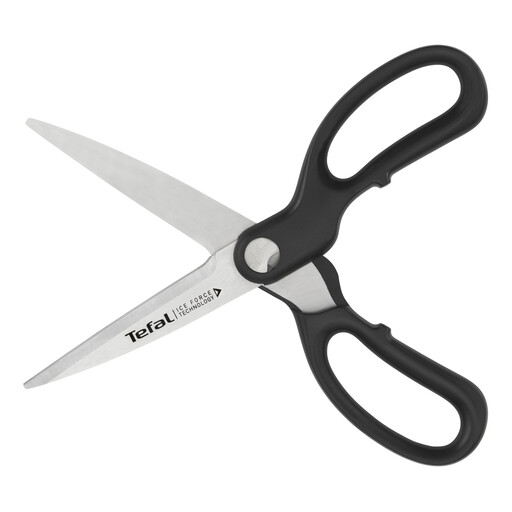
Why This Fits Their Persona: Ideal for anyone looking for reliable and hygienic shears for daily use without a large budget. They cover all basic tasks from cutting herbs to opening packages.
The blades are detachable for easy cleaning, thus avoiding the hygiene trap. According to the manufacturer, German stainless steel is used, which suggests greater durability than no-name products.
Take-apart blades for thorough cleaning. The handle is suitable for both right- and left-handed users.
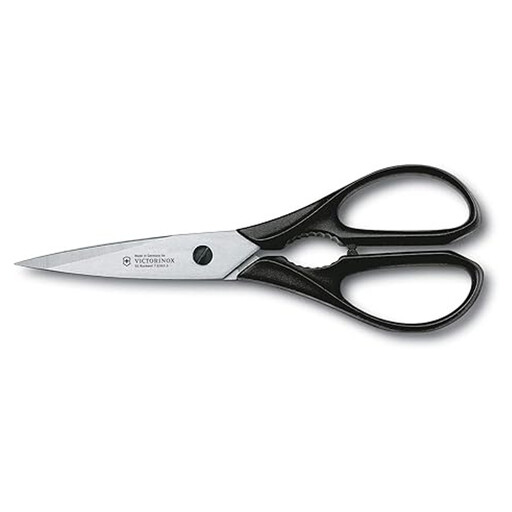
Why This Fits Their Persona: Perfect for home cooks who want a durable and versatile tool. These shears combine cutting tasks with practical extra functions and are designed for intensive use.
The break-resistant polyamide handles and robust joint construction counteract the pitfall of unstable design. The hard stainless steel blades with micro-serration offer lasting sharpness and grip.
Micro-serrated blade for a secure grip on food. Integrated nutcracker and jar lid opener.
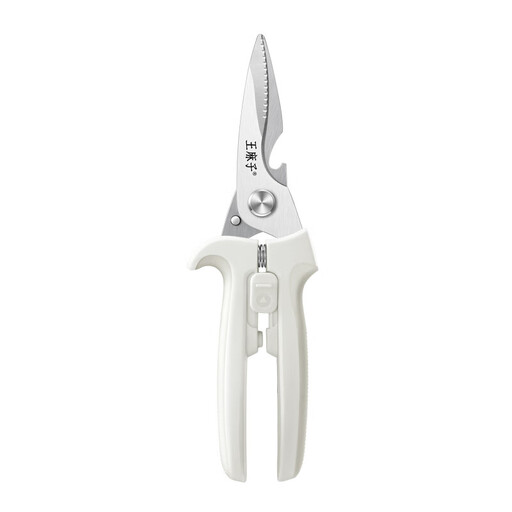
Why This Fits Their Persona: Designed for heavy-duty kitchen tasks, like breaking down poultry or cutting through ribs. A true pair of poultry shears for anyone who regularly processes meat and bones.
This model bypasses the trap of weak materials and unstable joints by using robust 40Cr13 stainless steel and a solid construction. The spring mechanism reduces effort and is easier on the hands.
High-performance stainless steel (40Cr13) for maximum stability. Integrated spring for low-effort cutting.
We have compiled a complete, up-to-date list of products that fully meet these strict selection criteria and UK safety regulations.
1. How often should kitchen shears be sharpened? The frequency depends on usage and blade quality. High-quality shears made of hard stainless steel often stay sharp for over a year with normal kitchen use. If you notice that cutting requires more force or the cut becomes messy, it's time to sharpen them. Use a suitable shear sharpener for this purpose.
2. Are take-apart kitchen shears really necessary? For optimal hygiene, especially after contact with raw meat, poultry, or fish, take-apart shears are highly recommended. They allow for the complete removal of residue and bacteria from between the blades and at the joint, which is nearly impossible with fixed shears.
3. Can I use poultry shears for herbs? Technically, it's possible, but not ideal. Heavy, robust poultry shears are often too clumsy for the fine cutting of herbs and are more likely to crush them than slice them. A lighter, more delicate pair of multi-purpose shears or dedicated herb scissors are better suited for herbs.