
Lieferung heute & morgen

Qualitätsgarantie

Willkommens-Angebote freischalten: KOSTENLOSE Lieferung | Bis zu 80 % RABATT | Kostenlose 30-Tage-JoyPlus-Testphase
App herunterladen
A good pair of kitchen shears is an indispensable tool in any kitchen. However, the market is overwhelming, and many models promise more than they can deliver. Often, subtle flaws cause a newly purchased pair of shears to become useless after a short time. This guide will show you which critical details to look for to find durable, functional kitchen shears that are worth the price.
Many buyers focus on attractive designs or supposed special offers, overlooking critical weaknesses in the process. These three design flaws are particularly common and often lead to disappointment:
To avoid a bad purchase, you should check three technical features before making a decision. These largely determine the longevity, functionality, and safety of your future shears.
A pair of sharp kitchen shears will only maintain its edge retention if the steel is of adequate quality. Look for precise specifications about the material. High-quality stainless steel for kitchen shears, such as 30Cr13 or 40Cr13, offers a good balance of hardness, toughness, and corrosion resistance. Models made from German stainless steel are also an indicator of high material quality. Some blades are additionally coated with titanium, which can improve corrosion resistance and non-stick properties.
Examine the connection between the two halves of the shears. A solid, adjustable screw is preferable to a simple rivet. It not only allows for readjusting the blade tension but is also a hallmark of durable construction. For optimal hygiene, take-apart kitchen shears are ideal. They can be disassembled into two parts in a few simple steps, allowing for a thorough cleaning of all components.
Consider what tasks the shears will primarily be used for.
Here are some recommendations tailored to specific user profiles and the quality criteria mentioned above.
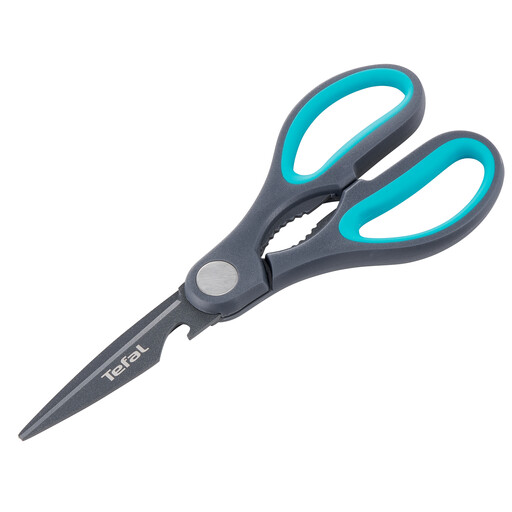
Why This Fits Their Persona: Ideal for households looking for a reliable tool for everyday tasks while valuing space-saving functionality. It replaces several small kitchen gadgets.
According to the manufacturer, the stainless steel blades are titanium-reinforced, which increases durability and corrosion resistance compared to simple steel alloys. The brand quality of Tefal suggests a more solid joint construction.
Integrated bottle opener and nutcracker. Ergonomic soft-touch handles for comfortable use.
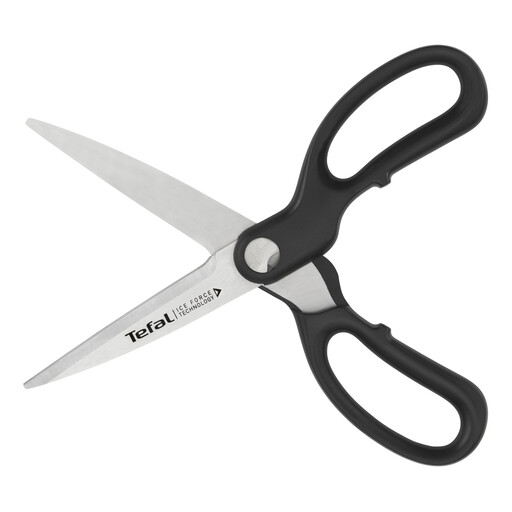
Why This Fits Their Persona: For cooks who value high edge retention and uncompromising hygiene. The combination of high-quality steel and a take-apart design meets professional standards for home use.
This model is detachable, solving the hygiene problem of inaccessible joints. According to Tefal, it uses German stainless steel, which is claimed to have high edge retention due to the Ice Force technology (cooling to -120°C).
Take-apart blades for easy and thorough cleaning. Suitable for both left- and right-handed users.
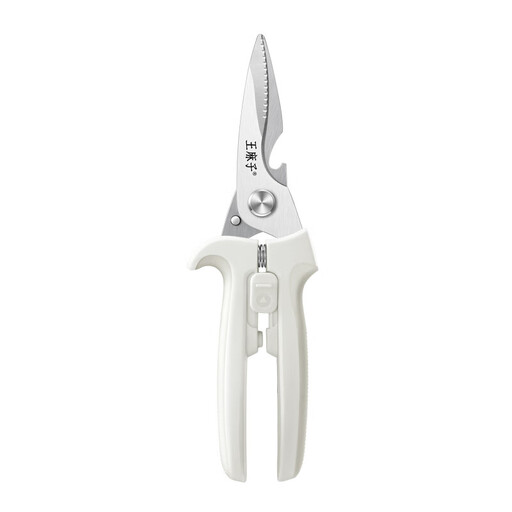
Why This Fits Their Persona: Designed for users who regularly cut poultry or perform other heavy-duty cutting tasks in the kitchen. The robust construction is built for high stress.
The explicit mention of 40Cr13 stainless steel as the blade material is a clear quality indicator, bypassing the trap of vague "stainless steel" claims. The massive construction and spring system are designed for durability under load.
Robust construction for cutting through bones. Spring-assisted handle for effort-saving operation.
We have compiled a complete, up-to-date list of products that fully meet these strict selection criteria and German safety regulations.
For optimal kitchen hygiene, take-apart shears are highly recommended. Food particles and bacteria can accumulate in the joint area, which is difficult to clean on a permanently fixed pair of shears. The ability to separate the blades allows for complete and easy cleaning, reducing the risk of food cross-contamination.
Look for precise material specifications from the manufacturer. Designations like "German Stainless Steel," "Surgical Steel," or specific alloy numbers such as 30Cr13, 40Cr13, or X50CrMoV15 indicate higher quality than the generic label "stainless steel" or "rustproof." These steels generally offer better edge retention and corrosion resistance.
To sharpen kitchen shears, a special scissor sharpener or a honing steel should be used. Guide the blade over the sharpener at a shallow angle (approx. 10-20 degrees), moving from the pivot screw to the tip. Repeat this process for both blades. For shears with micro-serrations, only the smooth edge should be sharpened to avoid damaging the serrations. If you are unsure or have a very high-quality model, you can also use a professional sharpening service.