
Lieferung heute & morgen

Qualitätsgarantie

Willkommens-Angebote freischalten: KOSTENLOSE Lieferung | Bis zu 80 % RABATT | Kostenlose 30-Tage-JoyPlus-Testphase
App herunterladen
A kitchen shelf can free up worktop space, keep supplies organised and make use of otherwise unused niches. However, not every kitchen storage shelf is suitable for every kitchen. Terms such as “space-saving”, “sturdy” or “versatile” do not tell you much on their own. The key factors are the dimensions, mounting method, material and actual load capacity.
It is therefore worth checking the product details carefully before buying. This helps prevent a shelf from becoming wobbly after a short time, failing to fit beneath a kitchen cupboard or proving unsuitable for heavy pans.
A kitchen shelf needs to fit more than just the available width. You should also take depth, height, door openings and the distance from sockets or kitchen appliances into account. With a corner shelf, it is also important to check whether the rear corner will remain fully accessible.
For small homes, narrow wall shelves, hanging shelves or multi-tier kitchen organisers are often a good choice. Before ordering, measure the available space at several points, as walls and worktops are not always perfectly straight.
Many shelves look spacious because they have several levels, but that does not automatically mean they are designed for heavy supplies or cookware. Check:
A shelf for spice jars needs different features from a pot and pan rack. Heavy items should ideally be placed on the bottom level.
Bamboo, MDF, metal and coated chipboard differ in their resistance to moisture, ease of cleaning and stability. A bamboo shelf should be wiped and dried after coming into contact with water. With coated metal, a dry or slightly damp cloth is often sufficient; harsh cleaning products can damage the surface.
A kitchen shelf with hooks should also be mounted or positioned so that the hooks do not catch on doors, handles or people walking past.
For a kitchen storage shelf beneath a wall cupboard, depth and clearance height are particularly important. A narrow wall shelf can hold spices or small kitchen utensils, while a freestanding shelf requires more floor space but can be positioned flexibly without drilling.
Typical solutions at a glance:
Check whether the stated load capacity applies per compartment or to the entire piece of furniture. For example, the SRD shelf is specified as supporting up to 9 lbs per level, which is approximately 4.1 kg. This provides a useful point of reference, but does not replace checking whether it is suitable for your intended use.
With wall shelves, actual safety also depends on the wall material, wall plugs and screws. The supplied fixings are not automatically suitable for every concrete, brick or plasterboard wall.
Tool-free solutions can be set up or hung quickly. Permanently mounted shelves, on the other hand, can offer greater everyday safety when the wall fixing has been installed correctly. Households with children or pets should also check whether anti-tip protection is required.
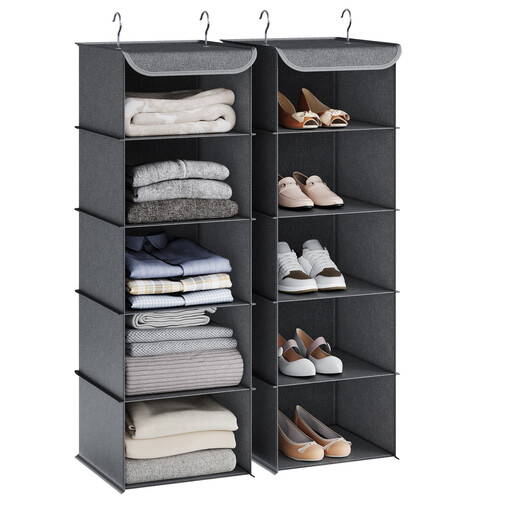
Why this product suits this profile: This two-piece hanging storage solution is ideal for anyone who wants to create additional vertical storage without drilling. It can also be used outside the kitchen, for example in a utility room or bedroom.
The specifications state precise dimensions of 30 × 30 × 90 cm, as well as a capacity of 2 kg per level and 10 kg per organiser. This makes it easier to compare the product with your available space and the weight of the items before buying.
Foldable design, metal hooks and removable bamboo inserts. The delivery includes two organisers.
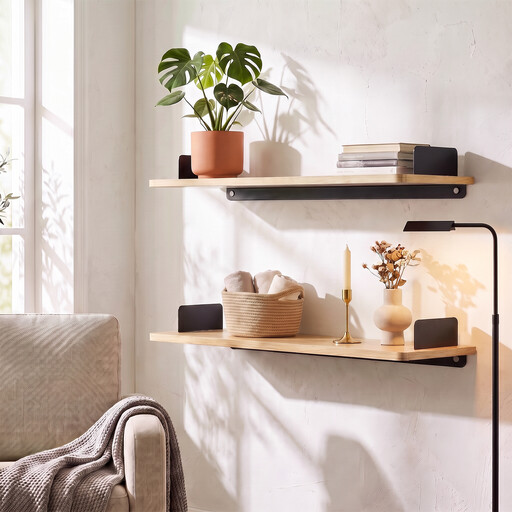
Why this product suits this profile: This wall shelf is suitable for kitchens, bathrooms, living rooms and bedrooms when you want to combine storage with secure wall mounting.
The product details specify a load capacity of up to 20 kg and recommend suitable wall anchors, as well as regular checks of the screws. The wall must be suitable for the intended load.
Rubberwood according to the product description, aluminium brackets and a painted surface. Suitable for spices, small kitchen utensils or decorative items.
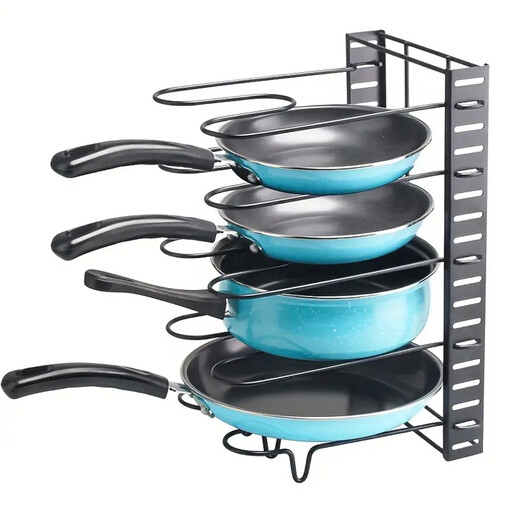
Why this product suits this profile: This pot and pan rack is designed for households with lots of cookware and changing storage needs in cupboards, work areas or beneath a wall cupboard.
The design offers three positioning options: vertical on both sides, vertical on one side or horizontal. U-shaped holders with silicone pads are designed to hold pan lids.
Powder-coated iron, eight adjustable levels and two hooks. According to the product description, it can be assembled without tools.
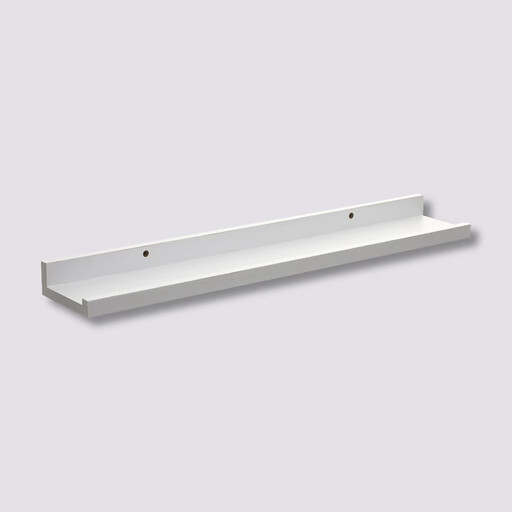
Why this product suits this profile: This slim wall shelf is ideal for small kitchens where spices, small bottles or decorative items need to be kept close at hand.
Measuring 58 × 10 × 4 cm and with a stated maximum load of 3 kg, its limits are clearly defined. The shelf is therefore not intended for heavy pans.
Slim design, wood-effect finish and MDF material according to the product description. It is designed for self-assembly, with an estimated assembly time of around 30 minutes.
We have put together a complete, regularly updated list of products that fully meet these strict selection criteria and the safety regulations applicable in the EU.
After assembly, check the shelf while empty to ensure it is stable, that the levels are straight and that no connections are loose. With wall-mounted models, it is advisable to check the fixings after a few days of use. Heavy items should be placed at the bottom or close to load-bearing brackets.
Bamboo and wooden surfaces should not be left damp for long periods. Metal surfaces can usually be cleaned with a soft cloth. With foldable fabric organisers, avoid sharp-edged items, as they can damage the material.
For small kitchens, narrow wall shelves, corner shelves, hanging shelves or shelves for kitchen cupboards may be suitable. Measure the available depth beforehand and make sure that doors and drawers can still be opened fully.
That depends on how it will be used. A capacity of just a few kilograms is often sufficient for spices and lightweight kitchen storage. Pots, pans and lids require a higher load capacity per level. The manufacturer’s specifications for the specific model are always decisive.
There is no standard lifespan. It depends on the material, load, moisture, assembly and care. Keeping within the permitted load and regularly checking the shelf for loose connections or damage can help reduce typical wear and tear.