
Lieferung heute & morgen

Qualitätsgarantie

Willkommens-Angebote freischalten: KOSTENLOSE Lieferung | Bis zu 80 % RABATT | Kostenlose 30-Tage-JoyPlus-Testphase
App herunterladen
A kitchen sieve is a staple in most households. It’s used for draining pasta, washing fruit and vegetables, rinsing rice, or drying small kitchen utensils. However, not every model suits every sink or every household. A bowl that’s too small, unstable handles, or holes that are difficult to clean can make daily life unnecessarily harder.
Before you buy, it’s worth looking at the actual product specifications rather than general marketing claims. Three points in particular often lead to the wrong purchase:
For single portions or small quantities, a kitchen sieve with a handle and a capacity of around 0.5 litres may be sufficient. Families and keen home cooks usually need more volume. Models with 2 to 2.5 litres are better suited for pasta, salad or larger amounts of vegetables.
A colander with extendable sides is practical if you’re not sure of the exact width of your sink. Before buying, you should measure the internal width of the sink. When placed over the sink, the sieve must sit stably and not tip onto the tap, drain or sink rim.
For larger quantities, a pasta sieve with a raised base can be useful. This keeps the food above the draining water. With an extendable sink colander, you should also check the minimum and maximum length, as well as the width of the resting surfaces.
A stainless steel sieve is resistant to moisture and can often be simply rinsed clean. Terms like “304 stainless steel” or “18/8” describe a specific quality of stainless steel. However, they don’t replace checking the care instructions, edge finishing and permitted temperatures.
Plastic models are usually lighter and can have advantages in small kitchens. With foldable versions, the moving segments are often made from different plastics such as PP, TPE or TPR. Look out for:
A strainer with very small holes will hold back even smaller ingredients, but it can drain more slowly and be harder to clean. Larger holes drain faster but let small berries, herbs or fine pasta through more easily. The hole size should therefore match your main use.
A kitchen sieve should be thoroughly rinsed and dried after use. With tightly spaced holes, residue can get stuck. A model with a smooth surface and easily accessible joins is therefore usually easier to care for in daily use.
For small flats or fully packed kitchen cupboards, a foldable sieve or an extendable draining basket is a good option. However, check whether the model, when folded, actually fits in the drawer you have in mind. A hook or hanging hole can create extra storage space.
If you want to drain not just food but also plates, cutlery and cups, you’re better off with a dish draining rack. Here, a removable draining board, a stable base and the ease of cleaning the water collection tray are all relevant.
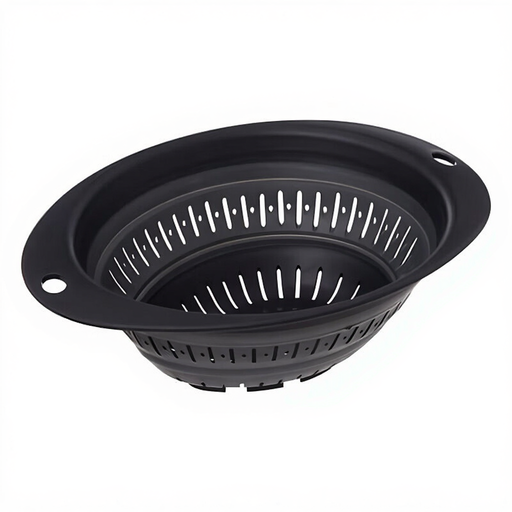
Why this product fits the profile: This foldable plastic sieve offers a capacity of 2.5 litres and can be collapsed for storage. It’s suitable for washing fruit and vegetables as well as draining pasta.
The moving segments reduce the space needed. The profiled base is designed for placing in the sink, and the wide rim makes it easier to grip.
2.5 litre capacity; foldable design with hanging hole.
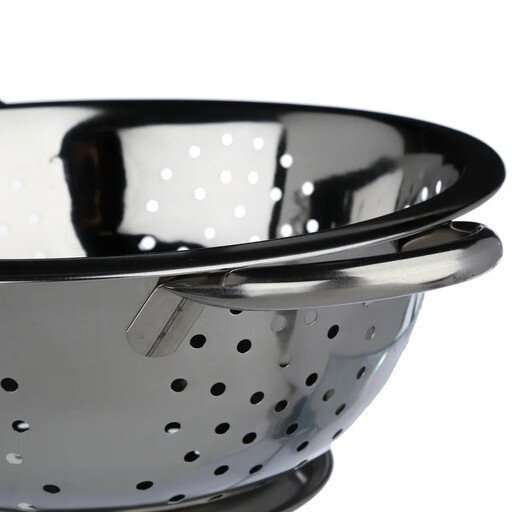
Why this product fits the profile: This 24 cm stainless steel sieve with a 2.2 litre volume is designed for regular draining and washing in the household.
The product details state the material, diameter, height and capacity. This makes it easier to check suitability against your existing cookware before buying.
Stainless steel construction; 2.2 litre volume with 24 cm diameter.
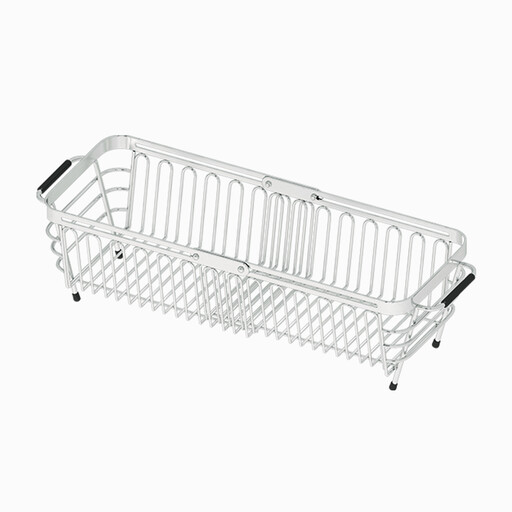
Why this product fits the profile: This extendable model can be adjusted from 29 to 44 cm and can be used as a draining basket for the sink, a vegetable sieve or a small shelf over the basin.
The variable length helps with different sink sizes. However, you should still check that the resting surfaces sit securely and level before use.
304 stainless steel; extendable range from 29 to 44 cm.
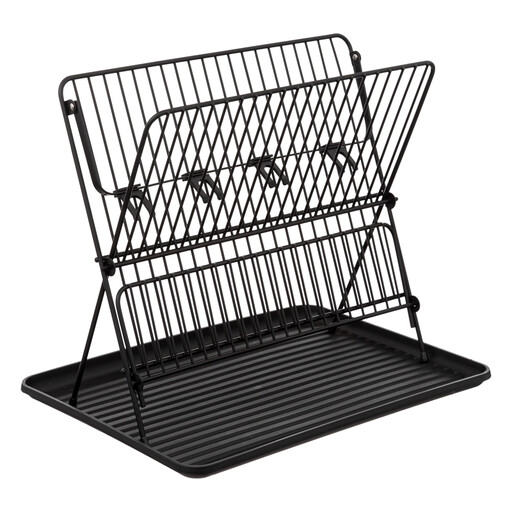
Why this product fits the profile: This two-tier dish draining rack makes use of vertical space and folds flat when not in use. It’s designed for plates, cups, cookware and cutlery.
The removable drip tray collects water. For a stable stand, the top tier should not be overloaded and the tray should be emptied regularly.
Two tiers; foldable design with removable drip tray.
We’ve put together a complete, regularly updated list of products that fully meet these strict selection criteria and the safety regulations in force in the EU.
For single portions, a small model with around 0.5 litres is often enough. For family meals and pasta, 2 to 2.5 litres is usually more practical. It’s also important whether the sieve fits into the pan or sits securely over the sink.
Both materials have different advantages. Stainless steel is shape-stable and suitable for regular use. Plastic models are often lighter and, as a foldable sieve, can take up less storage space. Temperature and care instructions should always be checked against the individual product description.
Rinse the sieve immediately after use with warm water and a suitable cleaning agent. Remove any residue from the holes and let the model dry completely. With an extendable sink colander, you should also regularly check the rails, handles and resting surfaces.