
Lieferung heute & morgen

Qualitätsgarantie

Willkommens-Angebote freischalten: KOSTENLOSE Lieferung | Bis zu 80 % RABATT | Kostenlose 30-Tage-JoyPlus-Testphase
App herunterladen
A kitchen sieve is a staple in many British households, yet it's often chosen on first impressions alone. A shiny stainless steel finish, an unusually high number of holes or a flashy folding mechanism don't tell you much about whether a sieve for the kitchen is actually practical, sturdy and suited to the job you have in mind.
Typical buying mistakes usually come down to three things:
So before you buy, it's worth considering capacity, material, drainage holes and storage all together.
A stainless steel kitchen sieve holds its shape well and is generally suitable for hot foods. Terms like 304 stainless steel or 18/10 stainless steel describe the material composition and give you a better steer than vague phrases such as "premium steel". However, the material alone doesn't guarantee that every product is dishwasher-safe – that needs to be stated explicitly in the product description.
Plastic models are usually lightweight and comfortable to handle. They can be handy for fruit, vegetables and pasta, but should be kept away from very hot pans, open flames and the oven, as per the manufacturer's instructions. Silicone is flexible and can be gentler on non-stick cookware. The Joybuy silicone sieve-spoon, for example, is rated for a temperature range of -40 °C to 230 °C. This rating applies to the product itself and doesn't override guidance about direct flame or prolonged heat exposure.
For food contact, buyers should look for specific suitability statements. The silicone sieve-spoon mentioned above is certified as compliant with EU Regulation (EC) No 1935/2004. For other items, you should check the individual manufacturer's information.
The right size depends on your household and typical portion sizes:
A large colander takes up more storage space, so check beforehand whether it will fit in your kitchen cupboard, on a draining rack or in your sink.
A sieve with a handle makes pouring easier when you need one hand on the pan and the other on the sieve. Two side handles, on the other hand, offer more balanced weight distribution – especially with a full pasta sieve. A flat or wide base stops the sieve from tipping over when you're washing vegetables.
Different designs suit different foods:
Cleaning matters too: a claim like "dishwasher-safe" should be stated for the specific model. On coated surfaces, abrasive cleaners or steel wool can damage the finish.
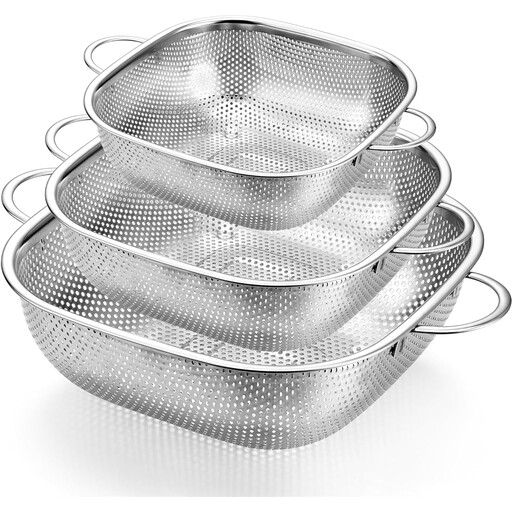
Why this product fits the profile: Three different diameters cover a range of tasks – from a small vegetable sieve to a larger colander for pasta or veg.
The different sizes reduce the risk of having to use a single sieve for every portion.
Three sizes: 20, 24 and 28 cm; handles on the sieves as per the product name.
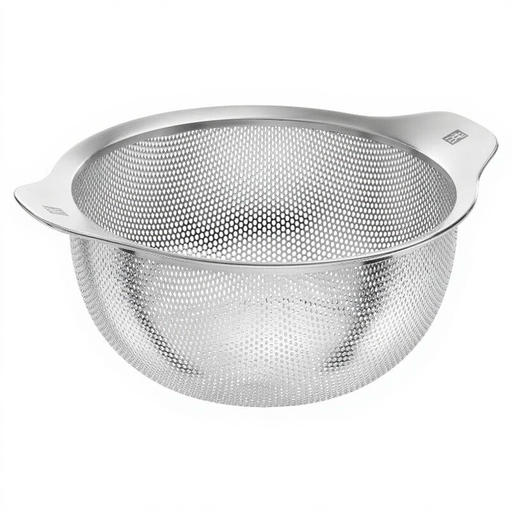
Why this product fits the profile: According to the product details, this model is made from 18/10 stainless steel and has a satin finish for a clean, understated look.
The stated diameter makes its intended use clearer than vague size labels. The product description also notes that it's dishwasher-safe.
20 cm diameter; 18/10 stainless steel; flat base; dishwasher-safe according to the product info.
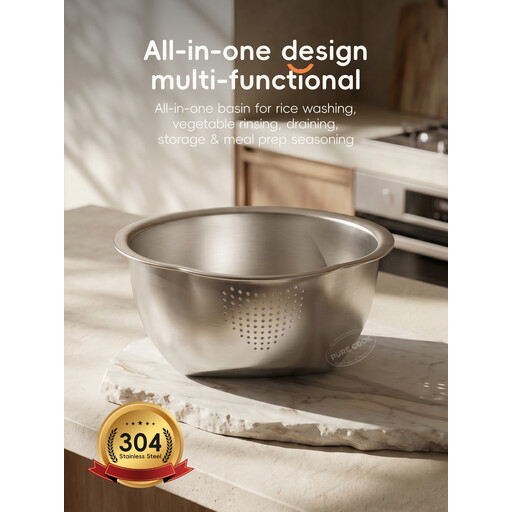
Why this product fits the profile: This colander is designed for rice, quinoa, fruit, vegetables and other prep tasks.
The description mentions evenly spaced, dense drainage holes and two side handles. This means the model isn't limited to just one type of food.
304 stainless steel; 27 cm diameter; 10.63-inch measurement; dishwasher-safe according to the product description.

Why this product fits the profile: The expandable design is ideal for households that want a larger capacity and the flexibility to use it over sinks of different widths.
The adjustable arms reduce the risk of the colander not having a secure resting point in the sink. Still, it's worth checking your sink measurements before buying.
3.6 litre capacity; expandable length; stainless steel; ergonomic handle according to the product details.
We've put together a full, regularly updated list of products that meet these strict selection criteria and comply with current EU safety regulations.
Rinse your sieve as soon as possible after draining, so that starch, salt or acid residues don't dry on. For stainless steel, mild cleaning agents and a soft sponge are all you need. Coated models should not be treated with steel wool.
With a fine rice sieve, it's a good idea to check the holes after each use. Small grains can get stuck and slow down the water flow. A sieve with a handle shouldn't be lifted by the handle alone if the contents are very heavy, unless the manufacturer specifies that it can take that weight.
For single portions, a model around 0.5 to 1 litre is usually enough. Families and regular pasta dishes are better off with 2 to 3.6 litres. It's also crucial to check whether the sieve fits into your existing pan or sink.
A colander or pasta strainer typically has larger holes and is intended for pasta, potatoes and vegetables. A fine-mesh sieve holds back smaller particles and is better suited to flour, soya milk, rice or fine liquids.
Not every stainless steel model is automatically dishwasher-safe. What matters is the specific manufacturer's instruction. Handles made of wood, plastic or other materials may have different care requirements.