
Lieferung heute & morgen

Qualitätsgarantie

Willkommens-Angebote freischalten: KOSTENLOSE Lieferung | Bis zu 80 % RABATT | Kostenlose 30-Tage-JoyPlus-Testphase
App herunterladen
A kitchen sieve needs to meet very different requirements depending on the task. When draining pasta, stability is key; when washing berries, the size of the holes matters; and for baking, you’ll need a fine-mesh sieve. Many disappointing purchases happen because product images promise a versatile design, but key technical details are missing.
A sieve with large holes is suitable for pasta or chunky vegetables, but won’t reliably hold back flour, icing sugar or small grains. On the other hand, a very fine-mesh model may drain slowly when you’re dealing with larger quantities.
Check whether the seller gives specific details about the mesh size, hole diameter or intended use. Claims such as ‘suitable for all foods’ are no substitute for a technical description.
A compact kitchen sieve is handy for a handful of berries or dusting a cake. But it can quickly overflow when you’re draining pasta for the family. This makes draining more difficult and increases the risk of food falling into the sink.
For everyday meals, diameter and height matter more than the product name alone. A pasta colander with a wide base is usually more stable to use over a pan or in the sink.
Stainless steel isn’t all the same. Details such as 18/10 stainless steel or 304 stainless steel describe the material more precisely than a general term such as ‘metal’. If you’re considering a model with a plastic frame, check whether it’s designed for hot liquids.
The handle design matters too: side handles, a long handle or an extendable rim each suit different kitchens. A draining sieve without a secure base may tip over when filled with heavy food.
A stainless steel kitchen sieve is a good choice for many households, particularly if it’s often used with water, acidic foods or warm dishes. Ideally, the product details should specify the exact alloy. The ZWILLING models featured here are listed as being made from 18/10 stainless steel; according to the product description, the 24 cm model has a perforated design and integrated side handles.
Models with plastic frames may be lighter and comfortable to hold. However, check the temperature guidance for these designs. For example, the 22 cm stainless steel and plastic sieve is listed as having a plastic frame that isn’t suitable for temperatures above 70 °C.
According to the product details, the 3.6-litre model in this selection has an extendable design measuring 53.5 cm long and 24.7 cm wide. This means it can be positioned across sinks of different widths.
A coarse vegetable sieve or pasta colander should drain water quickly and have enough room for larger foods. For flour, cocoa, icing sugar or very small particles, you’ll need a flour sieve or fine-mesh sieve.
For specialist filtering, there are also nylon filters with 200 mesh. These are better suited to liquids or very fine ingredients, rather than as a replacement for a sturdy colander for draining pasta.
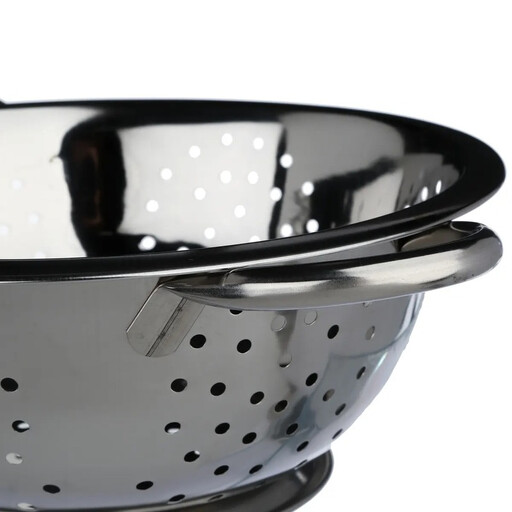
Why it suits this need: With a 24 cm diameter and a 2.2-litre capacity, this stainless steel sieve is well suited to everyday tasks such as draining pasta, washing vegetables and rinsing fruit.
The stated dimensions and capacity make it easier to judge whether this sieve is right for you than a general claim about versatility.
24 cm diameter, 2.2-litre capacity and stainless steel construction.
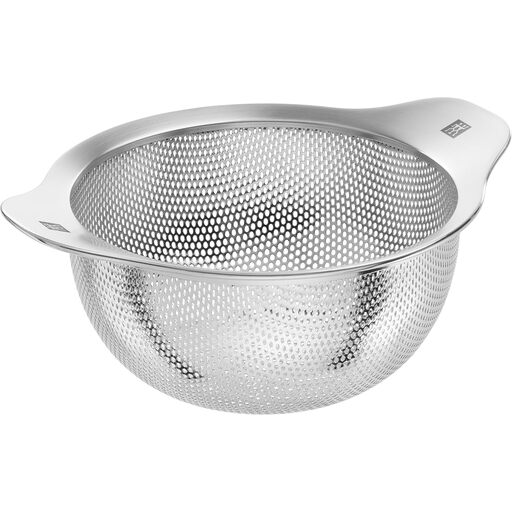
Why it suits this need: This 16 cm model can be used as a sieve, colander or bowl. It has a flat base and two stainless steel handles.
The flat base reduces the risk of the sieve tipping over while you prepare or drain food. The product details also state that it’s dishwasher-safe.
18/10 stainless steel, satin finish, two handles and stackable sizes in the range.
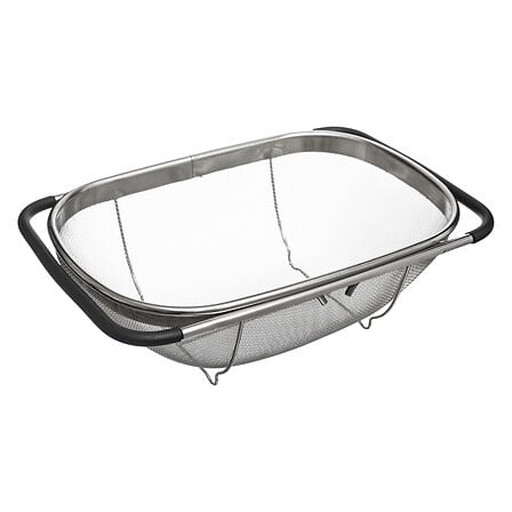
Why it suits this need: This extendable design is suitable for households or kitchens with sinks of different sizes, and for anyone who regularly handles larger quantities.
Its dimensions of 53.5 × 24.7 × 10.5 cm and extendable design give you clear details to help check whether it will fit your sink.
3.6-litre capacity, stainless steel and an ergonomic handle.
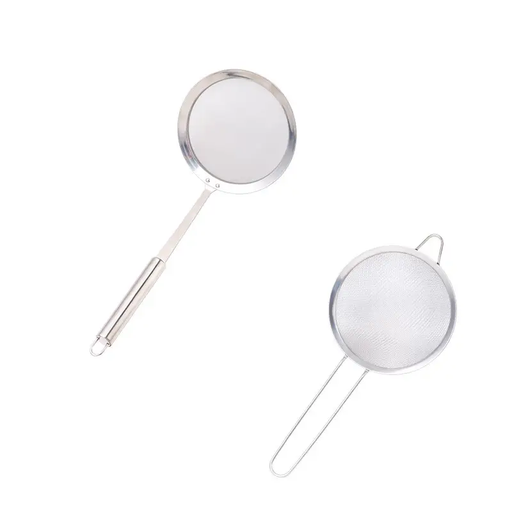
Why it suits this need: This set is designed for fine filtering tasks such as sifting flour, straining soya milk and filtering small particles, and complements a coarse draining sieve.
The ‘Fine Mesh’ description makes it clear that this is intended for a different use from a coarsely perforated colander for pasta.
304 stainless steel and a two-piece set for fine filtering and kitchen tasks.
We’ve put together a complete, regularly updated list of products that meet these strict selection criteria and fully comply with the safety regulations in force in the EU.
For pasta, a medium to large pasta colander with a stable base is a good choice. The holes should drain water quickly while being suitable for the type of pasta you’re using. Side handles or a wide rim are handy for spaghetti and larger portions.
For sifting flour, icing sugar or cocoa, you’ll need a fine-mesh sieve. The finer the powder, the more important it is to have an even mesh. A coarse vegetable sieve or traditional colander won’t do the job reliably.
How long it lasts depends on its material, construction, how heavily it’s used and how well it’s cared for. With proper cleaning, stainless steel models can remain in use for a long time. Don’t overload plastic parts or fine mesh, avoid contact with sharp objects, and follow the manufacturer’s cleaning instructions. Replace the sieve if it becomes misshapen or cracked, or is no longer safe to handle.