
Lieferung heute & morgen

Qualitätsgarantie

Willkommens-Angebote freischalten: KOSTENLOSE Lieferung | Bis zu 80 % RABATT | Kostenlose 30-Tage-JoyPlus-Testphase
App herunterladen
A kitchen sieve is a staple in many homes, but it’s often chosen based on just one thing: the price. That can leave you with a kitchen tool that isn’t practical. Smaller models may not hold enough, wobbly handles can make draining tricky, and wide holes may let small ingredients slip through.
The label ‘multifunctional’ doesn’t tell you everything, either. A sieve that’s suitable for rinsing berries may not also be right for pasta, flour or hot liquids. Before you buy, it’s worth checking the actual dimensions, hole size and material.
A compact kitchen sieve is handy for herbs, fruit or small portions. But a diameter of around 10 cm may be too small for pasta or larger quantities of vegetables. A large colander, on the other hand, needs more storage space and may be unnecessarily big for a single portion.
Check the:
An stainless steel sieve is often chosen for its sturdy construction and easy cleaning. Even so, check that stainless steel is listed as the main material and that the product is suitable for its intended contact with food. For plastic or silicone models, details such as heat resistance, food safety and whether they’re dishwasher-safe are also important.
If you’re using a colander to drain boiling pasta, a secure handle and a sturdy shape matter too. For coated pans, a silicone or plastic head may be a good choice: when used correctly, these materials are less likely to scratch the surface than metal.
A fine mesh is useful for rinsing small ingredients, filtering liquids or sifting dry ingredients. However, it may drain more slowly when you’re dealing with larger quantities. A colander with larger holes usually drains liquid more quickly, but may not reliably hold back small grains or very fine ingredients.
Before you buy, think about whether you’ll mainly use your kitchen sieve to:
Stainless steel is a practical choice for many kitchens because it holds its shape and, according to product details, may be rust-resistant. Still, check the specific care instructions. Some manufacturers recommend washing by hand with a mild detergent, even if the product is described as dishwasher-safe.
Silicone is particularly suitable for delicate coatings. A skimmer or slotted serving spoon made from silicone can drain liquid without leaving metal marks on non-stick or ceramic surfaces. However, don’t leave kitchen utensils in contact with hot pans unattended unless the product description confirms that this is safe.
A classic sieve with several drainage holes is usually suitable for pasta and vegetables. Finer filters are needed for flour, tea or homemade plant-based drinks. A tea strainer or nylon filter isn’t automatically suitable for hot fats or liquids at a rolling boil.
If you’re choosing a kitchen sieve with a handle, check that it’s well balanced. A long handle makes it easier to work over a pan, but the sieve may tip more easily when it’s full and heavy. A base or second resting point adds stability.
A small sieve with a capacity of around 0.5 litres may be enough for a single portion. Households that regularly cook pasta or larger quantities of vegetables are more likely to benefit from a model with a capacity of around 2 to 3.6 litres. An extendable sieve can fit different sink sizes, but has more moving parts to keep clean.
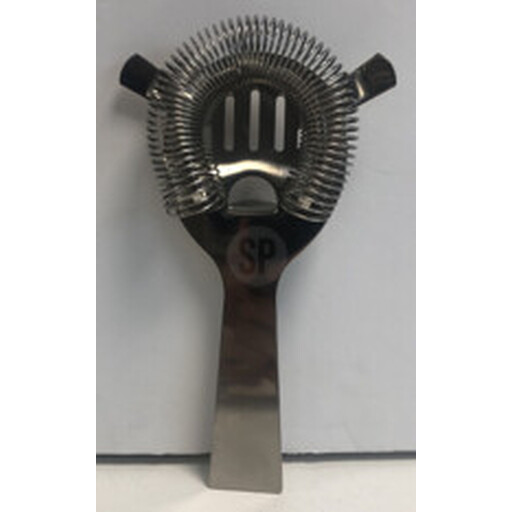
Why this product suits this profile: Measuring 17 × 10 cm, this compact stainless steel sieve is suitable for small portions, fruit, vegetables, tinned food and dry ingredients.
The stated dimensions make it clear that this sieve is designed for smaller tasks, so you won’t mistakenly expect it to work as a large pasta colander.
Stainless steel construction, fine mesh, a handle and, according to the product description, dishwasher-safe.
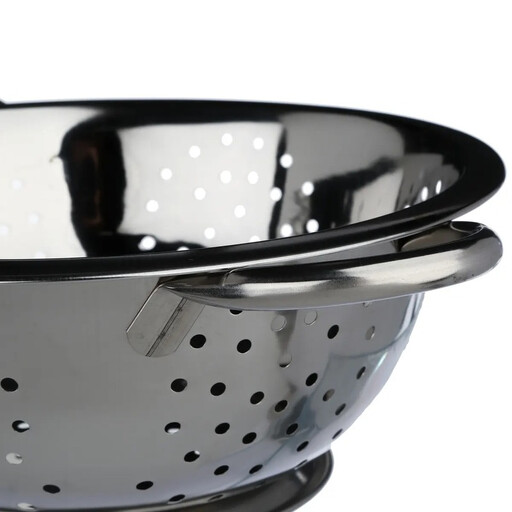
Why this product suits this profile: With a diameter of 24 cm and a capacity of 2.2 litres, this sieve is designed for larger quantities of pasta, fruit or vegetables.
The clearly stated capacity means you don’t have to guess the size based on general marketing claims.
Stainless steel, a 2.2-litre capacity and a design suited to rinsing, draining and sifting.
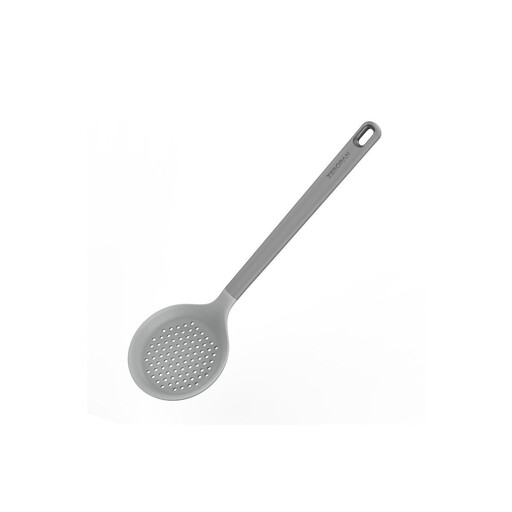
Why this product suits this profile: This finely perforated skimmer is designed for lifting and draining dumplings, vegetables or fried food from liquids.
The fine perforations and clearly described purpose set it apart from a large colander for draining pasta.
Food-grade silicone, stated to be BPA-free, a one-piece handle and, according to the description, dishwasher-safe.
If you often drain larger quantities, a spaghetti pot with a strainer insert may also be a good option. If you mainly want to scoop up liquids while leaving solid ingredients behind, look for combinations of a ladle, skimmer and straining spoon. The key is to choose a design and capacity that suit how you’ll actually use it.
We’ve put together a complete, regularly updated list of products that meet these strict selection criteria and fully comply with the safety regulations in force in the EU.
A sturdy pasta colander with a large enough diameter and several drainage holes is suitable for pasta. For larger portions, a capacity of around 2 to 3 litres is more practical than a small hand-held sieve. A wide rim or base can make draining easier.
It depends on the product. Many stainless steel models are described as dishwasher-safe. Still, follow the manufacturer’s care instructions and dry the sieve thoroughly after washing, especially if it has a fine mesh or joints.
A sieve or colander holds food back as liquid drains away and is usually used over a bowl or sink. A skimmer or straining spoon lifts individual ingredients out of liquids. Tea, flour and very fine ingredients, on the other hand, need especially fine-mesh filters.