
Lieferung heute & morgen

Qualitätsgarantie

Willkommens-Angebote freischalten: KOSTENLOSE Lieferung | Bis zu 80 % RABATT | Kostenlose 30-Tage-JoyPlus-Testphase
App herunterladen
A kitchen sieve needs to do more than simply drain water in everyday use. Depending on your household, you might use it to wash fruit and vegetables, drain pasta, filter oil or lift food out of liquid. But if you focus only on a shiny finish or a particularly low price, it’s easy to overlook important details.
Common buying pitfalls include:
A stainless steel sieve is a practical choice for many kitchens, as stainless steel can be rust-resistant and retain its shape. The specific material details still matter, though. Products made from stainless steel can use different grades. For more demanding uses, such as an oil filter, a grade such as 304 stainless steel can be useful to know.
Also look for:
Plastic, PBT, silicone and wood can also be good choices, particularly for use with coated cookware. A silicone or plastic head reduces the risk of scratching non-stick and ceramic surfaces. Just be sure to check the temperature limits for the product.
For one person or small quantities, a kitchen sieve with a handle and a capacity of around 0.5 litres is often enough. For families, large portions of pasta or washing vegetables, models with a capacity of around 2 to 3.6 litres are more practical.
A good draining sieve shouldn’t tip over when you fill it. Feet, a long handle or a support that rests on the sink can make it easier to use. An adjustable sink sieve can save space in smaller kitchens, as it can rest across sinks of different widths.
Use this rough guide to help you choose:
A dishwasher-safe sieve can make cleaning easier. For products with a wooden handle, delicate coating or parts made from different materials, check the care instructions. In many cases, stainless steel can be cleaned easily with water and a mild detergent. Abrasive cleaners may damage surfaces and protective coatings.
Take extra care when handling hot liquids. You should be able to hold a colander or pasta sieve securely without the handle getting hot. A slotted spoon or perforated serving spoon, on the other hand, is designed for lifting individual pieces of food out of water or oil and isn’t a substitute for a large sieve.
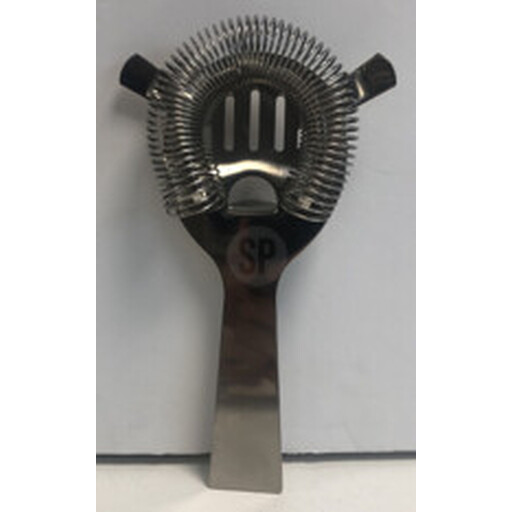
Why it’s a good fit: This compact stainless steel sieve is suitable for fruit, vegetables, tinned food, small amounts of pasta and dry ingredients. The handle makes it easier to use with control in smaller kitchens.
The size and material are clearly specified. This makes it easier to judge whether the sieve is intended for small portions rather than large family-sized quantities.
17 × 10 cm, stainless steel construction, fine mesh and dishwasher-safe according to the product description.
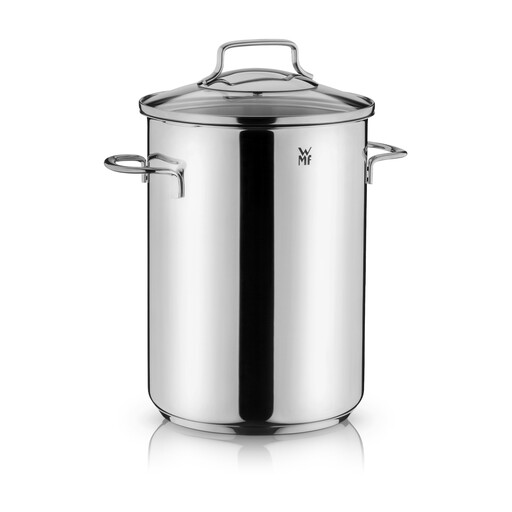
Why it’s a good fit: This asparagus pot with a sieve insert combines cooking and draining in one. It’s suited to households looking for a specialist pot that can also be used for pasta, spaghetti and vegetables.
The insert is listed as part of the product, and its capacity is clearly stated as 5 litres. This means it’s not just designed for small quantities.
Cromargan stainless steel, glass lid, wire insert, suitable for induction hobs and components listed as dishwasher-safe according to the product details.

Why it’s a good fit: This pot is designed for filtering and storing cooking oil and, according to the product details, is suitable for gas and ceramic hobs.
The intended use and capacity are clearly stated. This helps distinguish it from a standard pasta sieve designed for entirely different tasks.
304 stainless steel according to the product description, 2-litre capacity, and suitable for filtering and storing oil.
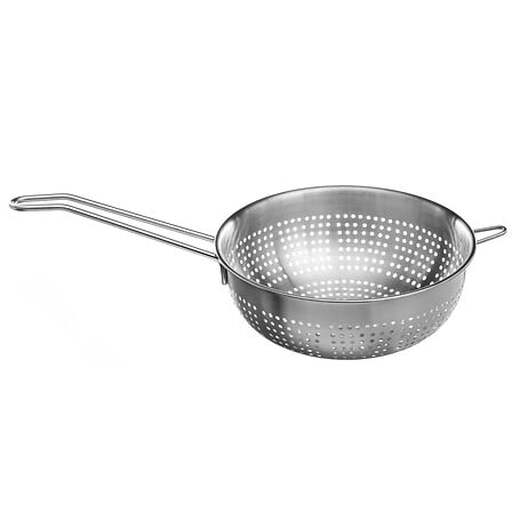
Why it’s a good fit: Its small capacity is designed for berries, herbs, vegetables or a single portion, and it takes up little storage space.
Its compact size isn’t presented as a solution for large quantities. This helps prevent unsuitable purchases based on unclear or exaggerated claims about what it can handle.
0.5-litre capacity, stainless steel, long handle and several drainage holes according to the product description.
We’ve put together a complete, regularly updated list of products that meet these strict selection criteria and fully comply with the safety regulations in force in the EU.
For very fine filtering, a nylon soya milk filter can be a good choice. The BJ filter inserts on offer have a 200-mesh weave designed to hold back small particles. Rinse them thoroughly after use.
A slotted spoon made from PBT or silicone is handy for lifting dumplings, vegetables or fried food. According to the product description, silicone models are suitable for coated cookware. Perforated wooden, PBT or stainless steel cooking spoons are another option for serving and draining small quantities.
If you filter oil regularly, it’s worth distinguishing between a simple oil sieve and a dedicated filter pot. A filter pot offers more capacity and may be designed for storage. For draining pasta water day to day, a traditional pasta sieve or large colander is usually a better choice.
A capacity of 0.5 to 1 litre is enough for berries, herbs and individual portions. For family portions, pasta and larger quantities of vegetables, 2 litres or more is usually more practical. As well as capacity, consider the diameter, stability and the space you have available to set it down.
Many stainless steel models are listed as dishwasher-safe in the product details. However, different care instructions may apply to wooden, plastic or silicone handles. Check the specific care guide and dry the sieve thoroughly after washing.
A draining sieve or colander holds food while liquid drains through its many openings. A slotted spoon lifts individual pieces out of water or oil. A fine-mesh filter holds back smaller particles and is better suited to sauces, flour or soya milk. The right shape for you depends on the task.